
Nick Goold
1-Minute Forex Trading: How to Trade High Volatility Markets Effectively
High volatility creates some of the best trading opportunities in the forex market, but it also increases risk. When price is moving quickly, traders need tools that allow them to react with precision. The 1-minute chart is one of the most effective ways to track short-term price movements and improve entry timing during these conditions.
Rather than focusing on large moves, the 1-minute chart allows traders to take advantage of smaller, repeatable opportunities. When used correctly, it can help improve consistency, especially in fast-moving markets.
Understanding High Volatility in Forex Markets
Volatility refers to how much price moves within a given period. When volatility is high, price moves faster and with greater range. This is often driven by economic data releases, central bank decisions, or geopolitical developments.
These conditions create opportunity, but they also reduce predictability. Price can move sharply in both directions, which is why structure and discipline become more important.
For short-term traders, volatility is necessary. Without movement, there is no opportunity. The key is not just trading when volatility is high, but understanding how to manage it.
Why the 1-Minute Chart Works in Volatile Conditions
The main advantage of the 1-minute chart is speed. It reflects price changes almost immediately, allowing traders to react quickly to market developments.
Compared to longer timeframes, entries can be more precise. A moving average, for example, will signal direction earlier on a 1-minute chart than on a 5-minute chart. This can improve timing, especially when markets are moving quickly.
The 1-minute chart also creates more trading opportunities. In volatile markets, price moves frequently, and this allows traders to engage multiple times during a session. However, more opportunities do not mean more trades. The focus should remain on quality setups.
Core Strategies for 1-Minute Trading
Trading short-term charts requires a clear and repeatable approach. The following methods work well when volatility is high.
Breakout trading is one of the most effective strategies in these conditions. When price breaks above resistance or below support, it often moves quickly. The 1-minute chart allows traders to enter close to the breakout level and manage risk tightly.
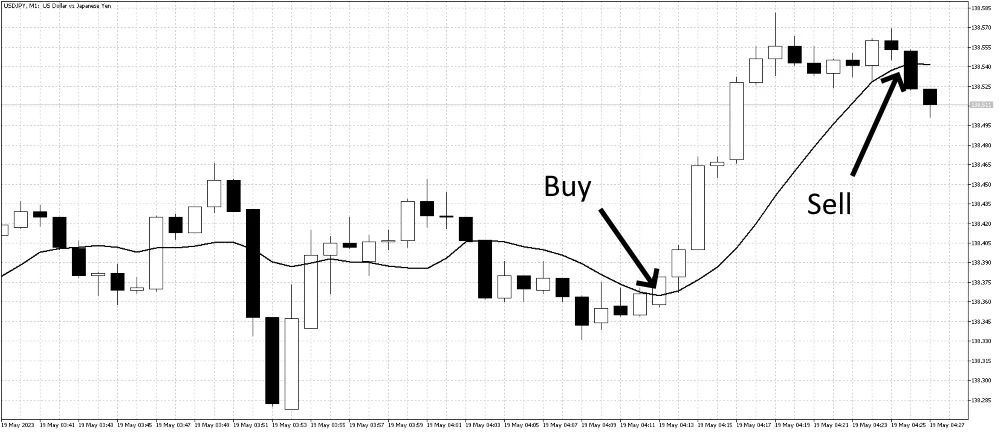
Trend-following is also important. Even in volatile markets, price often moves in short-term trends. Using a simple tool such as a 10-period moving average helps identify direction. Trading in the direction of the trend reduces the chance of being caught in sharp reversals.
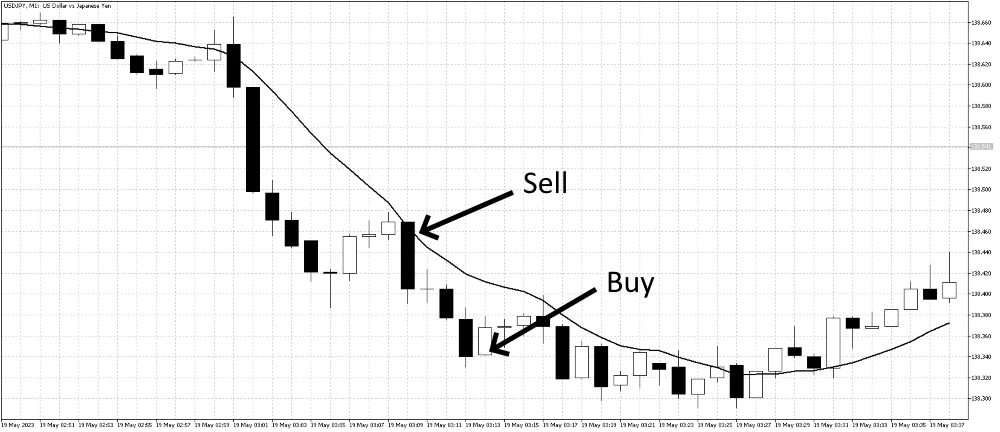
Scalping is naturally suited to the 1-minute chart. The goal is to take small profits repeatedly rather than waiting for large moves. This approach works best when volatility is strong and price moves cleanly between levels.
Managing Risk in Fast Markets
Risk management becomes more important as volatility increases. Price can move quickly against your position, so losses must be controlled.
Every trade should have a predefined stop loss. Position size should remain consistent, and risk per trade should stay small. This allows you to continue trading even after a series of losses.
Slippage is another factor to consider. During fast markets, orders may not be filled at the expected price. This makes it even more important to avoid overleveraging.
Using Multiple Timeframes for Better Decisions
While the 1-minute chart is useful for entries, it should not be used in isolation. Higher timeframes provide context and help avoid trading against the broader trend.
Checking a 5-minute or 1-hour chart before entering a trade can improve decision-making. It helps confirm whether the market is trending, ranging, or reacting to a larger level.
This combination allows you to align short-term entries with the overall direction of the market.
Avoiding Common Mistakes in 1-Minute Trading
The speed of the 1-minute chart can lead to overtrading. Many traders feel the need to take every setup, but this usually reduces performance.
Discipline is essential. Focus on clear conditions and avoid trading when the market is slow or unclear. Low volatility periods, such as holidays or quiet sessions, often produce poor results on short timeframes.
Emotional decisions are another common issue. Chasing moves, entering late, or holding losing trades too long can quickly damage performance. A structured plan helps reduce these mistakes.
Building Consistency with the 1-Minute Chart
Consistency in trading does not come from taking more trades, but from executing the same approach repeatedly under the right conditions.
The 1-minute chart can be a powerful tool when used with a simple strategy, clear risk management, and strong discipline. By focusing on high volatility periods, aligning with the trend, and controlling risk, traders can turn short-term price movements into consistent opportunities.
Over time, this structured approach allows traders to improve performance and build confidence in fast-moving markets.