
Nick Goold
The forex market is constantly shifting between different conditions, which creates opportunities but also makes trading more complex. A strategy that works well today may struggle tomorrow if the market environment changes. This is why adaptability is one of the most important skills a trader can develop.
Rather than relying on a fixed approach, successful traders adjust how they trade based on what the market is doing. This includes recognizing whether the market is trending or ranging, understanding volatility, and knowing when to be active or patient.
Understanding Market Conditions Before Trading
Every trading decision should begin with a simple question: what type of market am I in right now? Most price action can be grouped into two main environments, trending or range-bound.
Trending markets move in a clear direction over time, either higher or lower. These moves are often driven by macro factors such as interest rate expectations, economic data, or geopolitical developments. In these conditions, price tends to move with momentum, and pullbacks are often temporary.
Range-bound markets behave very differently. Price moves sideways between support and resistance levels, with no clear long-term direction. These conditions often appear when the market is waiting for new information or when buyers and sellers are balanced.
Recognizing this difference early helps avoid one of the most common mistakes in trading, using the wrong strategy for the current market.
Adapting Your Approach in Trending Markets
In a trending market, the focus should be on trading in the direction of the move rather than trying to predict reversals. The idea is not to catch the exact top or bottom, but to participate in the broader move.
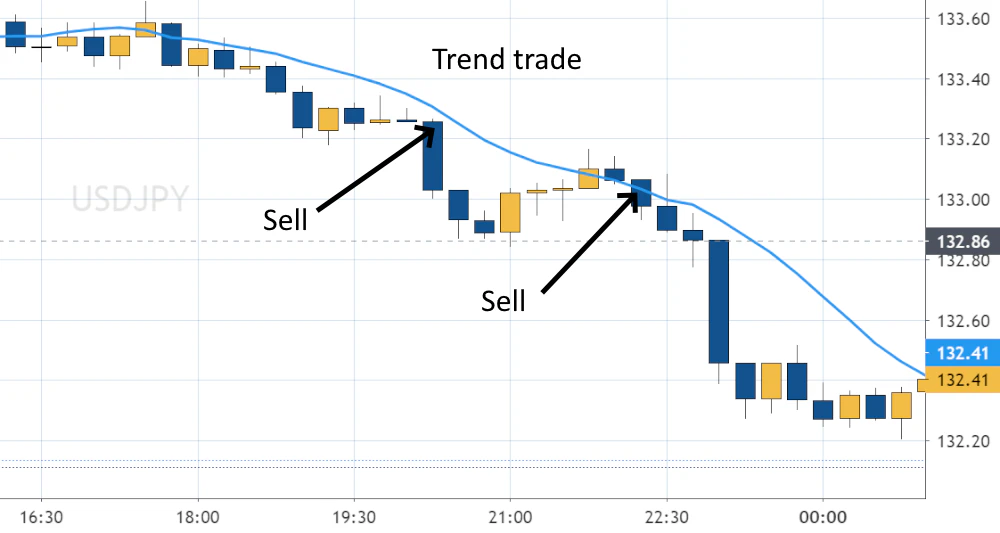
Simple tools such as moving averages can help identify direction and structure. When price remains above a moving average, it often acts as dynamic support. In a downtrend, the same average can act as resistance. Trendlines connecting higher lows or lower highs can also help identify entry areas without chasing price.
However, trends do not last forever. Monitoring price behavior is important. Signs such as slowing momentum, repeated failures to make new highs or lows, or reversal patterns can indicate that the trend is weakening.
Being adaptable means not only following trends, but also recognizing when they are changing. Traders who can shift from buying to selling when conditions reverse tend to protect profits more effectively.
Adjusting Strategy in Range-Bound Markets
When the market is not trending, a different approach is needed. Range-bound conditions require more precision, as price tends to reverse rather than continue.
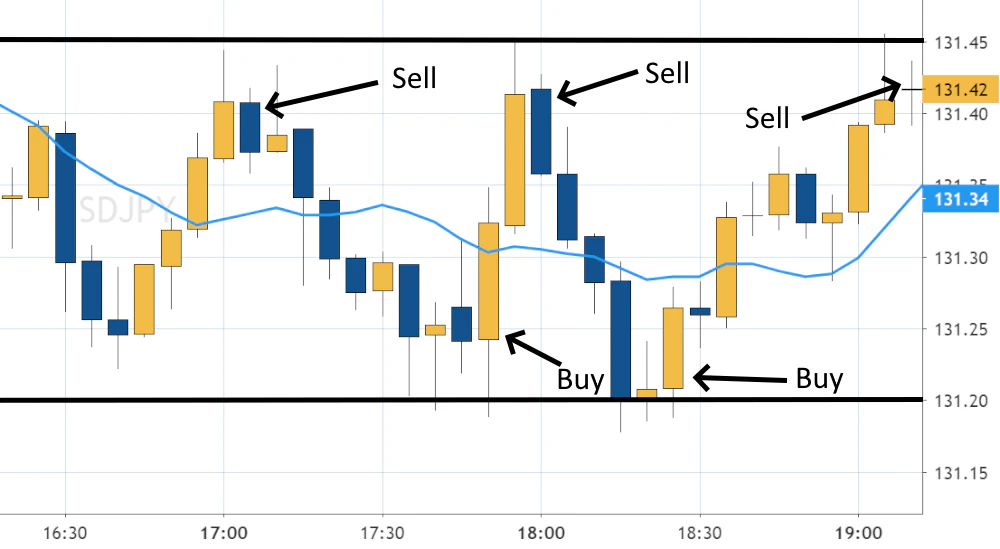
In these environments, traders look to buy near support and sell near resistance. The focus shifts from momentum to timing. Entries need to be closer to key levels, and targets are usually smaller compared to trend trades.
At the same time, it is important to remain aware that ranges eventually break. A strong move beyond support or resistance can quickly turn a range into a trend. Traders who continue fading moves during a breakout often face unnecessary losses.
Indicators such as Bollinger Bands or ATR can help identify when a range is becoming compressed. When volatility drops, it often signals that a larger move is approaching.
Managing Changes in Market Volatility
Volatility plays a major role in how trades should be managed. High volatility increases both opportunity and risk. Price moves faster, and stop losses can be hit more easily if they are not adjusted.
In more volatile conditions, reducing position size is often a practical way to control risk while still participating in the market. Wider stop losses may also be necessary to allow trades to develop without being stopped out prematurely.
In contrast, low volatility environments often require more patience. Price moves are smaller, and unrealistic targets can lead to frustration. Some traders choose to reduce activity during these periods, while others adjust expectations and focus on shorter-term opportunities.
Using Technology to Support Decision-Making
Modern trading tools can make it easier to adapt to changing conditions. Automated systems can adjust parameters based on volatility or trend strength, helping remove some of the emotional decision-making.
Backtesting tools are also valuable. By analyzing how a strategy performs in different environments, traders can better understand when it is likely to perform well and when it is not. This helps build confidence and improves consistency.
Technology should support decision-making, not replace it. Understanding why a strategy works in certain conditions remains essential.
Combining Technical and Fundamental Awareness
Technical analysis helps identify structure, trends, and key levels. It provides a clear framework for entries and exits. However, combining this with an awareness of fundamental factors can improve timing and context.
For example, strong trends are often supported by macro drivers such as central bank policy or economic data. Recognizing these factors can help traders stay with a trend longer rather than exiting too early.
While fundamental analysis can seem complex, even a basic awareness of major events can help avoid trading during uncertain or unpredictable periods.
Building a Flexible Trading Approach
No single strategy works in all market conditions. Traders who rely on one fixed method often struggle when the market changes. A more practical approach is to develop a small set of strategies and apply them based on the environment.
This might include trend-following strategies during strong directional moves and range-based strategies during consolidation. Over time, recognizing these patterns becomes more intuitive.
The goal is not to predict every move, but to respond to what the market is doing. Traders who stay flexible and adjust their approach tend to achieve more consistent results over time.