Nick Goold
Channel trading is a practical way to read price movement in FX without overcomplicating analysis. Instead of relying on indicators or predictions, it focuses on how price behaves between two clear boundaries.
By drawing simple parallel lines, traders can see where the market tends to slow down, reverse, or continue. This makes it easier to plan trades with defined risk and realistic targets, rather than reacting to every price move. :contentReference[oaicite:0]{index=0}
This approach works across both trending and ranging markets, which is why many traders use channels as a core part of their strategy.
Reading Market Structure Using Channels
A channel forms when price repeatedly moves between two parallel lines. The top line marks areas where selling pressure appears, while the bottom line shows where buyers step in.
Over time, this creates a rhythm in the market. Price pushes toward one side, reacts, and moves back toward the other. Understanding this rhythm helps traders stop chasing price and instead wait for better locations.
Channels are not fixed patterns. They develop as the market evolves, and part of the skill is learning to adjust them as new highs and lows form.
What Different Channels Tell You
The direction of the channel gives immediate context about the market.
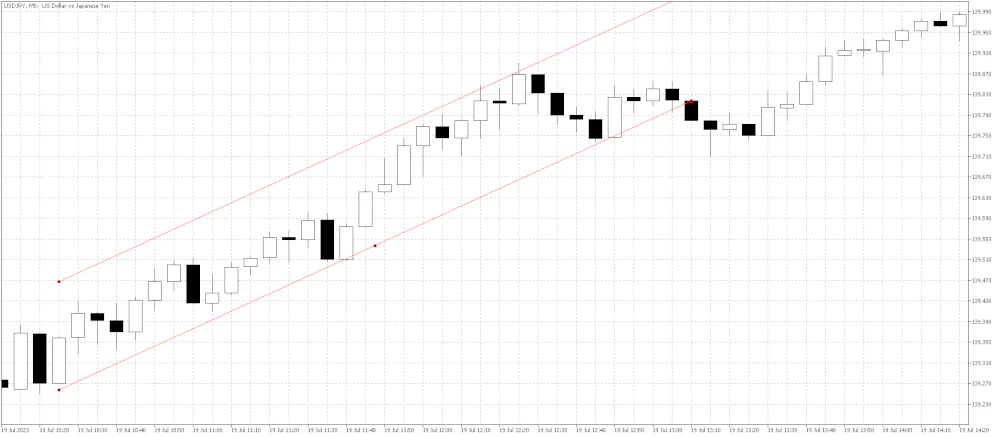
An upward-sloping channel shows steady buying pressure. Price is moving higher, but not in a straight line. Pullbacks toward the lower boundary often provide opportunities to join the trend.
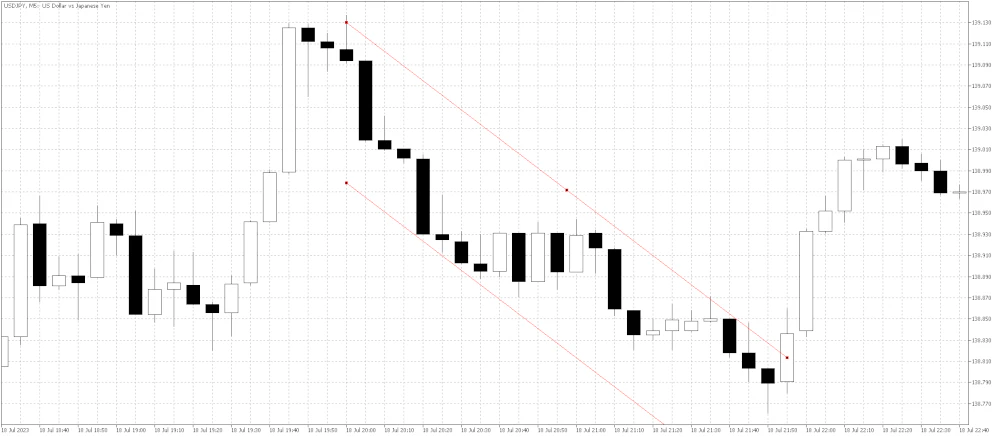
A downward channel reflects controlled selling. Even though price continues lower, it still retraces upward within the structure. These pullbacks often become areas to look for short entries.
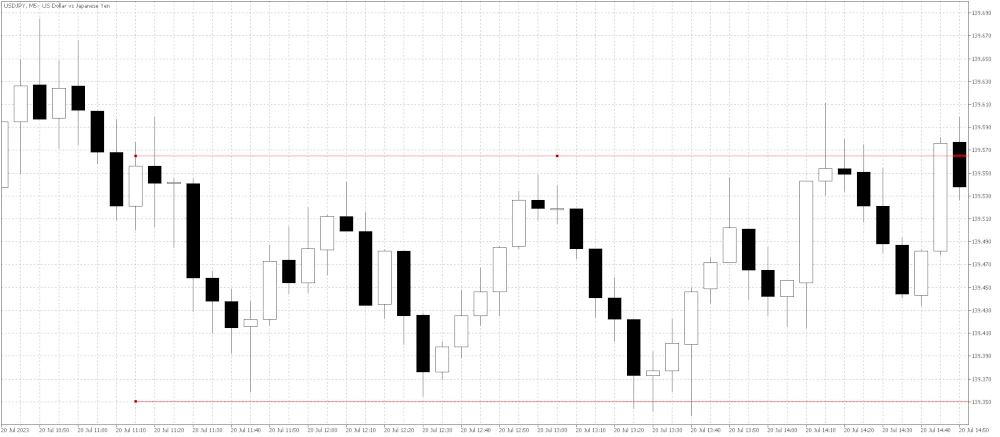
A sideways channel signals indecision. Price moves between support and resistance without a clear trend, and traders focus more on reaction than direction.
Recognizing the type of channel early helps avoid using the wrong strategy for the market conditions.
When a Channel Is Worth Trading
Not every channel is useful. Clean structure matters more than forcing lines onto a chart.
A stronger channel usually has multiple touches on both sides, with price reacting clearly each time. This shows that market participants are consistently responding to those levels.
If price breaks through the lines frequently or the angle keeps changing, the structure becomes unreliable. In these cases, it is often better to wait rather than force trades.
How Traders Use Channels for Entries
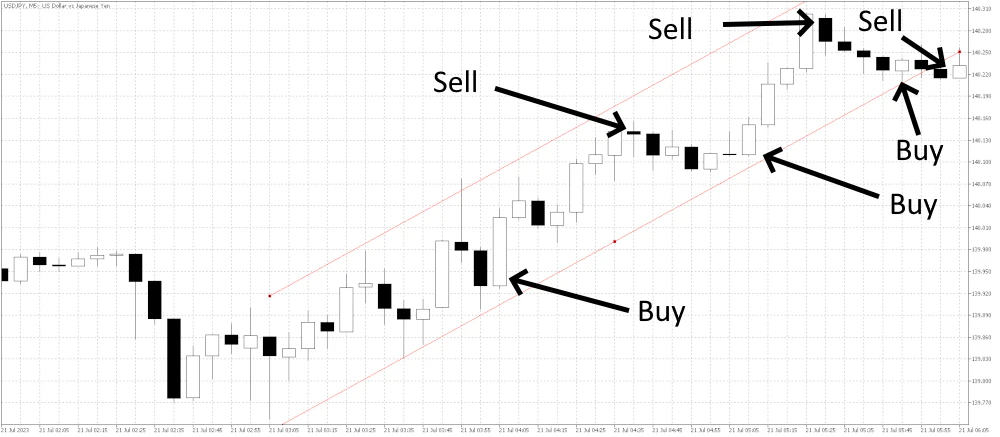
One of the simplest ways to use channels is to trade from edge to edge. Instead of entering in the middle of the move, traders wait for price to reach areas where reactions are more likely.
This often means:
- Looking for buys near the lower boundary where price has previously held
- Looking for sells near the upper boundary where price has previously rejected
- Setting stops just outside the channel to control risk
This approach keeps trading decisions structured. You are not reacting to noise, but waiting for price to reach areas that matter.
What Changes When the Channel Breaks
Eventually, the market stops respecting the channel. When price moves beyond the boundaries with strength, it often signals a shift in behavior.
These moments can lead to larger moves, but they also come with more uncertainty. Not every breakout continues, and false breaks are common.
Instead of reacting immediately, it helps to watch how price behaves after the break. Does it continue strongly, or does it return back inside the channel? That reaction often matters more than the break itself.
Why Confirmation Improves Consistency
Channels provide structure, but structure alone is not always enough. Adding confirmation helps filter out weaker setups.
This could be as simple as waiting for a clear rejection at the channel edge, or aligning the trade with the broader trend. The goal is not to add complexity, but to avoid low-quality entries.
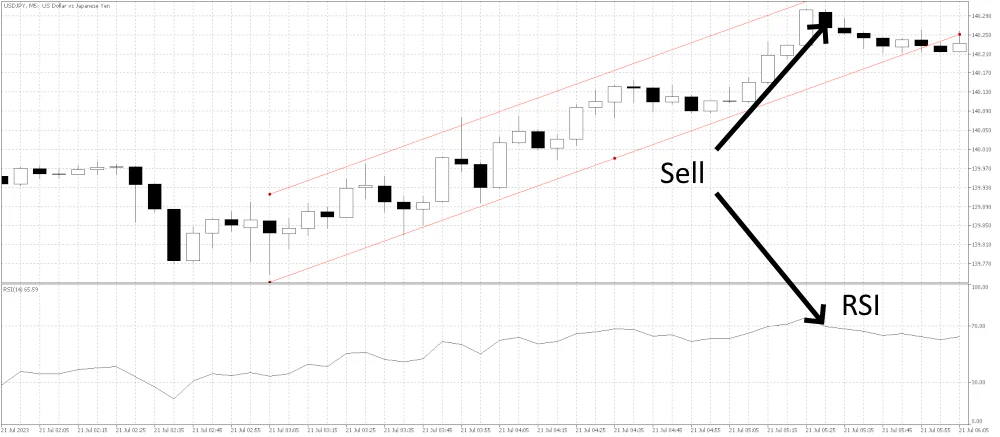
Over time, this small adjustment can make a noticeable difference in results.
Using Channels with Broader Market Context
Channels work best when they are not used in isolation. Market conditions still matter.
For example, a clean channel ahead of a major news release may not behave the same way once volatility increases. Similarly, a strong trend on a higher timeframe can influence how price reacts within a smaller channel.
Combining structure with context helps avoid trades that look good on the chart but do not fit the bigger picture.
Where Channel Trading Can Go Wrong
One of the main challenges is assuming the channel will always hold. Markets change, and structures break. There are also periods where price becomes slow and compressed, offering limited opportunity. At other times, moves become too fast, making entries difficult.
Another factor is interpretation. Two traders can draw slightly different channels and see different setups. This is part of trading, and experience helps refine this over time.
Why Risk Matters More Than Win Rate
Channel trading often feels comfortable because of its structure. Many trades work, especially in stable conditions. However, the trades that fail can quickly remove those gains if risk is not controlled.
What matters is not how often you win, but how well you manage both sides of the trade. Keeping losses small while allowing trades to reach their targets is what builds consistency.
Channels are not about predicting the market. They are a way to stay patient, wait for better locations, and make more measured decisions over time.