
Nick Goold
As technology has made the Forex market more accessible, more individuals are entering currency trading in search of profit. However, increased access has also led to a rise in misinformation. Many beginner traders start with unrealistic expectations or incorrect assumptions, which often results in avoidable losses. Understanding what is true and what is not is an important step toward building a sustainable trading approach.
This article breaks down some of the most common Forex trading myths and explains the reality behind them, helping traders make clearer and more informed decisions.
More trading does not mean more profit
A common belief among new traders is that taking more trades will naturally lead to more opportunities and higher profits. In reality, overtrading is one of the fastest ways to damage an account. When traders feel the need to always be in the market, they often enter trades without strong reasoning or clear setups.
Professional traders understand that not every market move is worth trading. They are selective and focus on quality rather than quantity. Waiting for clear setups that align with their strategy allows them to manage risk more effectively and avoid unnecessary losses.
- Fewer, well-planned trades often outperform frequent, impulsive trades
- Patience is a key part of long-term profitability
Brokers are not the reason for losses
It is easy to blame a broker after a losing trade, especially in the early stages of trading. While there are low-quality brokers in the market, most regulated brokers operate legitimate businesses. They provide access to liquidity and earn through spreads or commissions, which means they benefit when traders remain active over time.
Focusing on blaming external factors prevents traders from improving. A better approach is to choose a well-regulated broker and then focus on refining strategy, execution, and risk management.
- Choose brokers based on regulation, reliability, and trading conditions
- Take responsibility for trade decisions and outcomes
Automated systems are tools, not solutions
The idea of fully automated trading systems generating consistent profits is appealing. However, no system can adapt perfectly to all market conditions. Most automated strategies are based on historical data, which means they may struggle when market dynamics change.
This does not mean automation is useless. It can be a helpful tool for execution, backtesting, or supporting a strategy. The key is understanding its limitations and using it as part of a broader trading plan rather than relying on it entirely.
Forex trading is not easy money
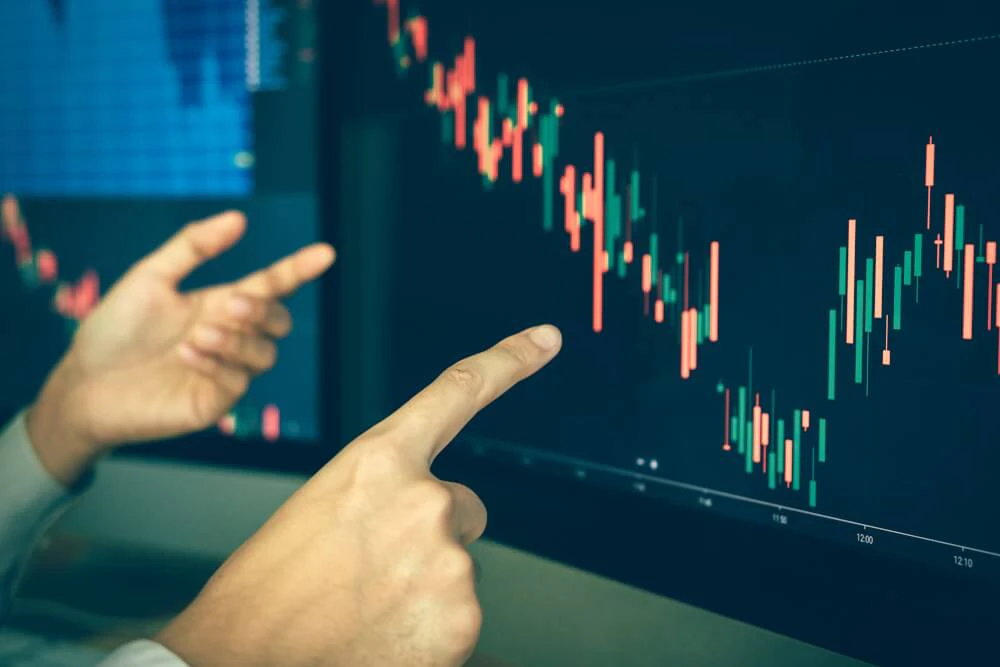
One of the most damaging misconceptions is that Forex trading offers quick and easy profits. While the market does provide opportunities, consistent profitability requires time, experience, and discipline. Many traders underestimate the learning curve and approach trading with unrealistic expectations.
Trading should be treated like a skill-based profession. It involves understanding market behavior, managing risk, and controlling emotions under pressure. Those who treat it casually often face avoidable losses.
Simple strategies often perform better
Many beginners believe that adding more indicators or creating complex systems will improve their results. In practice, complexity often leads to confusion and inconsistent decision-making. When too many signals conflict, it becomes difficult to act with confidence.
Clear and simple strategies tend to be more effective because they are easier to follow and repeat. This consistency is what allows traders to evaluate performance and improve over time.
- Focus on understanding price behavior and key levels
- Keep rules simple and repeatable
You do not need large capital to start
Another common belief is that significant capital is required to trade Forex successfully. While larger capital can provide more flexibility, many brokers offer micro and mini accounts that allow traders to start with smaller amounts.
The focus should not be on how much you start with, but on how well you manage risk and protect your capital. Developing good habits with a smaller account is often more valuable than trading large amounts without discipline.

Forex trading can be part-time
Many people assume that successful trading requires watching charts all day. In reality, trading can be adapted to fit different schedules. With the right approach, traders can focus on specific sessions or timeframes that suit their availability.
What matters is not the number of hours spent watching the market, but the quality of analysis and decision-making. A structured routine and clear plan are more important than constant screen time.
The market cannot be predicted with certainty
Some traders believe that with the right tools or indicators, they can predict market movements with high accuracy. However, financial markets are influenced by many factors, including economic data, geopolitical events, and shifts in sentiment. This makes precise prediction impossible.
Instead of trying to predict the market, experienced traders focus on probabilities. They build strategies that manage risk and take advantage of favorable conditions while accepting that losses are part of the process.
- Use analysis to form scenarios, not certainties
- Always manage downside risk through stop losses and position sizing
Building a realistic trading mindset
Successful trading comes from understanding how the market works, following a structured plan, and maintaining discipline over time. Traders who improve consistently are those who review their performance, learn from mistakes, and adapt to changing conditions.
By moving away from common myths and focusing on practical realities, traders can develop a more balanced and sustainable approach. This shift in mindset often makes a bigger difference than any single strategy or indicator.