
Nick Goold
Successful day trading requires more than just a strategy. It requires focus, repetition, and a clear understanding of how specific markets behave. While there are many markets and countless trading methods available, trying to trade everything at once often leads to confusion and inconsistent results.
One of the most effective ways to improve as a trader is to narrow your focus. By concentrating on a small number of markets and strategies, you give yourself the opportunity to build real expertise. This process can feel repetitive and even slow at times, but it is one of the most reliable paths toward long-term improvement.
Trading is highly competitive. Just like in any professional field, those with deeper knowledge and stronger skills tend to perform better. Markets behave differently depending on the time of day, liquidity, and the types of participants involved. Because of this, it is difficult to trade multiple markets effectively without a strong understanding of each one.

Why Focusing on One Market Improves Results
Each market has its own rhythm. Price movement, volatility, and reaction to news can vary significantly between currency pairs. By focusing on one market, you begin to recognize patterns that are not obvious when switching between multiple charts.
This deeper familiarity helps you make better decisions. You start to understand when the market is active, when it is slow, and how it typically reacts to certain conditions. Over time, this reduces hesitation and improves execution.
Professional traders often specialize in a small number of markets for this reason. Instead of trying to capture every opportunity, they focus on the setups they understand best.
How to Build Skill Through Focus and Repetition
Your trading performance improves when you repeatedly apply the same approach in the same environment. In the early stages, it is recommended to focus on a single market and a limited number of strategies.
Once you achieve consistent results, you can gradually expand to additional markets. However, even experienced traders typically limit themselves to a few markets to maintain quality over quantity.
For example, USD/JPY tends to offer opportunities during the Asian session, while GBP/USD is more active during the European session. Understanding these characteristics allows you to align your strategy with the most suitable conditions.
Similarly, different strategies perform better in different environments. Range-based or contrarian strategies may work well in quieter markets like EUR/USD during low volatility periods. In contrast, trend-following strategies are often more effective in highly active markets such as GBP/USD.
Finding the Right Market and Strategy for You
There is no single best market or strategy for every trader. The goal is to find combinations that match your personality, schedule, and risk tolerance. This requires testing and observation. By studying charts, executing trades, and reviewing results, you begin to identify where your strengths lie.
Simply copying another trader rarely works in the long run. Even if their strategy is profitable, it may not suit your decision-making style or risk tolerance. Real progress comes from adapting strategies to fit your own approach. Consistent improvement is built through repetition, analysis, and gradual refinement.
Using Trade Analysis to Improve Performance
Tracking and reviewing your trades is one of the most effective ways to improve. Without analysis, it is difficult to understand what is working and what needs to change.
Keeping a detailed trade log allows you to identify patterns in your performance. Over time, this helps you refine your strategy and eliminate unnecessary mistakes.
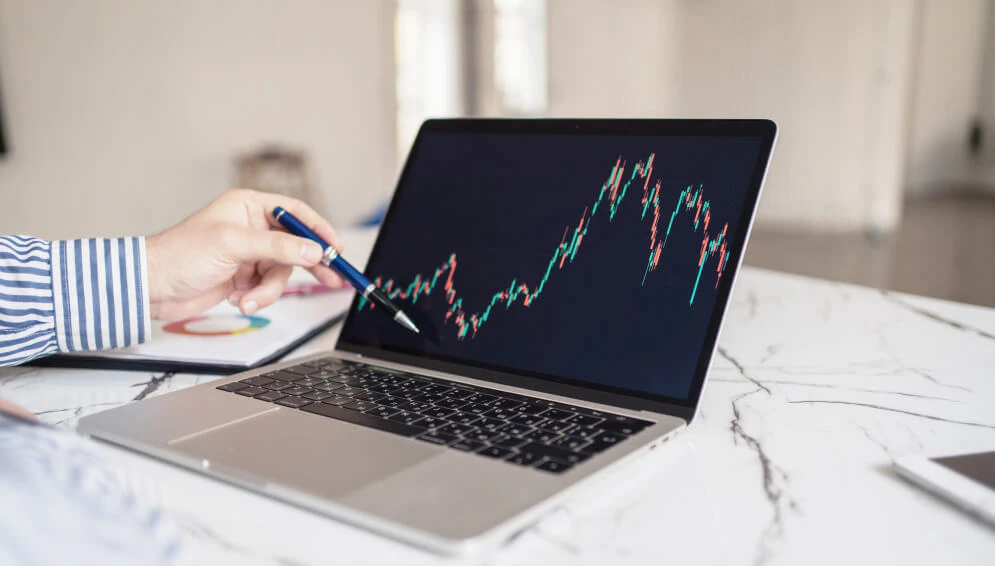
When analyzing your trades, focus on areas that directly impact consistency:
- Identify which timeframes produce the most reliable setups
- Compare performance across different markets
- Evaluate how each strategy performs under different conditions
- Record observations about market behavior and trade execution
This process turns experience into structured knowledge. Instead of relying on memory or intuition alone, you build a clear understanding of your trading performance.
Adapting as Market Conditions Change
Markets are not static. Volatility, trends, and liquidity all change over time. A strategy that works well today may become less effective in the future. By focusing on a specific market, you are better positioned to notice these changes early. This allows you to adjust your approach before losses become significant.
Experience in one market also makes it easier to recognize when conditions are shifting. You can then adapt your strategy rather than continuing to apply methods that no longer work.
Developing a Long-Term Trading Mindset
Becoming a skilled trader takes time. The process can feel repetitive, but that repetition is what builds confidence and consistency. Experienced traders do not chase every opportunity. They wait patiently for conditions that match their strategy and act only when the setup is clear.
They also focus less on individual trade outcomes and more on whether they followed their trading rules correctly. This shift in mindset reduces emotional decision-making and improves long-term results.
By taking a long-term view and committing to steady improvement, you can develop the skills needed to trade with greater confidence and stability. Over time, this approach leads to more consistent performance and less stress in your trading.