
Nick Goold
Contrarian trading is a strategy where traders deliberately go against the prevailing market trend. Instead of following the crowd, contrarian traders look for situations where price may have moved too far, too fast. These moments often occur when markets overreact to news or sentiment, creating temporary mispricing and potential trading opportunities.
In forex trading, this approach can be particularly effective because currency markets are heavily influenced by sentiment, positioning, and macro expectations. Understanding when the majority may be wrong can give traders an edge, but it requires patience, discipline, and strong analysis.
What is contrarian trading?
Contrarian trading is based on a simple idea: when most traders are positioned in one direction, the market may already be near exhaustion. At that point, there may be fewer buyers left to push prices higher, or fewer sellers to drive prices lower.
Rather than joining the trend late, contrarian traders look for signs that the move is overextended. They aim to enter early into a potential reversal, before the market shifts direction.
This does not mean blindly trading against trends. The key is identifying when sentiment becomes extreme and when price action starts to show signs of slowing or reversing.
Why markets create contrarian opportunities
Markets are driven by human behavior, and human behavior is often influenced by emotion. Fear and greed tend to push traders into similar decisions at the same time, which can lead to crowded positioning.
When a strong news event or economic release hits the market, traders may react quickly, sometimes pushing prices beyond what fundamentals justify. This is where contrarian opportunities begin to form.
Common situations where overreactions occur include:
- Sharp moves following unexpected economic data
- Strong trends driven by headlines or geopolitical events
- Markets pricing in extreme scenarios too quickly
As these moves become widely accepted, late participants enter the market, often just as the move is losing momentum. This is where contrarian traders start to look for opportunities.
Key contrarian strategies in forex
There are two main approaches traders use when applying contrarian thinking. Both require careful timing and confirmation.
Reversal trading focuses on identifying turning points in the market. Traders look for signs that a trend is weakening, such as slowing momentum, divergence, or failure to make new highs or lows. The goal is to enter near the top or bottom of a move.
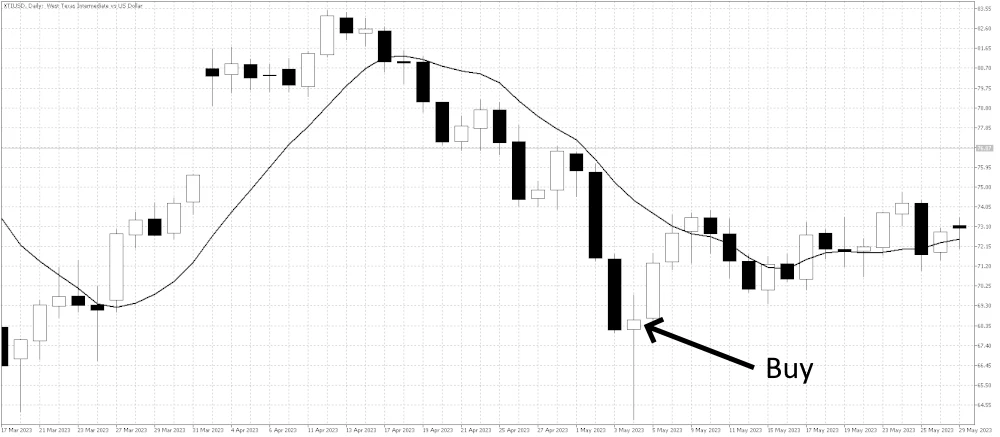
Fading is a shorter-term approach. Instead of calling a full reversal, traders take positions against the current move, expecting a temporary pullback. For example, selling into a strong rally or buying during a sharp drop, aiming to capture a correction rather than a full trend change.
This approach is often used in volatile markets where price moves quickly in both directions.
How to identify contrarian setups
Contrarian trading is not about guessing. It relies on combining multiple signals to improve probability. Traders typically look for alignment between price, indicators, and sentiment.
Some of the most commonly used tools include:
- Support and resistance levels to identify areas where price may stall
- Indicators like RSI or Bollinger Bands to highlight overbought or oversold conditions
- Trend exhaustion signals such as divergence or slowing momentum
Sentiment analysis also plays an important role. When positioning becomes heavily one-sided, it can signal that the move is becoming crowded. This increases the risk of a reversal if new buyers or sellers stop entering the market.
News and economic events should also be monitored closely. Strong reactions to data releases can create short-term imbalances, especially when expectations shift quickly.
Risk and challenges of contrarian trading
Trading against the trend carries higher risk than following it. Markets can remain strongly directional for longer than expected, and entering too early can lead to losses.
One of the biggest challenges is timing. Even if the analysis is correct, the market may take time to turn. During this period, price can continue moving against the position.
This is why risk management is essential. Traders should:
- Use stop-loss orders to control downside risk
- Avoid adding to losing positions without a clear plan
- Keep position sizes smaller when trading against strong trends

Another challenge is psychological. It can be uncomfortable to trade against the majority, especially when the market appears strong. Confidence must come from a structured plan, not emotion.
How to improve your contrarian trading approach
Developing consistency with this strategy takes time. Traders need to build both technical skill and confidence in their decision-making.
A practical approach includes:
- Studying how markets behave at extremes and during reversals
- Practicing on a demo account to understand timing and execution
- Creating a clear trading plan with defined entry and exit rules
- Reviewing past trades to identify patterns and improve performance
It is also important to stay flexible. Not every strong move will reverse, and sometimes the best decision is to wait rather than force a trade. Contrarian trading works best when combined with patience and selectivity.
Understanding when to step in
The most effective contrarian trades often occur when sentiment is at its strongest and price begins to show signs of hesitation. This is the point where risk-reward can become attractive. Rather than trying to predict every reversal, focus on situations where the market shows clear signs of imbalance. Wait for confirmation, manage risk carefully, and avoid reacting to noise.
Over time, recognizing these patterns becomes easier, and traders can develop a more structured approach to trading against the crowd while staying aligned with overall market conditions.