
Nick Goold
Improving your forex trading results is not just about finding a new strategy. In many cases, better performance comes from refining what you already use. Strategy optimization is the process of adjusting your trading approach so it performs more consistently across different market conditions.
Markets change constantly. A strategy that works well in a trending market may struggle when conditions become slow or range-bound. Regularly reviewing and improving your approach helps you stay aligned with how the market is behaving now, not how it behaved in the past.
What is forex strategy optimization?
Strategy optimization involves adjusting the key parts of your trading system to improve results. This includes refining entry timing, exit rules, stop loss placement, and overall risk management.
The goal is not to create a perfect system. Instead, it is to build a strategy that performs reliably over time, even when conditions change. A well-optimized strategy should balance risk and reward while remaining simple enough to follow consistently.
Why optimization matters for trading performance
Many traders focus only on finding new setups, but consistency usually comes from improving execution rather than constantly changing strategies. Optimization helps remove weak points in your system and improves decision-making.
It also reduces emotional trading. When your rules are clear and tested, you are less likely to make impulsive decisions during volatile conditions.
Some key benefits include:
- More consistent results across different market environments
- Better control of risk and drawdowns
- Clear rules that reduce hesitation and overtrading

Step 1: Backtest your strategy
Backtesting is the starting point of any optimization process. It involves applying your strategy to historical price data to see how it would have performed.
This helps you understand both strengths and weaknesses. You may find that your strategy performs well in trending markets but struggles in ranges, or that certain entry conditions work better than others. The goal is not to achieve perfect results, but to understand how your strategy behaves in different conditions.
Step 2: Refine your entry and exit rules
Small adjustments to timing can make a significant difference to performance. Many traders enter too early or exit too late, which reduces overall efficiency.
Improving entries may involve waiting for clearer confirmation, such as a break back in the direction of the trend or a reaction from support and resistance. Exits should also be reviewed to ensure profits are not given back unnecessarily. Rather than adding more indicators, focus on improving clarity in your existing rules.
Step 3: Adjust stop loss and profit targets
Risk management is one of the most important areas to optimize. A stop loss that is too tight may lead to frequent losses, while a stop that is too wide can increase drawdowns.
Stops should reflect market conditions. In more volatile markets, wider stops may be needed, while quieter markets allow tighter control. Profit targets should also be realistic. In strong trends, allowing trades to run using a trailing stop can improve overall returns. In slower markets, taking profits at key levels may be more effective.
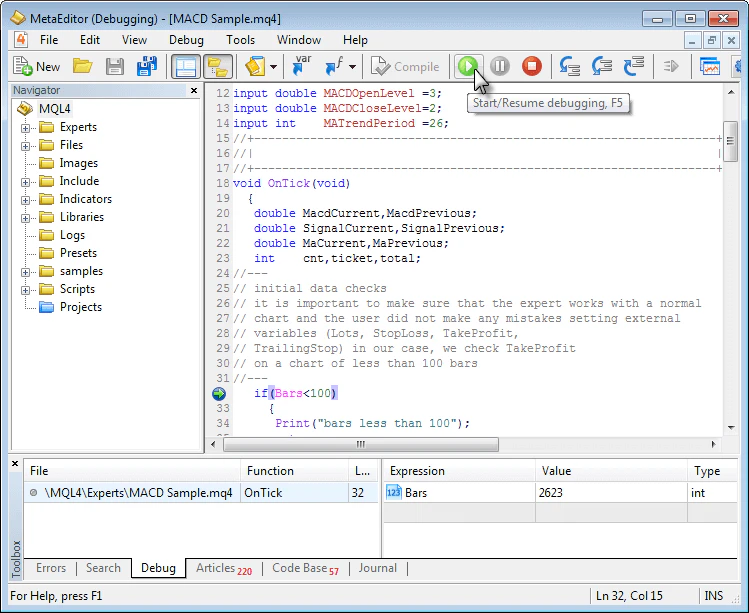
Tools that help optimize your strategy
There are several tools that can support the optimization process and make it more structured.
- Trading platforms with built-in backtesting features to test strategies on historical data
- Charting tools to analyze price behavior and refine entries
- Risk calculators to manage position size and risk exposure
- Trading journals to review past trades and identify patterns
A trading journal is particularly valuable. By tracking your trades, you can see where mistakes occur and where your strategy performs best. Over time, this provides clear data to guide improvements.
Avoid over-optimization
One of the biggest mistakes traders make is trying to make a strategy perfect. This often leads to curve fitting, where a system is adjusted too closely to past data. While this may produce strong backtest results, it often fails in live markets because conditions are always changing.
Keeping your strategy simple helps avoid this problem. Focus on a few reliable signals rather than trying to capture every market movement.
Build a process of continuous improvement
Optimization is not something you do once. It should be part of your regular trading routine. Markets evolve, and your strategy should adapt over time.
Review your performance regularly, identify what is working, and make small adjustments where needed. Avoid making large changes based on a short period of results. Over time, this steady approach leads to better consistency and improved confidence in your trading.
Focus on consistency, not perfection
The goal of optimization is not to eliminate losses, but to improve overall performance. Even strong strategies will have losing trades. What matters is having a system that you can follow with discipline, manage risk effectively, and adapt as market conditions change.
By focusing on clarity, simplicity, and continuous improvement, traders can build a more reliable approach and achieve more consistent results over time.