
Nick Goold
Most forex traders focus heavily on technical analysis, but understanding market volatility can give you an additional edge. One of the most widely followed indicators for measuring volatility is the VIX, often referred to as the “fear gauge.”
Although the VIX is based on the U.S. stock market, it provides valuable insight into global risk sentiment. Forex markets are closely connected to equity markets, so changes in volatility often affect currency flows, especially between risk-sensitive currencies and safe havens.
Below we explain how the VIX works and how you can use it to improve your trade timing, risk management, and overall market awareness.
Understanding the VIX Indicator
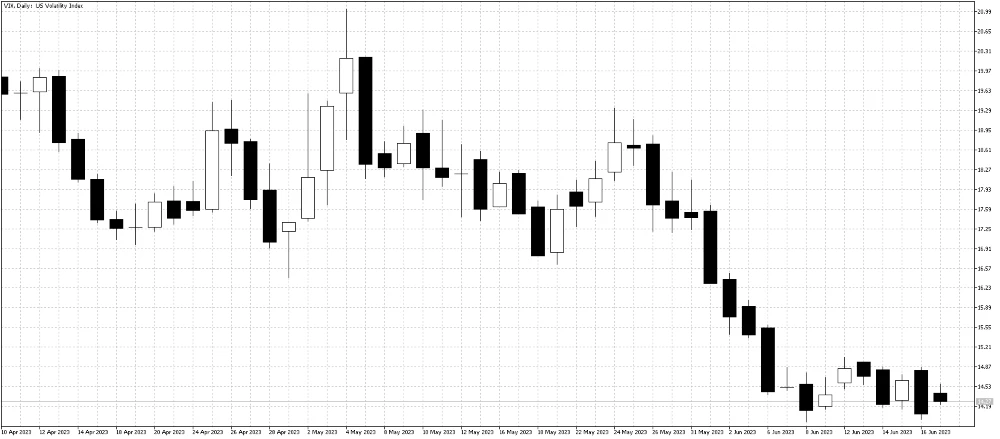
The VIX measures expected volatility in the U.S. stock market, specifically based on options pricing for the S&P 500. When investors expect large price swings, demand for options increases, pushing the VIX higher. When markets are calm and stable, the VIX tends to fall.
In simple terms, a rising VIX reflects uncertainty and risk, while a low VIX suggests stability and confidence. :contentReference[oaicite:0]{index=0}
Even though it is not a forex-specific indicator, it reflects global sentiment. When fear increases in equities, it often leads to capital moving into safer assets, which directly impacts currency markets.
How the VIX Connects to Forex Markets
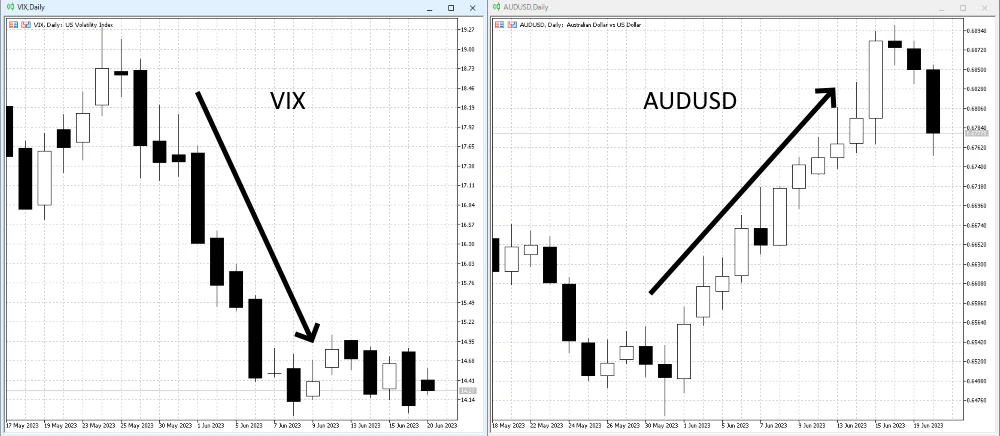
Forex markets react strongly to changes in risk sentiment. The VIX provides a useful way to understand whether traders are seeking risk or avoiding it. When the VIX is low, markets are generally calm. In these conditions, traders are more willing to take on risk, which often supports currencies like the Australian dollar, British pound, or Canadian dollar.
When the VIX rises, it signals growing uncertainty. In these environments, traders often move into safer currencies such as the Japanese yen or Swiss franc. The U.S. dollar can also strengthen depending on broader conditions. This shift in positioning is not random. It reflects global capital flows responding to risk, and the VIX provides a clear signal of when those shifts may occur.
Using the VIX to Read Market Sentiment
The VIX helps you understand the type of market environment you are trading in. This is often more important than the setup itself. When the VIX is low and stable, markets tend to trend more cleanly. Breakout strategies and trend-following approaches are often more effective in these conditions.
When the VIX is rising or already elevated, price action becomes more volatile and less predictable. Moves can be sharper and driven by emotion rather than structure. In these conditions, traders often look for overextended moves or short-term opportunities rather than holding positions for long trends. Instead of treating every trade the same way, the VIX allows you to adapt your approach to the current environment.
Improving Risk Management with the VIX
The VIX is particularly useful as a risk management tool. It gives you a clear signal of when market conditions are changing.
When volatility increases, risk also increases. This does not mean you should stop trading, but it does mean you should adjust your approach.
- Reduce position size during high volatility periods
- Allow for wider stop-loss levels when price swings increase
- Avoid overleveraging when market conditions are unstable
One of the most common mistakes traders make is becoming too comfortable during low-volatility periods. When markets are calm, it is easy to increase position size and ignore risk. When volatility returns, those positions can quickly become difficult to manage.
The VIX acts as a reminder that market conditions are always changing, even if price appears stable in the short term.
Trade Timing and Market Shifts
Changes in the VIX can often signal shifts in market behavior before they become obvious on price charts. A sudden increase in the VIX after a quiet period can indicate that volatility is returning. This can lead to breakouts, reversals, or stronger trends depending on the broader context.
By monitoring these changes, you can prepare for new opportunities instead of reacting after the move has already started. The VIX is not used for precise entries, but it helps you understand when conditions are becoming more favorable for certain strategies.
Using Divergence for Additional Insight
Another way to use the VIX is through divergence. This happens when the VIX and a currency pair move in opposite directions. For example, if the VIX is rising while a currency pair continues to trend higher, it may suggest that risk is building beneath the surface. This can sometimes lead to a correction or reversal.
While divergence is not a signal on its own, it can help you manage positions more carefully or avoid entering late into extended moves.
Focus on Profit vs Loss, Not Just Win Rate
The VIX is not designed to generate trade signals on its own. Its value comes from helping you understand the environment you are trading in. When combined with tools like support and resistance or trend analysis, it can improve both entry timing and risk control. More importantly, it helps you avoid trading the same way in every condition.
Trading performance is built on adapting to changing markets. The VIX provides a simple but effective way to stay aware of those changes and adjust your strategy accordingly. By using the VIX as part of your decision-making process, you can approach the market with a clearer understanding of risk, sentiment, and opportunity.