
Nick Goold
The phrase “bear market” has been part of financial language for centuries, but its origins are still debated. One explanation comes from the way a bear attacks, striking downward, which reflects falling prices. Another theory links the term to early traders who sold assets in advance, expecting prices to drop before they needed to buy them back.
Today, the meaning is straightforward. A bear market refers to a period where prices trend lower and confidence weakens. This applies across all markets, including stocks, commodities, and currencies. For traders, recognizing this environment early is important because it changes how opportunities form and how risk should be managed.
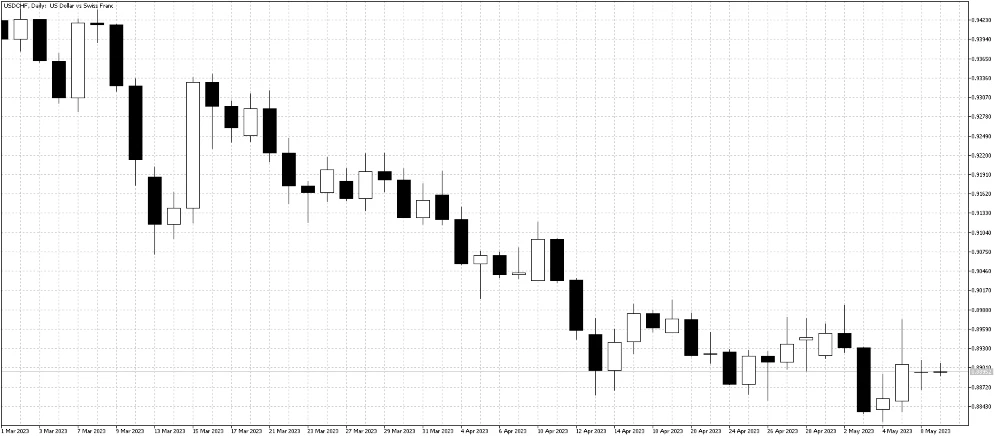
What is a bear market in forex trading?
In forex, a bear market occurs when the base currency is losing value relative to the quote currency. For example, if EUR/USD is moving lower, the euro is weakening compared to the U.S. dollar.
This type of movement is rarely random. It is usually driven by broader shifts such as weaker economic data, falling interest rate expectations, or reduced demand for the currency. These factors tend to build gradually, which is why bear markets often develop over time rather than appearing suddenly.
Understanding this helps traders avoid reacting to every short-term move and instead focus on the bigger picture.
Why bear markets require a different mindset
One of the biggest challenges in a falling market is psychological. Many traders are naturally inclined to look for buying opportunities, especially after prices have already dropped. However, in a bear market, this approach often leads to repeated losses.
What looks like a reversal can easily turn into a continuation of the trend. Prices tend to fall further than expected, and short-term rebounds are often temporary.
Adapting to a bear market means shifting your focus. Instead of trying to predict where the market will bottom, it becomes more effective to follow the direction of the trend and look for structured opportunities to sell.
How to identify a bear market
Spotting a bear market is not about reacting to a single price move. It requires observing how price behaves over time and how different factors align.
Recognize a consistent downtrend
The clearest indication of a bear market is a pattern of lower highs and lower lows. This shows that sellers are consistently stepping in and pushing prices down after each rally.
Moving averages can help confirm this structure. When price remains below the average and the average itself is pointing downward, it reflects sustained selling pressure. This applies across both short-term and longer-term timeframes.
Trendlines provide another way to visualize the trend. By connecting lower highs, you can identify areas where the market is likely to face resistance.
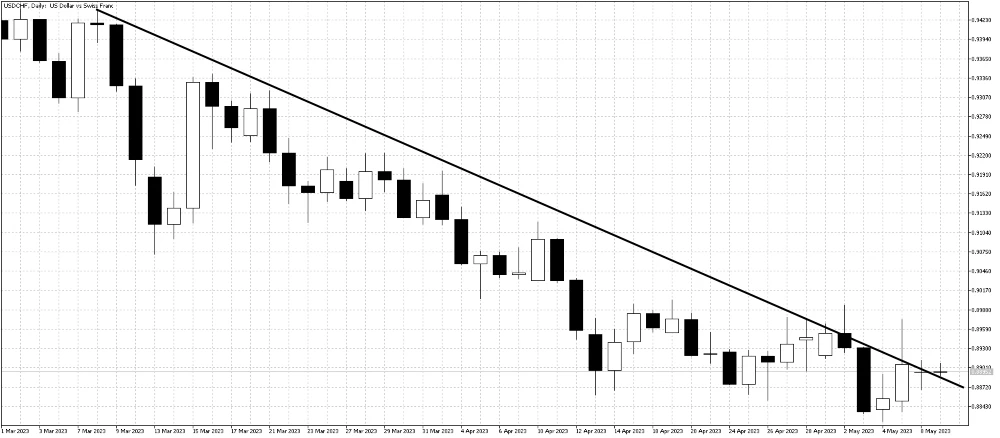
These areas are often where selling opportunities appear, as price struggles to break higher and resumes its downward movement.
Use pullbacks to improve timing
Bear markets do not move in a straight line. There are periods where price retraces upward before continuing lower. These pullbacks are a normal part of trending markets.
Rather than chasing price after a sharp drop, traders can wait for these retracements to develop. This allows for better entries and more controlled risk.
Common areas to watch during pullbacks include:
- Previous support levels that now act as resistance
- Downward sloping trendlines
- Moving averages that price returns to before continuing lower
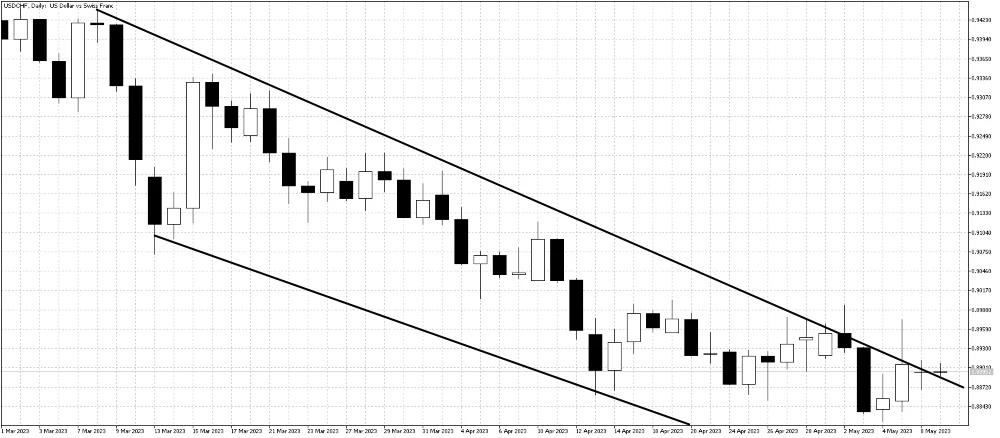
This approach reduces the need to react quickly and instead focuses on letting the market come to you.
Use indicators to support, not lead
Indicators such as the Relative Strength Index (RSI) can help confirm momentum, but they should not be used as standalone signals.
In a bear market, RSI often forms lower highs, showing that upward momentum is weakening. When RSI drops below key levels such as 30, it reflects strong selling pressure. However, oversold conditions can continue for extended periods, so this should not automatically be seen as a signal to buy.
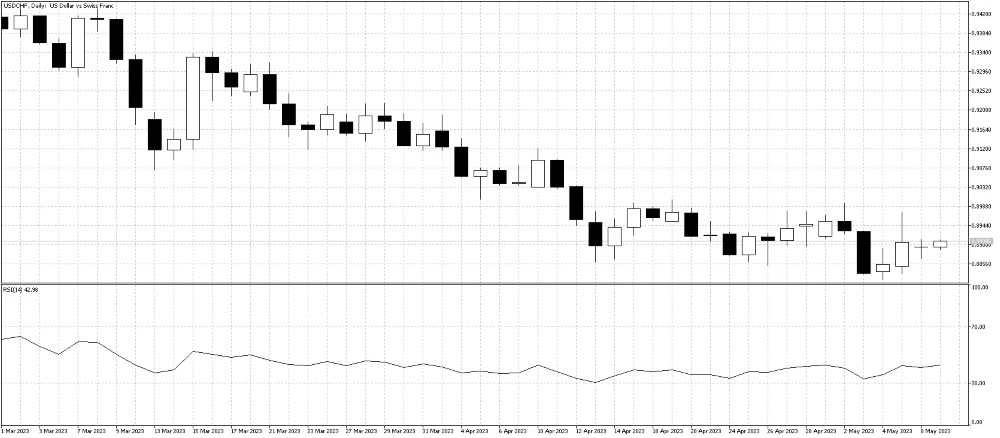
The role of indicators is to support what price is already showing, not to override it.
Understand the economic drivers behind the move
Price trends are often supported by underlying economic conditions. In a bear market, these may include weaker growth, declining consumer confidence, or expectations of lower interest rates.
Markets tend to react to changes in expectations rather than the data itself. A series of weaker-than-expected releases can gradually shift sentiment and reinforce the downward trend. This is why staying aware of economic developments is important, even when focusing on technical setups.
Watch how sentiment and participation change
As a bear market develops, the overall tone of the market shifts. Confidence declines, and traders become more cautious. News headlines often turn negative, and expectations are adjusted lower. At the same time, participation can decrease. Fewer traders are willing to take long positions, and activity may become more selective.
This environment tends to reinforce the trend, as the lack of strong buying interest makes it easier for prices to continue lower.
Trading with structure in a bear market
Once a bear market is clearly established, the focus should be on structured execution rather than prediction. This means waiting for price to reach areas where trades can be planned with defined risk. It also means accepting that not every move needs to be traded.
Over time, aligning with the trend rather than fighting it leads to more consistent results. Instead of reacting emotionally to falling prices, you begin to work with the market’s direction, which allows for clearer decisions and better control over risk.