
Nick Goold
Large company takeovers and mergers are major corporate events where one company acquires another or two companies combine to form a single entity. These transactions can involve stock purchases, asset transfers, or cash deals, and they often take place across borders, involving multiple currencies and financial systems.
While these deals are usually discussed in terms of business strategy or stock market impact, they also play an important role in the foreign exchange (FX) market. Understanding how mergers and acquisitions influence currency movements can give traders and investors a valuable edge, particularly during periods of increased market activity. :contentReference[oaicite:0]{index=0}
Why Mergers and Takeovers Matter in Forex
When large companies engage in cross-border deals, they must convert significant amounts of capital from one currency into another. This creates real demand and supply changes in the FX market, which can move exchange rates.
For example, if a U.S. company acquires a European firm, it may need to buy euros to complete the transaction. This increases demand for euros and can push the euro higher against the U.S. dollar, at least in the short term. These flows are not speculative, they are driven by real business needs, which makes them particularly important for traders to understand.
How Takeovers Impact Currency Demand
The most direct impact of mergers and acquisitions on forex comes from currency conversion. Large transactions often require billions of dollars to be exchanged, and this can temporarily shift currency demand.
- Acquiring companies must buy the target company’s local currency
- This creates upward pressure on that currency
- The funding currency may weaken due to selling pressure
The size of the transaction plays a major role. Smaller deals may have limited impact, but large, high-profile acquisitions can move markets, especially if they involve major global currencies.
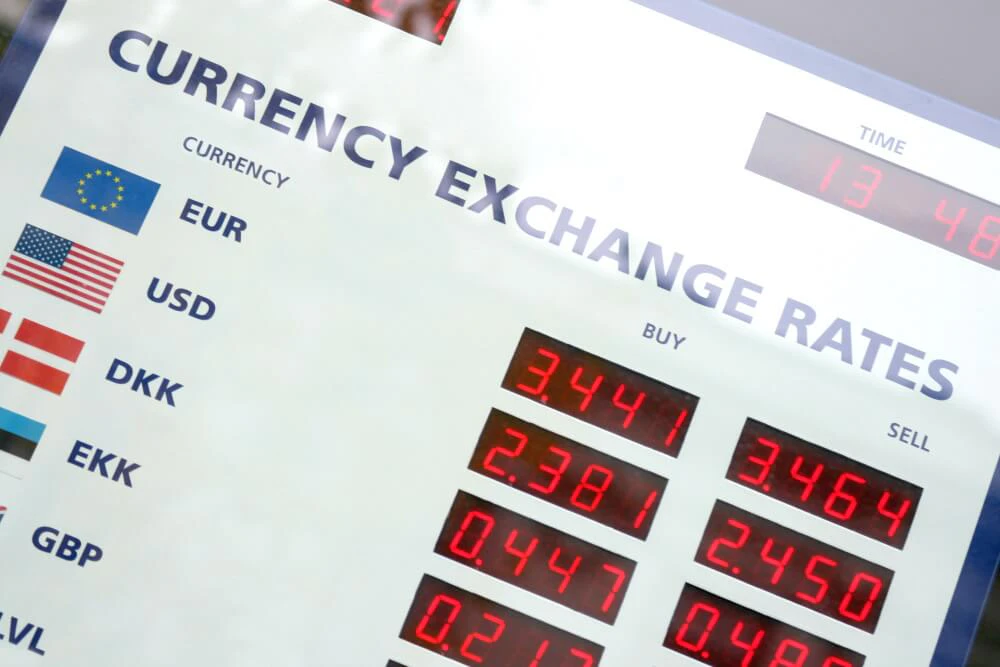
Increased Volatility Around Deal Announcements
Mergers and takeovers often lead to increased volatility in the FX market. When a deal is announced, traders quickly adjust their expectations, and this can lead to sharp price movements.
Markets react not only to the deal itself but also to what it signals about the economy. A large acquisition may indicate confidence, expansion, or shifting global priorities. At the same time, uncertainty around deal completion, financing, and integration can create additional volatility.
For traders, this means that periods around major announcements can offer both opportunity and risk. Price movements may be faster and less predictable than usual.
Shifts in Global Economic Power
Large mergers can also reflect broader changes in global economic power. When companies from stronger or growing economies acquire firms in weaker regions, it can signal long-term structural shifts.
These shifts can influence investor sentiment and capital flows, which in turn affect currency values. For example, increased investment into a particular region can support its currency over time, while capital leaving another region may weaken its currency.
Understanding these broader trends helps traders move beyond short-term reactions and consider longer-term positioning.
Impact on Trade Flows and Currency Trends
Mergers and acquisitions can also change how goods and services move between countries. When companies combine operations, they often restructure supply chains, production, and distribution.
This can lead to shifts in trade flows, which directly affect currency demand. For example, increased exports from one country can strengthen its currency, while reduced trade activity may weaken another.
These effects are not always immediate, but they can influence longer-term currency trends as the global economic landscape adjusts.
Key Factors That Influence FX Reactions
Not all mergers have the same impact on the FX market. Several factors determine how significant the currency movement will be.
- The size and visibility of the transaction
- The currencies involved in the deal
- The financial strength of the companies
- The regulatory environment and approval process
- Overall market conditions and investor sentiment
For example, a large deal involving major currencies like the U.S. dollar, euro, or yen is more likely to attract attention and generate volatility than a smaller regional transaction.
Risk Management During Major Corporate Events
Periods of increased volatility require careful risk management. Traders and investors should be aware that price movements can become less predictable during major announcements.
Some practical approaches include:
- Reducing position size during uncertain periods
- Using stop-loss levels to control downside risk
- Avoiding overtrading during high volatility
It is also important to align trading decisions with your time horizon. Short-term traders may look to capture volatility, while longer-term investors may focus on broader economic trends.
Balancing Short-Term Moves and Long-Term Trends
Mergers and acquisitions can create both short-term trading opportunities and longer-term shifts in currency trends. Immediate price movements are often driven by transaction flows and market reactions, while longer-term effects depend on economic changes and capital allocation.
Successful traders learn to separate these two perspectives. Reacting to short-term volatility without understanding the bigger picture can lead to inconsistent results, while ignoring short-term flows may cause missed opportunities.
By understanding how corporate activity influences currency markets, traders can better interpret price movements and make more informed decisions in both the short and long term.