
Nick Goold
Many traders experience periods of profitability, but struggle to maintain it over time. The main reason is not a lack of strategy, but the impact of one or two large losses that erase weeks or even months of progress.
In forex trading, protecting your capital is more important than chasing profits. Large losses do not just affect your account balance—they also impact your confidence, decision-making, and ability to stay consistent.
Understanding how to avoid these losses is a key step toward becoming a disciplined and profitable trader.
Why Large Losses Happen in Forex Trading
Large losses are rarely random. In most cases, they are the result of poor risk control or emotional decision-making.
Common causes include:
- Not using a stop loss
- Holding onto losing trades too long
- Increasing position size after a loss
- Overconfidence after a winning streak
These situations often develop gradually, which is why many traders do not recognize the risk until it is too late.
Focus on Limiting Losses, Not Chasing Profits
A common mistake is focusing too much on how much money can be made. This often leads to taking unnecessary risks.
Professional traders approach the market differently. Their priority is to control losses first.
Key principles:
- Accept that losses are part of trading
- Keep each loss small and manageable
- Allow profits to grow over time
Consistent performance comes from discipline, not from trying to maximize gains on every trade.
Avoid Overconfidence During Winning Periods
After a series of profitable trades, it is natural to feel more confident. However, this is often when traders take unnecessary risks.
Overconfidence can lead to:
- Ignoring stop losses
- Holding trades longer than planned
- Increasing position size too quickly
When the market moves against you, these decisions can quickly turn a winning period into a significant loss.
Staying consistent with your rules, regardless of recent results, is essential.
Take a Break After a Losing Trade
After a loss, especially a frustrating one, there is often a strong urge to recover quickly. This can lead to impulsive trades and further losses.
Instead:
- Step away from the charts for a short period
- Reset your mindset before trading again
- Wait for a clear setup that matches your plan
Good trading opportunities are always available. There is no need to rush back into the market.
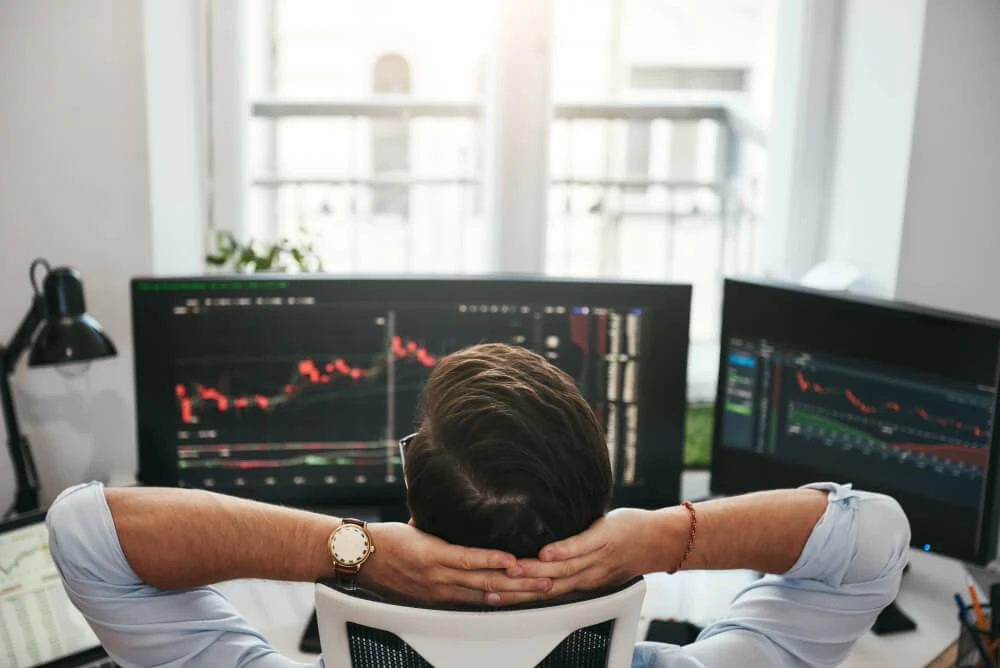
Stay Grounded After Big Profits
Large profits can be just as dangerous as large losses if they lead to overconfidence.
Some traders begin to take bigger risks or deviate from their strategy after a strong win. This often results in giving back those profits.
Maintaining a steady approach is key:
- Treat every trade independently
- Follow the same rules regardless of profit
- Avoid the need to prove success to others
Consistency matters more than short-term results.
Focus on Process, Not Profit and Loss
One of the most important shifts in trading is focusing on execution rather than outcomes.
A profitable trade is not always a good trade, and a losing trade is not always a bad one.
What matters is whether you followed your plan.
- If you followed your rules, the trade was valid
- If you broke your rules, the result is not sustainable
This mindset helps you build long-term consistency and reduces emotional decision-making.

Review and Learn from Large Losses
Every large loss has a cause. Identifying it is essential for improvement.
After a losing trade, take time to review:
- Did you follow your plan?
- Was your position size appropriate?
- Did emotions influence your decisions?
Understanding the reason behind a loss helps prevent repeating the same mistake.
Use Clear Rules to Protect Your Account
Having simple, predefined rules can help you avoid situations where losses grow too large.
Examples of practical rules:
- Always use a stop loss
- Limit risk per trade to a fixed percentage
- Close trades before ending your trading session if risk is uncontrolled
- Protect profits by adjusting stops after strong moves
These rules act as safeguards when emotions are high.
Build Consistency by Controlling Risk
Large losses are often the result of small mistakes repeated over time. By focusing on risk control and disciplined execution, traders can avoid these situations.
The goal is not to eliminate losses, but to prevent them from becoming significant.
When losses are controlled, confidence remains stable, decision-making improves, and long-term performance becomes more consistent.
In trading, survival comes first. Once you protect your capital, growth becomes possible.