
Nick Goold
Support and resistance analysis is one of the most important skills a trader can develop. Whether you are trading forex, stocks, indices, or commodities, understanding where price is likely to pause, reverse, or break can significantly improve your decision-making.
Many traders focus on indicators, but price itself often provides the clearest signals. By learning how to identify key levels on a chart, you can improve your entries, manage risk more effectively, and set more realistic profit targets.
What Support and Resistance Really Represent
Support and resistance are not just lines on a chart. They represent areas where buying and selling pressure meet.
Support is a zone where buyers tend to step in, preventing price from falling further. Resistance is a zone where sellers become more active, preventing price from rising further. These levels form because traders remember past price reactions and often act in similar ways when price returns to those areas.
It is important to understand that these are not exact levels. Markets rarely reverse at a single price point. Instead, they react within zones where liquidity and orders are concentrated.
Why Support and Resistance Matter in Trading
Before entering any trade, identifying key levels gives you context. It helps answer important questions such as whether the market has room to move, where it might reverse, and where risk should be controlled.
Using support and resistance effectively can help you:
- Find higher probability entry points
- Avoid entering trades near potential reversal zones
- Set logical stop loss and take profit levels
- Understand whether the market is trending or ranging
Without this framework, trades often become random and inconsistent.
How to Identify Strong Support Levels
There are several reliable ways to identify support. The key is not to rely on a single method, but to look for areas where multiple factors align.
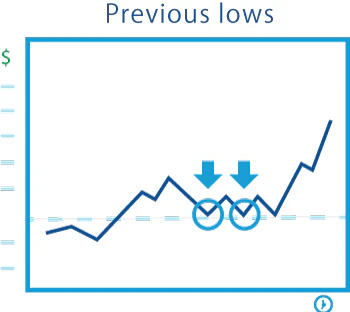
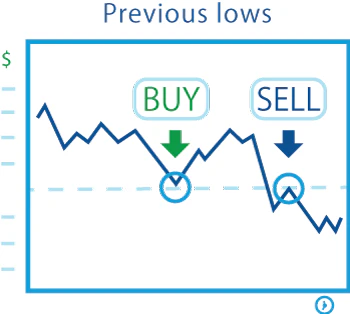
One of the most common methods is previous lows. When price has bounced from the same level multiple times, it suggests strong buying interest. The more times a level is tested and holds, the more attention it attracts from traders.
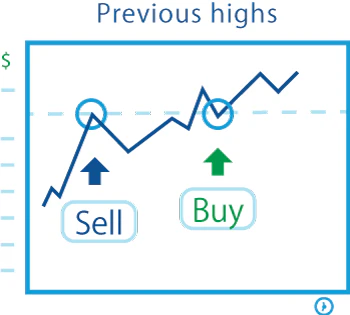
Another important concept is resistance turning into support. When price breaks above a resistance level, that same level often becomes support. This happens because traders who were previously selling may exit their positions, while new buyers step in.
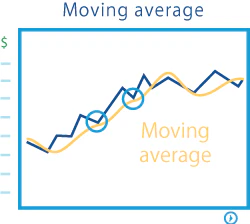
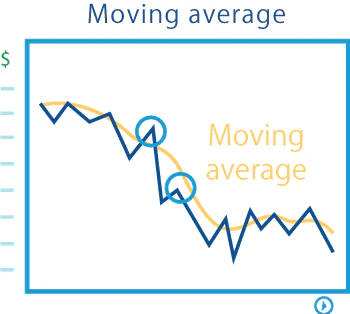
Moving averages also act as dynamic support in trending markets. When the market is rising, price often pulls back to a moving average before continuing higher. This creates opportunities to enter trades in line with the trend.
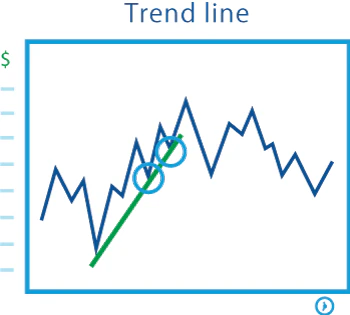
Trendlines are another useful tool. By connecting higher lows, you can identify a rising support line that reflects the underlying strength of the trend.
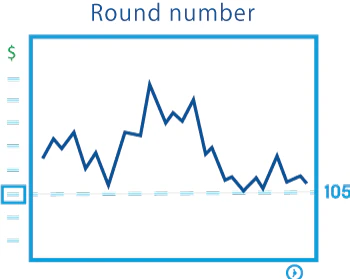
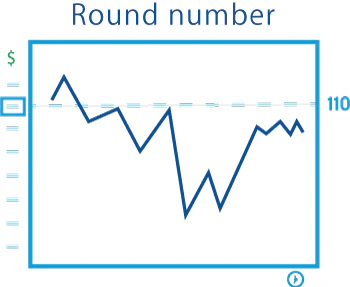
Finally, round numbers often act as strong support. Levels like 145.00 in USD/JPY or 1.2000 in GBP/USD attract attention because they are easy to remember and widely used by traders.
How to Identify Strong Resistance Levels
Resistance works in the same way as support, but in the opposite direction. These are areas where selling pressure increases and upward moves tend to slow or reverse.
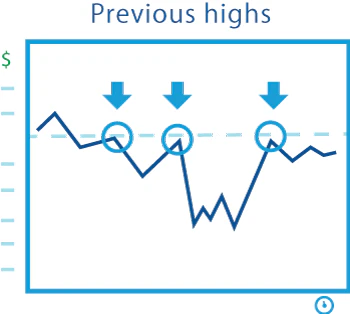
Previous highs are one of the simplest ways to identify resistance. If price has turned lower from a level before, traders will watch that level again for potential selling opportunities.
Support can also become resistance after it breaks. Traders who bought near the old support level may look to exit at breakeven when price returns, creating selling pressure.
In downtrends, moving averages often act as resistance. Price may rally toward the average but struggle to break above it, offering opportunities to enter short trades.
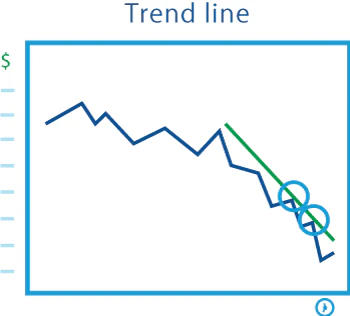
Trendlines can also define resistance. By connecting lower highs, you can create a downward trendline that highlights where selling pressure is likely to appear.
As with support, round numbers also act as resistance. Markets often hesitate or reverse around these levels due to large orders and psychological barriers.
Using Support and Resistance in Real Trading
Understanding these levels is only the first step. The real value comes from how you apply them in your trading decisions. Instead of treating support and resistance as exact points, think of them as zones. Look for confirmation from price action before entering trades, such as rejection candles, momentum shifts, or breakouts with follow-through.
It is also important to combine multiple methods. When a level is supported by previous highs or lows, a moving average, and a round number, it becomes more significant. These confluence areas tend to attract more traders and create stronger reactions. Over time, learning to read these levels will help you better understand market structure. This allows you to trade with more confidence, avoid unnecessary risks, and focus on higher-quality opportunities rather than reacting to every price movement.