
Nick Goold
Following the trend is one of the most consistent approaches in forex trading. Instead of trying to predict reversals, traders focus on identifying the current market direction and trading in the same direction. This approach aligns your trades with momentum, which can improve consistency over time.
Trends form because of sustained buying or selling pressure, often driven by economic data, interest rate expectations, or broader market sentiment. Understanding how to identify and follow these trends allows traders to avoid unnecessary risks and focus on higher-probability setups.
How to Identify the Trend
The first step in trend trading is recognizing the direction of the market. One of the simplest and most reliable tools for this is the moving average. It provides a clear and objective way to determine whether the market is trending higher, lower, or moving sideways.
An upward-sloping moving average suggests an uptrend, while a downward-sloping moving average indicates a downtrend. When the moving average is flat, the market is usually ranging without a clear direction.
The length of the moving average also matters. Shorter averages react faster and are useful for short-term trading, while longer averages help identify broader trends.
- 10 to 30 periods: short-term trends
- 50 to 100 periods: medium-term trends
- 100+ periods: long-term trends
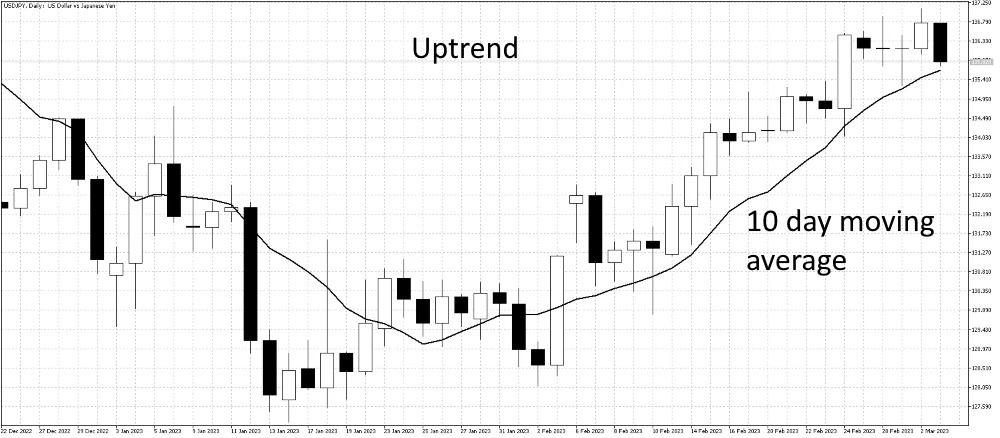
While trendlines can also help, they require more judgment and can vary between traders. Moving averages offer a more consistent and objective approach, especially for beginners.
How to Measure Trend Strength
Once the trend is identified, the next step is to assess how strong it is. Strong trends tend to move with clear momentum and show consistent price structure.
In an uptrend, this appears as a series of higher highs and higher lows. In a downtrend, it shows as lower highs and lower lows. The angle of the moving average can also provide insight, with steeper angles often indicating stronger momentum.
The duration of the trend is another factor. Trends that have been developing over a longer period tend to attract more participants, which can increase their strength.
Using Multiple Timeframes for Confirmation
Checking multiple timeframes helps traders confirm the overall direction of the market. For example, if you are trading on a short-term chart, aligning your trades with the higher timeframe trend can improve your chances of success.
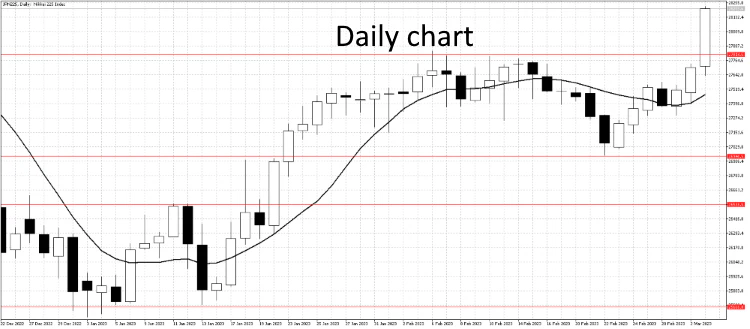
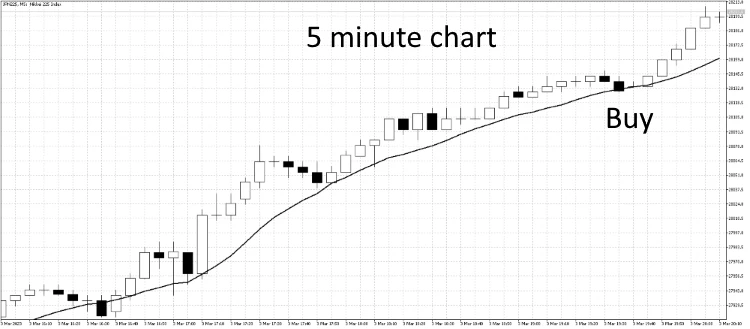
However, it is important not to overcomplicate this process. Using too many timeframes can create conflicting signals and make decision-making more difficult. A simple structure, such as one higher timeframe and one trading timeframe, is usually enough.
Waiting for Pullbacks to Improve Entry
One of the most important skills in trend trading is patience. Instead of entering when price is moving strongly, experienced traders wait for pullbacks. These temporary corrections offer better entry points and improve risk-reward.
A pullback occurs when price moves against the trend for a short period, often returning toward a moving average or trendline. This allows traders to enter closer to support in an uptrend or resistance in a downtrend.
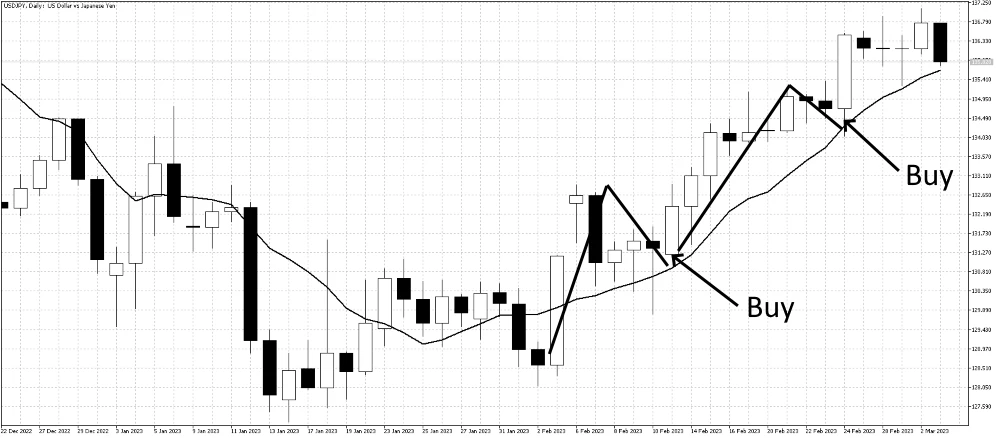
Chasing price after a strong move often leads to poor entries. Waiting for a pullback helps reduce risk and increases the potential reward relative to the stop loss.
Understanding the Role of News in Trends
Strong trends are often driven by fundamental factors such as economic data releases, central bank policies, or geopolitical events. Understanding what is driving the market helps traders stay aligned with the trend and avoid unexpected reversals.
For example, rising interest rate expectations may support a currency, creating a sustained trend. However, if expectations change, the trend can reverse quickly. Staying aware of upcoming news helps manage this risk.
Using Trailing Stops to Maximize Trends
One of the challenges in trend trading is knowing when to exit. Setting a fixed profit target can limit potential gains, especially in strong trends.
Trailing stops offer a more flexible approach. As the trade moves in your favor, the stop loss is adjusted to lock in profits while allowing the position to remain open. This helps traders stay in winning trades longer without exposing themselves to large reversals.
This approach is particularly useful in trending markets where price can continue moving further than expected.
Patience and Consistency in Trend Trading
Trend trading requires discipline and patience. Markets do not move in straight lines, and there will always be short-term fluctuations. Trying to react to every move often leads to overtrading and inconsistent results.
It is also important to accept that not every trade will be successful. Even in strong trends, pullbacks can extend further than expected, and false signals can occur. Maintaining a structured approach helps reduce emotional decisions.