
Nick Goold
Markets tend to become more active when price breaks above resistance or below support. These levels attract attention from many traders, which means more orders, more competition, and often sharper price movements. While this creates opportunity, it also makes trading more difficult.
At first glance, breakout trading looks simple. When you review historical charts, it seems obvious that you should just enter when price breaks a key level and ride the trend. In reality, the challenge is timing. Enter too early and the breakout may fail. Enter too late and the move may already be exhausted.
The difficulty comes from the fact that these levels are not only watched by breakout traders. Range traders are also active in the same areas, placing sell orders near highs and buy orders near lows. This creates a conflict between different strategies, increasing volatility and making price behavior less predictable.
Understanding breakout strategies
Breakout trading is not a single approach. There are several variations depending on how price behaves around key levels.

Buy breakout: entering when price moves above resistance, expecting continuation.

Sell breakout: entering when price moves below support, expecting further downside.
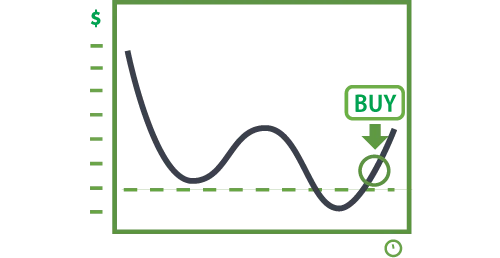
False breakout buy: price breaks lower but quickly reverses, creating a buying opportunity.

False breakout sell: price breaks higher but fails to hold, leading to a reversal.
Each of these setups requires a different mindset. The key is not just identifying the pattern, but understanding the context in which it appears.
Why breakout trading is harder than it looks
Many traders struggle with breakouts because they focus only on the level itself. In reality, the level is just one part of the picture. What matters more is how price approaches that level, the strength of the move, and the surrounding conditions.
When markets are quiet and moving sideways, breakouts tend to fail more often. When momentum is strong and driven by clear expectations or news, breakouts are more likely to follow through. Recognizing this difference is what separates consistent traders from those who get caught in false moves.
Five key points for better trade timing
Check the overall market conditions
Before focusing on any breakout, step back and look at the broader market structure. If moving averages are flat and price is moving sideways, the market is likely range-bound. In this environment, breakouts often fail because there is no strong directional pressure.
On the other hand, when moving averages are clearly trending and price is consistently making higher highs or lower lows, breakout strategies tend to perform better. The market already has momentum, and breakouts become a continuation rather than a guess.
Avoid entering too late
Waiting for a clean breakout can feel safe, but it often leads to poor entry prices. By the time the breakout is obvious, many traders are already in the trade, and the risk-reward becomes less attractive.
In strong markets, it can be more effective to enter just before the breakout level is tested. This allows for tighter risk and more flexibility. Even if the breakout fails, losses can be controlled more easily, and in some cases, the trade can be exited near breakeven.
Watch for overextended price moves
When price moves too far away from its average too quickly, the risk of a pullback increases. This is often where traders get caught buying highs or selling lows.
If the distance between price and the moving average is unusually large, it is often better to wait. Let the market slow down, retrace, and stabilize before considering a breakout trade. This improves timing and reduces the chance of entering at the worst possible moment.
Pay attention to timing within the trading day
Market behavior changes depending on the time of day. Some sessions are more active and trend-driven, while others are quieter and more range-bound.
For example, breakout strategies tend to work better during high-liquidity periods when participation is strong. Understanding these patterns helps you avoid forcing trades during slow conditions and instead focus on periods when breakouts are more likely to succeed.
Understand the impact of news and expectations
Economic data and major news events can significantly influence breakout behavior. Markets often move not just on the data itself, but on how that data compares to expectations.
Entering just before a major announcement can be risky, as price movements may become unpredictable and directionless. However, once the market has reacted and direction becomes clearer, breakouts can become more reliable.
The key is preparation. Know when important events are scheduled and consider how they might affect volatility and direction.
Focus on execution, not just the setup
Understanding breakout strategies is only part of the process. Consistency comes from execution. This means waiting for the right conditions, managing risk carefully, and avoiding the urge to trade every movement.
Breakouts offer strong opportunities, but only when approached with patience and structure. Over time, focusing on timing and context rather than just the level itself leads to more stable performance and less emotional decision-making.
Practicing these concepts in a demo environment can help build confidence. As your timing improves, trading becomes less stressful and more controlled, allowing you to focus on the quality of each trade rather than the number of trades you take.