
Nick Goold
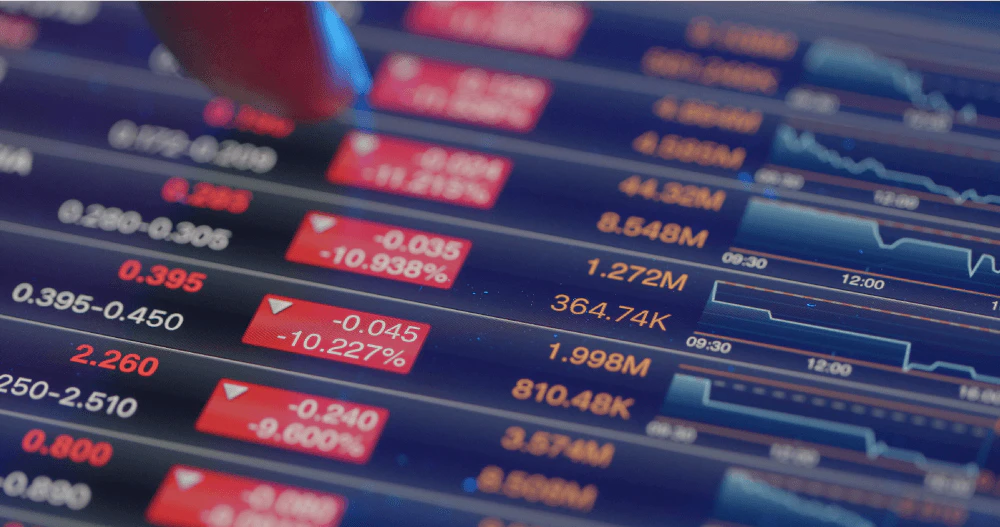
Equity market indices are widely used to measure the performance of stock markets. They provide a quick and simple way to understand how a group of stocks is performing over time, whether that represents a specific sector, country, or the broader market.
For traders, indices are more than just indicators of market health. They are tradable instruments that reflect overall sentiment, capital flows, and economic expectations. Understanding how indices work and what drives their movements can help traders make better decisions and identify opportunities across global markets.
What Equity Market Indices Represent
An equity index tracks the performance of a selected group of stocks. Instead of analyzing individual companies, traders can use indices to gain a broader view of the market.
For example, if a major index is rising, it often signals positive sentiment, strong economic expectations, or capital flowing into equities. If it is falling, it may reflect uncertainty, risk-off behavior, or weaker economic outlook.
This makes indices useful not only for trading but also for understanding the bigger picture behind market movements.
How Stock Indices Are Calculated
Indices are calculated using a basket of stocks, but not all stocks have the same influence. The weight of each company in an index depends on the calculation method used.
There are two main approaches:
- Market-cap weighted indices: Larger companies have a bigger impact on the index. This is the most common method and reflects where most capital is concentrated.
- Price-weighted indices: Stocks with higher share prices have more influence, regardless of company size.
Most modern indices, including major global benchmarks, use market-cap weighting because it better represents the overall market.
Major Global Indices Traders Should Know
Different indices reflect different economies and sectors. Understanding their characteristics helps traders interpret market movements more effectively.
The S&P 500 is one of the most important indices globally. It tracks 500 large US companies and is often used as a benchmark for the overall US stock market. Because of its size and diversification, it is closely watched by traders worldwide.
The NASDAQ Composite is more focused on technology and growth companies. As a result, it tends to move more aggressively during periods of innovation, strong earnings in tech, or shifts in interest rate expectations.
The Dow Jones Industrial Average consists of 30 large, established companies. Although smaller in size compared to the S&P 500, it remains a key indicator of market sentiment.
In Europe, the FTSE 100 represents the UK market and is influenced by global companies and currency movements. In Asia, the Nikkei 225 reflects Japan’s market and is heavily impacted by the yen and export-driven industries.
What Drives Equity Market Indices
Index movements are driven by a combination of macroeconomic factors, company performance, and global sentiment. Understanding these drivers helps traders anticipate potential market direction.
Economic data plays a major role. Indicators such as GDP growth, inflation, and employment data influence expectations about economic strength. Strong data often supports higher equity prices, while weak data can lead to declines.
Corporate earnings are another key factor. When companies report strong results, it increases confidence and can push indices higher. On the other hand, disappointing earnings can lead to broad market sell-offs.
Central bank policy is especially important. Interest rate decisions and monetary policy signals from institutions like the Federal Reserve can significantly impact equity markets. Lower rates tend to support stock prices, while higher rates can put pressure on valuations.
The Role of Currency and Global Factors
Currency movements can have a strong influence on indices, particularly in export-driven economies.
For example, a weaker currency can support stock markets by making exports more competitive, while a stronger currency can reduce overseas earnings when converted back into the local currency.
This is particularly relevant for indices like the FTSE 100 and Nikkei 225, where many companies generate revenue internationally.
Global events also play a role. Political developments, trade agreements, and geopolitical tensions can create volatility and shift market sentiment quickly.

How Traders Use Indices in Practice
Indices are often used by traders to identify overall market direction before focusing on individual trades. If the broader market is trending higher, traders may look for buying opportunities. If the market is weak, they may focus on selling or reducing risk.
Indices are also popular for short-term trading due to their liquidity and clear reaction to news events. Major announcements, such as central bank decisions or economic releases, often create strong moves in index markets.
Rather than trying to follow every individual stock, many traders prefer to trade indices directly because they reflect broader trends and reduce single-company risk.
Why Understanding Indices Matters for Traders
Equity indices provide insight into market sentiment, economic conditions, and capital flows. They act as a foundation for understanding how financial markets are behaving at any given time.
By combining knowledge of index structure, key drivers, and global influences, traders can develop a clearer view of market conditions and make more informed trading decisions.