
Nick Goold
Wedge patterns are a common price action setup used by forex traders to identify potential reversals and breakout opportunities. They appear when price begins to compress between two converging trend lines, creating a tightening structure that often leads to a strong move.
Although wedge patterns are widely known, they are not always easy to trade. The structure can look similar to other patterns, and entering too early often leads to false signals. This guide explains how wedge patterns work and how to approach them in a more structured and practical way.
What a Wedge Pattern Represents
A wedge forms when price moves within two trend lines that gradually come closer together. This narrowing range reflects a market that is losing momentum, even if price is still moving in the same direction.
Unlike simple consolidation, wedges often appear near the end of a trend. They signal that buying or selling pressure is weakening, and a reversal or breakout is becoming more likely.
The key idea is that the market is running out of strength. Once that pressure fades, price tends to break out of the pattern with more direction.
Rising Wedge: A Sign of Weakening Strength
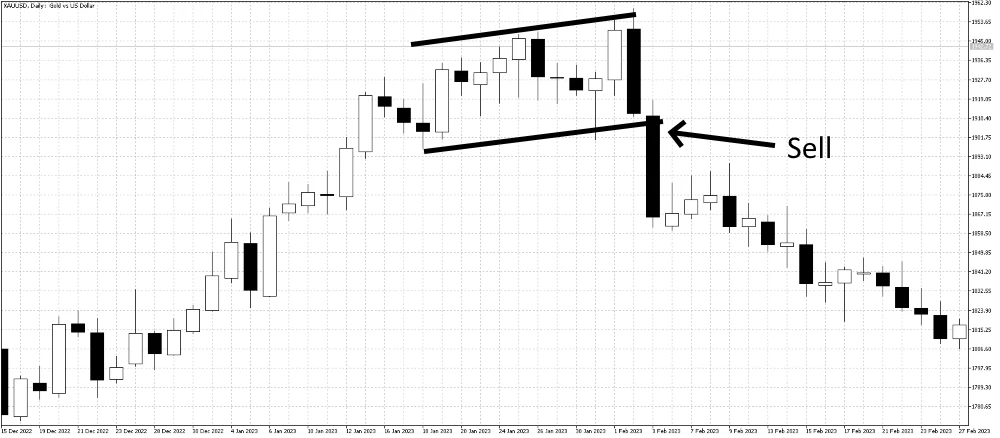
A rising wedge forms when both support and resistance slope upward. At first glance, it may look like a strong uptrend, but the structure tells a different story.
As the pattern develops, each new high becomes smaller, and the distance between highs and lows tightens. This suggests that buyers are losing strength even though price is still rising.
Traders often look for a downside breakout from this pattern. When price breaks below support, it can lead to a sharper move as the remaining buyers exit positions.
Falling Wedge: A Potential Shift Higher
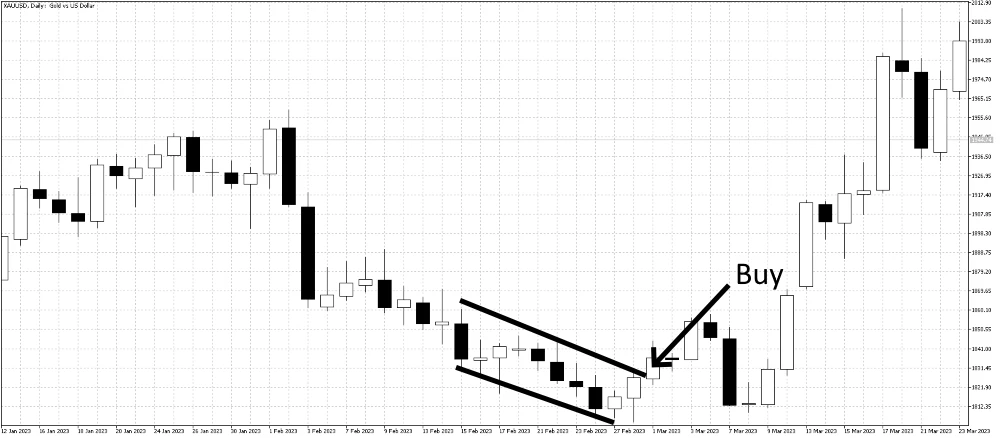
A falling wedge is the opposite structure. Both support and resistance slope downward, but the pattern reflects weakening selling pressure rather than strength.
As the range narrows, sellers struggle to push price lower with the same force. This often leads to a breakout to the upside once the pattern completes.
This type of wedge is commonly seen near the end of downtrends and can offer early signs of a reversal.
Waiting for Breakout Confirmation
One of the most important aspects of trading wedges is patience. The pattern itself does not provide a signal until price breaks out.
A valid breakout usually involves a clear close outside the wedge, not just a brief move beyond the trend line. Acting too early inside the pattern often leads to losses, as price can continue moving within the wedge longer than expected.
Volume or strong momentum during the breakout can add confidence, but the key is the structure break itself.
Entry and Trade Management
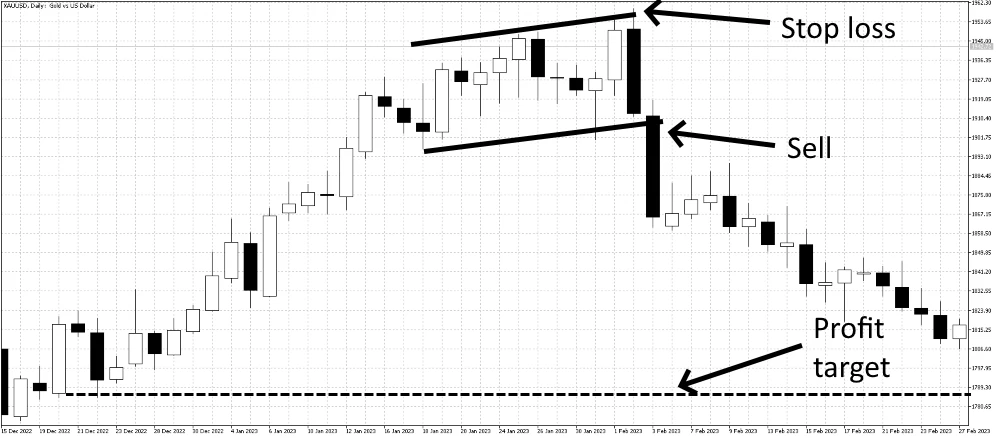
There are two common approaches when trading wedge breakouts. The first is entering immediately after a confirmed breakout. This allows you to capture the move early but requires confidence in the setup.
The second approach is to wait for a retest. After the breakout, price often returns to the broken level before continuing. This can provide a more controlled entry with a clearer stop-loss level.
In both cases, risk should be defined before entering the trade. A typical approach includes:
- Placing the stop loss outside the opposite side of the wedge
- Targeting the next support or resistance level
- Using the height of the wedge as a guide for potential move size
This structure helps maintain a clear balance between risk and reward.
Using Multiple Timeframes for Context
Wedge patterns become more reliable when viewed in a broader market context. A pattern on a lower timeframe can be stronger if it aligns with a larger structure on a higher timeframe.
For example, a rising wedge on a daily chart carries more weight if the higher timeframe shows resistance or a weakening trend. This alignment increases the probability that the breakout will follow through.
Instead of relying on a single chart, using multiple timeframes helps confirm direction and avoid trading against the larger trend.
Combining Wedges with Other Tools
Wedge patterns work best when combined with other forms of analysis. Using additional tools can help confirm whether the breakout is likely to succeed.
Common confirmations include:
- Support and resistance levels near the breakout area
- Momentum slowing before the breakout
- Market context such as overextended moves or news-driven reactions
These factors help filter out weaker setups and focus on trades with better structure.
Focus on Profit vs Loss, Not Just Win Rate
Wedge patterns do not always lead to successful trades. False breakouts can occur, especially in volatile or unclear market conditions.
The key is not to avoid losses entirely, but to structure trades so that potential profits are larger than potential losses. By waiting for confirmation, managing risk carefully, and selecting high-quality setups, wedge patterns can become a consistent part of your trading approach.
Like any strategy, success comes from discipline and consistency rather than predicting every move. Wedges provide a framework, but how you manage the trade ultimately determines the outcome.