
Nick Goold
Pullbacks in Trading: How to Identify, Trade, and Manage Risk
Pullbacks are one of the most important concepts in trading. They occur when price temporarily moves against the main trend before continuing in the original direction. Markets do not move in straight lines. Instead, they move in waves, and pullbacks are a natural part of that movement.
Understanding pullbacks allows traders to enter trades at better prices rather than chasing the market. This improves risk control and increases the potential reward on each trade. Traders who learn to wait for pullbacks often avoid unnecessary losses and develop a more consistent approach.
What Is a Pullback in Trading?
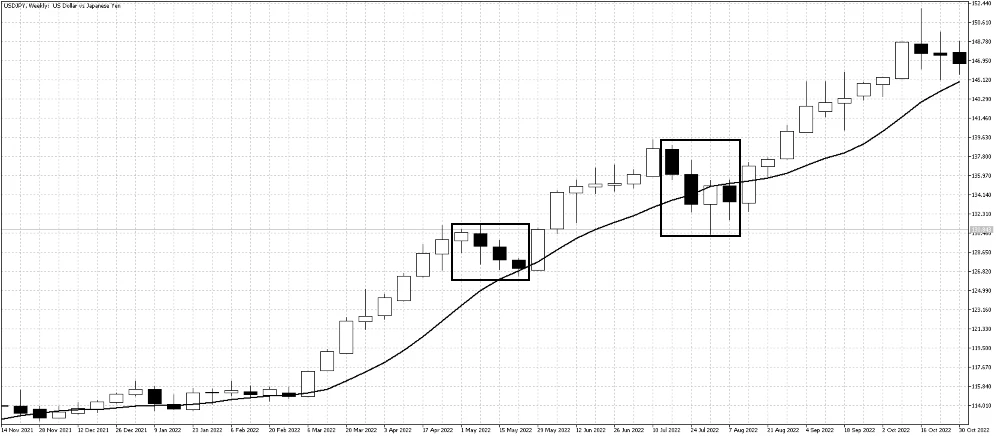
A pullback is a short-term move against the prevailing trend. In an uptrend, price may fall back toward a support level before continuing higher. This temporary move is not a trend reversal but a pause in the trend.
Recognizing this difference is important. Many traders confuse pullbacks with reversals and exit trades too early or enter in the wrong direction. Learning to identify the structure of a trend helps you stay aligned with the market.
Why Pullbacks Improve Trade Timing
Trading success is not only about predicting direction. Timing plays a major role. Entering too early or too late can lead to losses, even if your market view is correct.
Many traders enter trades after a strong move because they fear missing out. This often results in buying near highs or selling near lows. Pullbacks provide an opportunity to enter at a more favorable price with a smaller stop loss.
In many cases, entering late is more dangerous than entering early, because the market may already be close to a temporary turning point. Waiting for a pullback helps avoid this problem.
Common Pullback Trading Strategies
There are several practical ways to identify pullbacks. Each method has advantages and limitations, and many traders combine them to improve accuracy.
Using Moving Averages to Identify Pullbacks
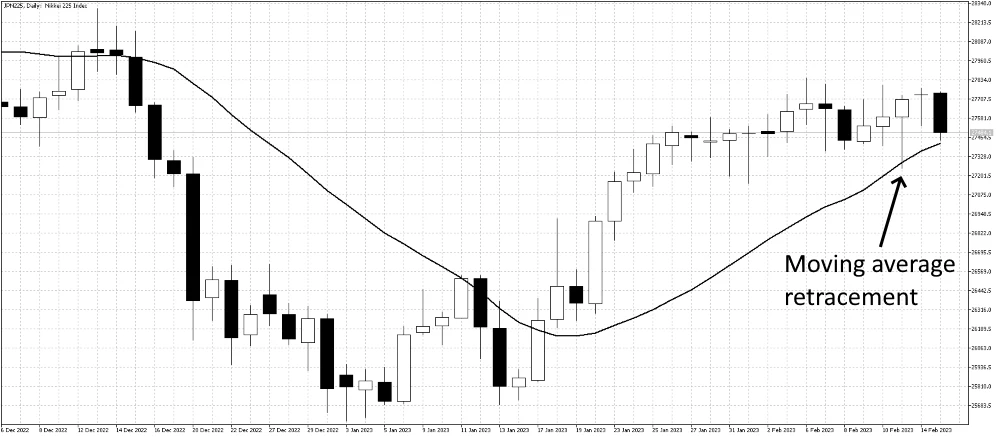
In a strong trend, moving averages often act as dynamic support or resistance. In an uptrend, price may pull back toward the moving average and then continue higher. Traders can wait for price to stabilize and begin rising again before entering.
Shorter-term moving averages are more sensitive and provide more frequent opportunities, while longer-term averages help identify deeper pullbacks in broader trends.
Using Trend Lines for Pullback Entries
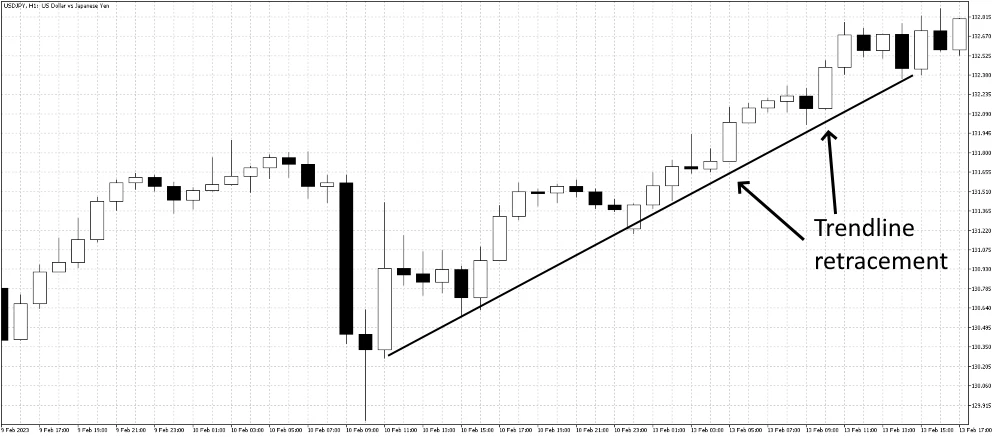
Trend lines are drawn by connecting key swing points. When price returns to the trend line and reacts, it can signal a continuation of the trend.
This method is useful for visualizing market structure, but it can be subjective. Different traders may draw different trend lines, which can lead to different interpretations.
Using Previous Highs and Lows as Key Levels
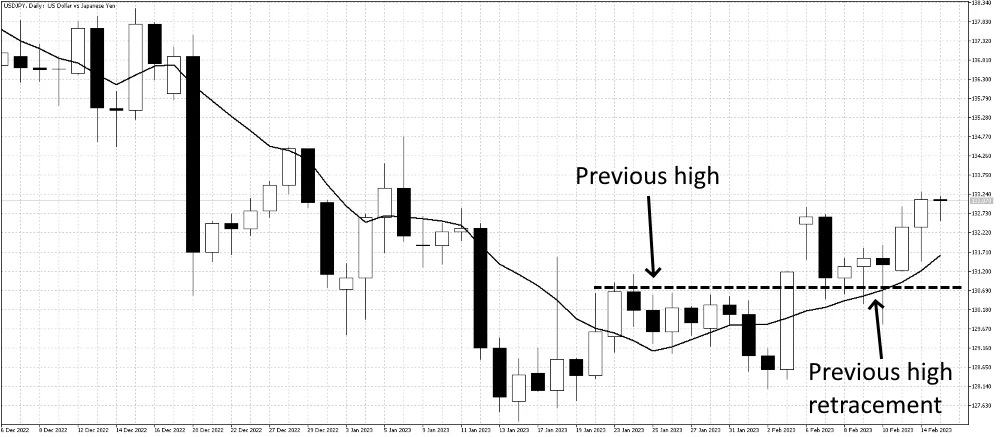
Previous highs often become support in an uptrend. When price returns to these levels, traders who missed the initial move may enter, creating demand.
This approach is widely used because it reflects real market behavior. However, levels are not exact, and price may move slightly beyond them before reacting.
Combining Methods for More Reliable Entries
No single method is perfect. Combining tools can improve accuracy. For example, a pullback that aligns with both a moving average and a previous high provides stronger confirmation.
Using multiple forms of confirmation helps reduce false signals and improves trade quality.
Risk Management in Pullback Trading
Even strong trends can fail, so risk management is essential. Pullback strategies often have lower win rates, but they can still be highly profitable when risk is controlled properly.
A common approach is to aim for profits that are at least twice the size of the stop loss. This creates a positive risk–reward balance, allowing traders to remain profitable even if not all trades succeed.
Stops should be placed beyond logical support or resistance levels. This could be below a moving average, trend line, or previous structure level. Exiting quickly when the setup fails is key to long-term success.
Managing Trade Exits and Letting Profits Run
Setting profit targets can be challenging because trends can extend further than expected. Some traders take profits at key resistance levels, while others use trailing stops to stay in the trade as long as the trend continues.
The right approach depends on your trading style, but consistency is more important than the method itself.
Discipline and Patience in Pullback Trading
One of the biggest challenges is waiting. It is tempting to enter trades early, especially when the market is moving quickly. However, patience often leads to better entries and lower risk.
Focusing on potential losses rather than potential gains can help improve discipline. This shift in mindset encourages better decision-making and reduces impulsive trades.
Accept that you will miss some opportunities. The goal is not to catch every move, but to take high-quality trades with favorable risk–reward conditions.
Understanding the Difference Between Pullbacks and Reversals
It is important to distinguish between a pullback and a reversal. A pullback is temporary and followed by continuation of the trend. A reversal signals a potential change in direction.
If key support levels break and price fails to recover, the trend may be ending. Recognizing this early helps you avoid holding losing trades and protects your capital.
Building Consistency with Pullback Trading
Pullbacks offer some of the most efficient trading opportunities because they combine trend direction with improved entry timing. By focusing on structure, confirmation, and risk control, traders can build a more consistent approach.
With practice, pullbacks become easier to identify, and decision-making becomes more natural. Over time, this leads to more stable results and a more controlled trading process.