
Nick Goold
Support and resistance are two of the most practical tools traders can use to improve entry timing. Instead of chasing price, they allow you to define where the market is likely to react. When used correctly, they help you structure trades where the potential profit is larger than the potential loss.
This article explains how to use support and resistance to find better entries. It focuses on four core strategies that traders use in different market conditions. You do not need to use all of them. Most consistent traders focus on one or two approaches that match their style and the market they trade.
Understanding Market Conditions First
Before choosing an entry strategy, you need to identify whether the market is ranging or trending. This decision will shape everything that follows.
In a range, price moves between clear support and resistance levels, often reacting multiple times. In a trend, price breaks through levels and continues in one direction, with only temporary pullbacks.
If you apply the wrong strategy to the wrong market condition, even a good setup can fail. Taking a few seconds to assess structure will improve your results more than constantly changing strategies.
Strategy 1: Buy at Support and Sell at Resistance
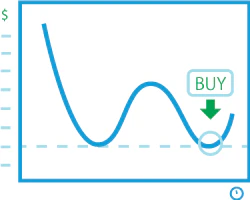
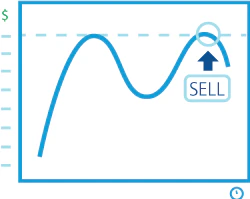
This is the most widely used approach and is best suited to range markets. The idea is simple: buy when price approaches support and sell when it approaches resistance. These areas often act as turning points where buyers and sellers step in.
The advantage of this strategy is control. Your stop loss can be placed just outside the level, keeping risk small. At the same time, your target can be the opposite side of the range, creating a favorable risk-to-reward setup.
This approach works best when there is no strong news driving the market. Sudden volatility can break ranges quickly, so it is important to avoid trading this strategy during major events.
Strategy 2: Buy Breakouts Above Resistance and Sell Below Support
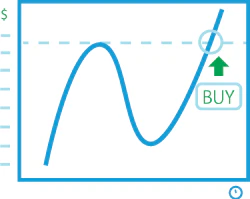
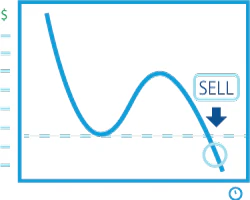
This strategy is used by trend-following traders. Instead of expecting price to reverse, you expect it to continue moving once it breaks a key level.
When price breaks above resistance, it often signals strength and the potential for further upside. The same applies in reverse when price breaks below support. These moves are often driven by strong momentum or new information entering the market.
The key point to understand is that the win rate for this strategy is usually lower. Many breakouts fail. However, the trades that work can produce much larger gains than the losses from failed attempts. This is why it is commonly used in high-volatility environments, especially after news releases.
Traders using this approach focus less on being right and more on capturing larger moves when they occur.
Strategy 3: Trade False Breakouts
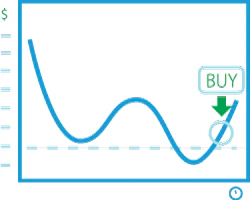
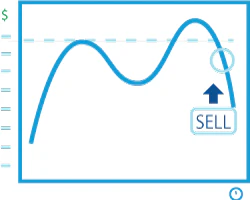
False breakouts are one of the most reliable patterns used by experienced traders. They occur when price breaks a level but fails to continue and quickly reverses.
For example, when price drops below support, many traders enter short positions expecting further downside. If the market then moves back above support, those traders are trapped in losing positions. To exit, they must buy back, which adds buying pressure and pushes price higher.
This creates an opportunity to enter in the opposite direction of the original breakout. The same logic applies when price briefly moves above resistance and then falls back below it.
Although these setups do not appear frequently, they often provide clean entries with strong follow-through. The key is patience and waiting for confirmation that the breakout has failed.
Strategy 4: Enter Before the Level
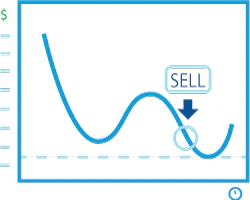
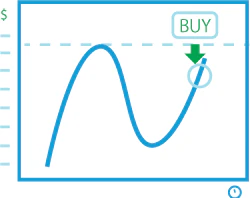
In strong trends, price often moves aggressively toward support or resistance without fully reacting at those levels. Professional traders anticipate this behavior and position themselves ahead of the level.
This approach is based on understanding where other traders are likely to place their stop losses. For example, many traders will place stop orders just below support. By selling before the level, you position yourself ahead of that liquidity.
The advantage is a strong risk-to-reward setup. If the trend continues, price will break through the level and accelerate, allowing for larger profits. If the move stalls at the level, you can exit with a smaller gain or minimal loss.
This strategy requires confidence in the trend and should not be used in sideways markets.
Focus on Profit vs Loss, Not Just Win Rate
Many traders focus too much on how often they win. A higher win rate can feel more comfortable, but it does not always lead to better results.
Some of the strategies above, especially breakout trading, may win less than half the time. However, the size of the winning trades can more than compensate for the losses. Other strategies, like range trading, may have a higher win rate but smaller average profits.
The goal is to consistently find trades where the potential reward is greater than the risk. Over time, this is what drives performance, not the number of winning trades.
Choosing the Right Approach for Your Trading
There is no single best strategy. Each of the approaches in this article works under different conditions. The key is to match your strategy to the market environment and your own trading style.
If you prefer structure and consistency, range trading may suit you. If you are comfortable with volatility and larger swings, breakout strategies may be more effective. If you are patient and selective, false breakouts can offer high-quality opportunities.
By focusing on a small number of strategies and understanding when to apply them, you can improve both your entry timing and your overall results.
Support and resistance are simple concepts, but when combined with discipline and clear decision-making, they become a powerful foundation for trading.