
Nick Goold
The double top is one of the most widely recognized reversal patterns in forex trading. It signals that an uptrend may be coming to an end and that selling pressure is starting to build. For traders, this creates an opportunity to protect profits on long positions or look for potential short trades as the market turns lower.
While the pattern itself is simple, trading it effectively requires good timing, confirmation, and risk management. When used correctly, the double top can help identify strong reversal moves that often develop quickly after the trend breaks.
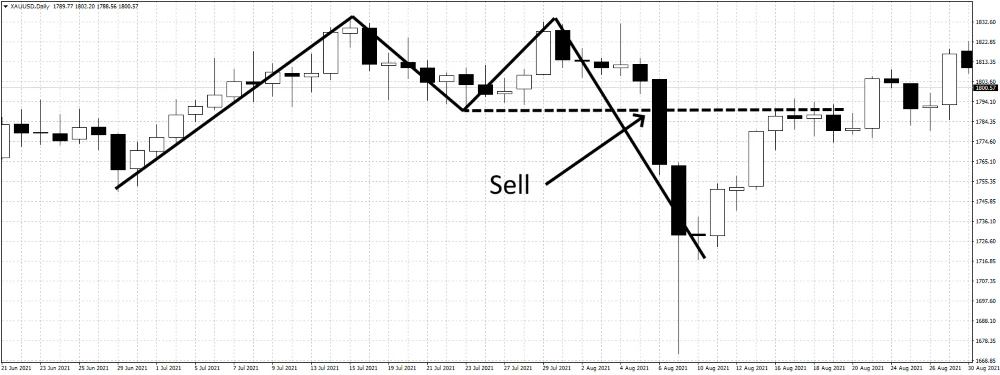
A double top forms when price reaches a similar high twice and fails to break higher. The market then falls below the low between the two peaks, confirming the pattern and signaling a potential downtrend. This shift often happens because buyers lose momentum while sellers begin to take control.
How the Double Top Pattern Works
The strength of the double top comes from market psychology. The first peak shows strong buying pressure, but when price returns to a similar level and fails to break higher, it suggests that demand is weakening. Traders who bought earlier begin to take profits, while new sellers enter the market.
The key level in this pattern is the low between the two highs. A break below this level confirms the reversal and often leads to a stronger move downward as stop losses are triggered and momentum builds.
However, not every double top leads to a large decline. False signals can occur, especially in strong trending markets. This is why confirmation and timing are critical when trading this pattern.
Improving Entry Timing with Moving Averages
Moving averages can help improve the timing of double top trades by showing when momentum is shifting. In an uptrend, price often stays above the moving average. When the market starts to weaken, price may begin to move below it.
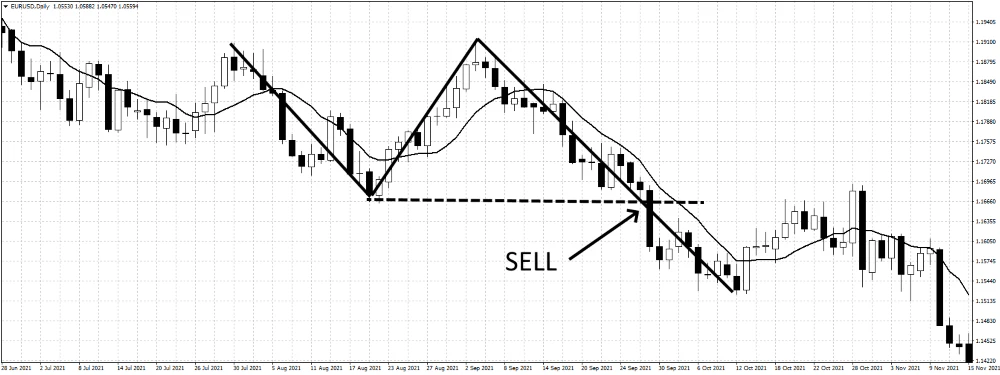
There are two practical ways to use moving averages with this pattern:
- Sell when price rallies back toward a falling moving average after the second peak
- Enter after price breaks below the moving average for additional confirmation
This helps avoid entering too early and improves the probability that the reversal is genuine rather than temporary.
Advanced Entry: Entering Before the Break
Many traders wait for price to break below the low between the two peaks before entering a trade. While this is a safer approach, it often results in a later entry and smaller profit potential.
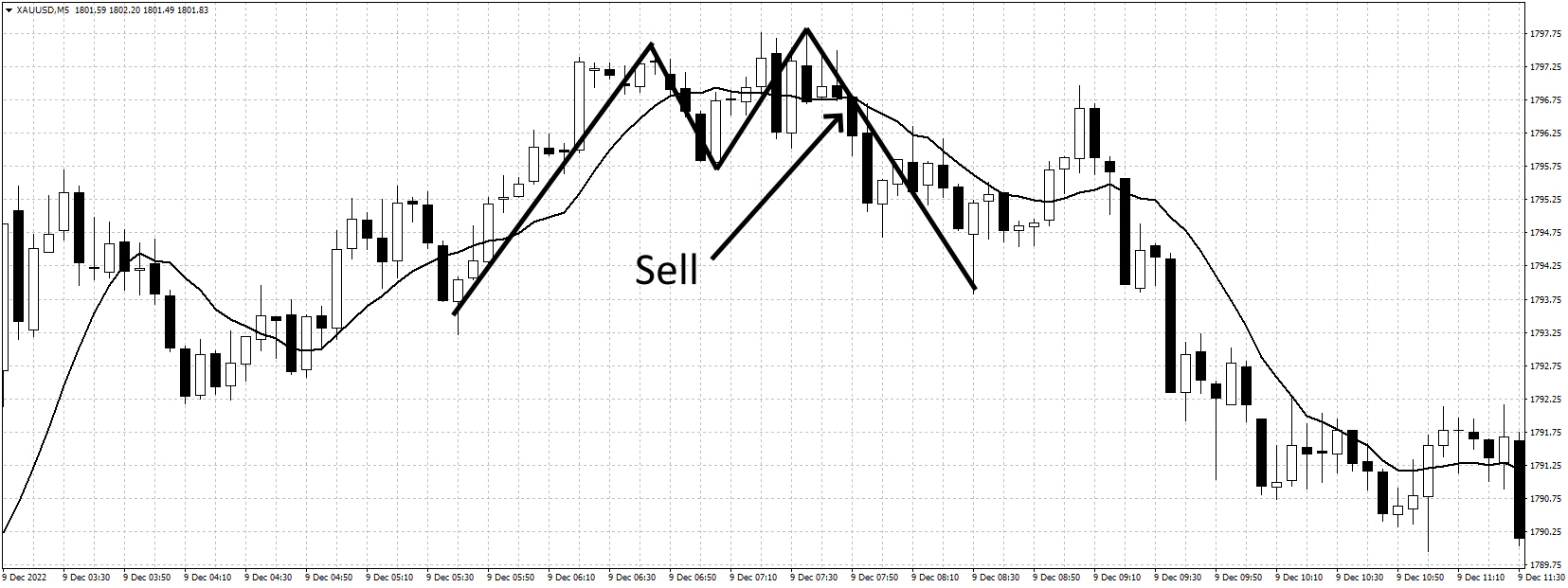
A more advanced strategy is to enter just before the breakout, as price approaches the key support level. This approach allows for a better entry price and larger potential reward, but it also carries higher risk because the pattern is not yet confirmed.
To manage this risk effectively:
- Look for signs of weakness such as slowing momentum or rejection at the second peak
- Use a tight stop loss in case the pattern fails
- Avoid entering too early without clear confirmation signals
This approach is best suited for traders with experience and strong risk control.
Why Strong Trends Create Better Reversal Opportunities
Strong uptrends often create the best double top setups. When a market has been rising for a long time, many traders are holding long positions. If the trend begins to weaken, these traders may rush to exit, adding to the downward pressure.
Rather than being discouraged by a strong uptrend, experienced traders see it as a potential opportunity. The stronger the trend, the more significant the reversal can be once momentum shifts.
However, patience is essential. Trying to sell too early in a strong trend can lead to repeated losses. Waiting for the pattern to form clearly improves the chances of success.
Planning Exits Using Support and Structure
Managing exits is just as important as finding the right entry. After entering a double top trade, traders should identify key support levels where price may slow down or reverse.
Common areas to consider include:
- Previous swing lows where price has reacted before
- Former resistance levels that may now act as support
- Round numbers and psychological levels
- Trendlines or longer-term moving averages
Taking partial profits or exiting trades near these levels can help lock in gains before the market reverses.
Using Retracements to Set Targets
Another method for setting profit targets is to use percentage retracements. Markets often retrace a portion of the previous move when a trend reverses. Common retracement levels include 33%, 50%, and 67% of the prior trend. For example, if price rises 100 pips, these levels can act as potential support during a reversal.
These levels are not exact but can provide a useful guide when planning exits. Combining them with support and resistance levels can improve accuracy.
Managing Risk with Stops and Trade Management
Because it is difficult to predict exactly when a trend will reverse, controlling risk is essential when trading double tops. Using a relatively small stop loss helps limit losses if the pattern fails. Even if several trades result in small losses, a single successful reversal trade can offset them due to the larger potential reward.
A trailing stop can also be effective in managing profitable trades. As price moves in your favor, the stop loss is gradually adjusted to lock in profits while allowing the trade to continue. For example, if a trade moves significantly lower after entry, the stop can be moved step by step to reduce risk and protect gains. This approach is especially useful when the final target is uncertain.
By combining structured entries, realistic targets, and disciplined risk management, traders can use the double top pattern to capture meaningful reversal moves while protecting their capital.