
Nick Goold
The cup and handle pattern is a well-known bullish continuation pattern that signals a pause in an uptrend before the market moves higher again.
It reflects a period where the market corrects, stabilizes, and then rebuilds momentum. For traders, it offers a structured way to identify potential breakout opportunities with defined risk and targets.
What the Cup and Handle Pattern Represents
This pattern forms after an existing uptrend. Instead of reversing, the market slows down and consolidates before continuing higher.
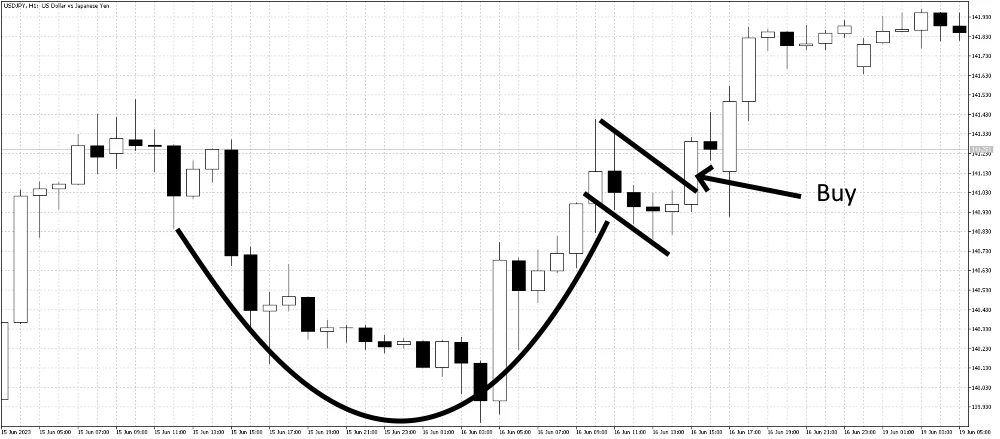
The “cup” shows a gradual correction and recovery, while the “handle” represents a final short pause before the breakout. Together, they indicate that buyers remain in control, even during the pullback. This makes it a continuation pattern rather than a reversal setup.
Key Characteristics of a Strong Pattern
Not all cup and handle patterns are equal. The quality of the structure matters.
A strong pattern usually includes:
- A clear prior uptrend before the pattern begins
- A rounded bottom rather than a sharp drop and recovery
- A controlled handle that forms near the highs
The rounded bottom is important because it shows that selling pressure is gradually absorbed. A sharp V-shape often reflects unstable price action and can lead to weaker outcomes.
The handle should be relatively small compared to the cup. If the pullback becomes too deep, it may suggest that buyers are losing control.
How to Trade the Cup and Handle Pattern
Trading this pattern is straightforward when you focus on structure rather than prediction. The first step is identification. Look for a clear cup formation followed by a smaller consolidation near the highs.
The entry comes when price breaks above the handle resistance. This breakout confirms that buyers are stepping back in and momentum is returning. Rather than entering early, waiting for confirmation improves consistency, especially in volatile markets.
Stop Loss and Risk Management
Risk management is built into the pattern. A common approach is to place the stop loss below the handle low. This level represents the point where the pattern fails. If price breaks below it, the setup is no longer valid.
This keeps risk controlled and aligned with the structure of the trade.
Setting Realistic Targets
The most common way to set a target is by measuring the depth of the cup and projecting it upward from the breakout point. This gives a logical estimate of how far the market may move if the trend continues.
However, it is often better to combine this with:
- Previous resistance levels
- Key psychological price levels
- Overall market conditions
This keeps targets realistic and aligned with how the market behaves, rather than relying only on fixed projections.
Why the Pattern Works
The cup and handle pattern reflects market psychology. The initial pullback shakes out weaker buyers. As the market stabilizes, stronger participants begin accumulating positions. The handle represents the final hesitation before the breakout.
When price breaks higher, it often triggers momentum as new buyers enter and previous sellers are forced to exit. This combination creates the conditions for a strong continuation move.
Advantages for Traders
This pattern is popular because it provides structure and clarity.
It helps traders:
- Identify continuation opportunities in trending markets
- Define clear entry and stop levels
- Plan trades with favorable risk-to-reward setups
It can also be applied across different markets, including forex, indices, commodities, and stocks.
Limitations to Be Aware Of
Despite its strengths, the pattern is not perfect. One of the main challenges is subjectivity. Traders may interpret the structure differently, especially when the pattern is not clean.
False breakouts can also occur. Price may briefly break above the handle and then reverse lower. This is why waiting for confirmation and managing risk is essential. The pattern also takes time to form. Traders looking for frequent opportunities on lower time frames may find fewer setups.
Improving Results with Simple Confirmation
The cup and handle pattern becomes more effective when combined with basic tools. Using a short-term moving average like the 10 SMA can help confirm momentum. If price holds above the moving average during the handle, it suggests underlying strength.
Volume can also provide confirmation. A breakout with increased activity is generally more reliable than one with low participation. Keeping the approach simple usually leads to better decisions and more consistent results.
Developing Consistency with the Pattern
The goal is not to trade every cup and handle that appears, but to focus on high-quality setups. Strong trends, clean structure, and clear breakouts tend to perform better over time. With practice, the pattern becomes a reliable way to identify continuation trades where risk is defined and the potential reward justifies the trade.