Nick Goold
The World Bank and the International Monetary Fund (IMF) are two of the most important global financial institutions. Both were created in 1944 and are headquartered in Washington, D.C., but they serve different roles in supporting the global economy.
For anyone following global markets, including forex traders, understanding how these institutions operate helps explain broader economic trends, currency stability, and how countries respond to financial stress.
The Role of the World Bank in Global Development
The World Bank focuses on long-term economic development and poverty reduction. Its main objective is to support sustainable growth by providing funding and expertise to developing countries.
It operates mainly through two institutions. The International Bank for Reconstruction and Development (IBRD) provides loans to middle-income and financially stable low-income countries, while the International Development Association (IDA) supports the poorest countries with concessional loans and grants.
Rather than reacting to short-term crises, the World Bank works on longer-term projects such as infrastructure, education, and economic reform. These efforts aim to create stable economic conditions that can support growth over time.
The IMF and Global Financial Stability
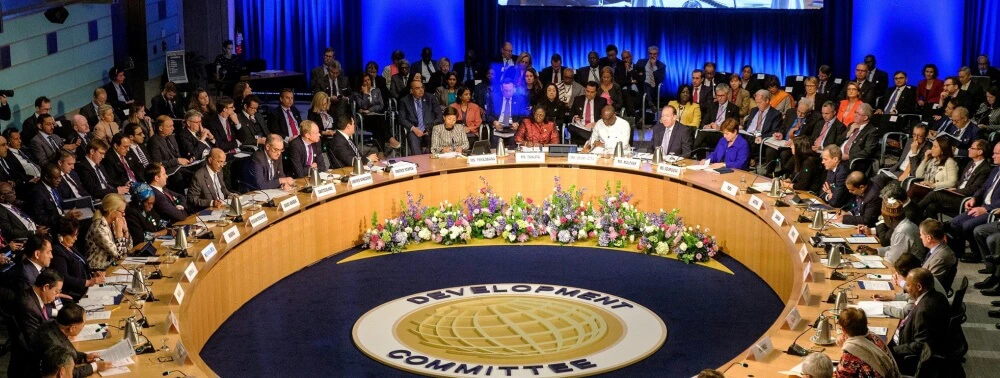
The International Monetary Fund plays a different but equally important role. Its primary focus is maintaining stability in the global financial system and supporting countries facing economic difficulties.
The IMF provides financial assistance to countries experiencing balance of payments problems, often when they are struggling to meet international payment obligations or facing currency pressure. In addition to funding, the IMF also offers policy advice and technical support.
This support often comes with conditions, encouraging countries to implement economic reforms designed to restore stability and improve long-term growth prospects.
Key Functions That Influence Global Markets
Both institutions play an important role in shaping global economic conditions. While their approaches differ, their actions can influence investor confidence, capital flows, and currency movements.
- Providing financial assistance to countries in need, helping stabilize economies during periods of stress
- Offering policy advice on fiscal and monetary strategy, which can influence long-term economic direction
- Supporting institutional development and knowledge sharing to improve economic resilience
- Helping manage financial crises and restore confidence in global markets
These functions can indirectly affect forex markets by influencing economic stability, growth expectations, and investor sentiment across regions. :contentReference[oaicite:0]{index=0}
Governance and Decision-Making
The World Bank and IMF are governed by boards representing their member countries. Major decisions are made at the highest level by the Board of Governors, while day-to-day operations are handled by executive boards.
Leadership positions, such as the President of the World Bank and the Managing Director of the IMF, are selected through a process involving member countries. These roles are important, as leadership can influence policy direction and institutional priorities.
Although all member countries are represented, larger economies often have greater influence due to their financial contributions and voting power.
Membership, Funding, and Global Influence
The IMF currently has 190 member countries, and its funding mainly comes from contributions known as quotas. These quotas are based on the economic size of each country and determine both financial contributions and voting power.
In addition to quotas, the IMF can raise funds through borrowing arrangements and financial markets. It also operates several lending programs designed to address different types of economic challenges.
Countries such as the United States, Japan, China, Germany, and the United Kingdom hold significant influence due to their larger contributions. However, all members participate in the broader decision-making framework.
Understanding Special Drawing Rights (SDRs)
Special Drawing Rights (SDRs) are an international reserve asset created by the IMF to support global liquidity. They are not a currency but can be exchanged for freely usable currencies among member countries.
The value of SDRs is based on a basket of major currencies, including the U.S. dollar, euro, Japanese yen, British pound, and Chinese renminbi. This structure helps reduce reliance on a single currency and provides a more balanced reserve asset.
SDRs are often used during periods of financial stress, helping countries access liquidity without increasing exposure to a specific currency. This makes them a useful tool for maintaining stability in the global financial system.
Why These Institutions Matter for Forex Traders
While the World Bank and IMF do not directly set exchange rates, their influence on economic stability, capital flows, and policy direction can shape currency trends over time.
When the IMF supports a country facing financial stress, it can restore confidence and stabilize that country’s currency. Similarly, World Bank projects can improve long-term growth prospects, which may strengthen a country’s economic outlook.
For traders, these institutions are part of the bigger picture. Their actions often signal underlying economic conditions, and understanding their role can help provide context for longer-term currency movements and shifts in global risk sentiment.