
Nick Goold
What Are Candlestick Charts and How Do Traders Use Them?
Candlestick charts are one of the most widely used tools in technical analysis. They provide a clear visual representation of price movement, helping traders understand market sentiment and identify potential trading opportunities. By showing how price moves within a specific time period, candlesticks make it easier to read trends, momentum, and possible reversals.
Each candlestick reflects the battle between buyers and sellers. Over time, these individual candles form patterns that traders use to make decisions about when to enter or exit the market.
The Origin of Candlestick Trading
Candlestick analysis dates back to 18th century Japan. A rice trader named Munehisa Homma observed that price movements were not driven only by supply and demand, but also by trader psychology. He recognized that emotions such as fear and greed created repeating patterns in the market.
These early observations laid the foundation for what we now describe as bull and bear cycles. Today, candlestick charts continue to reflect these emotional cycles, making them highly relevant for modern trading.
How Candlesticks Are Formed
Each candlestick represents price movement over a specific time period, such as one minute, one hour, or one day. The structure of a candlestick is simple but powerful:
- The body shows the opening and closing price
- The upper wick shows the highest price reached
- The lower wick shows the lowest price reached
A bullish candlestick, often shown in blue or green, forms when the closing price is higher than the opening price. This reflects buying pressure and market strength. A bearish candlestick, usually red or yellow, forms when the closing price is lower than the opening price, indicating selling pressure.
This simple structure allows traders to quickly assess whether buyers or sellers are in control during that period.
Reading Market Strength and Weakness
Candlesticks provide a straightforward way to follow the current market direction. When consecutive bullish candles appear, it suggests strength and upward momentum. When bearish candles dominate, it indicates weakness and downward pressure.
Many traders use this as a simple filter for entries. Instead of trying to predict every move, they align their trades with current momentum by buying when the market shows strength and selling when it shows weakness.
However, relying only on a single candle can be misleading. It is more effective to view candlesticks within the broader context of trend, support and resistance, and overall market conditions.
Understanding Candlestick Patterns
Over time, combinations of candlesticks form recognizable patterns. These patterns often signal changes in market sentiment, such as a potential reversal or continuation.
The human eye is naturally good at spotting these formations, which is why candlestick patterns remain popular across all levels of trading. While no pattern guarantees an outcome, they can provide useful clues when combined with other analysis.
Key Reversal Patterns to Watch
Some of the most widely followed candlestick patterns are reversal patterns. These appear at the end of trends and may signal a shift in direction.
The Hammer Pattern
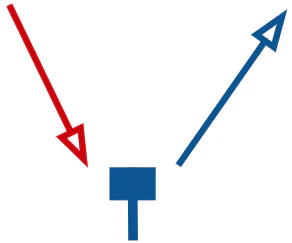
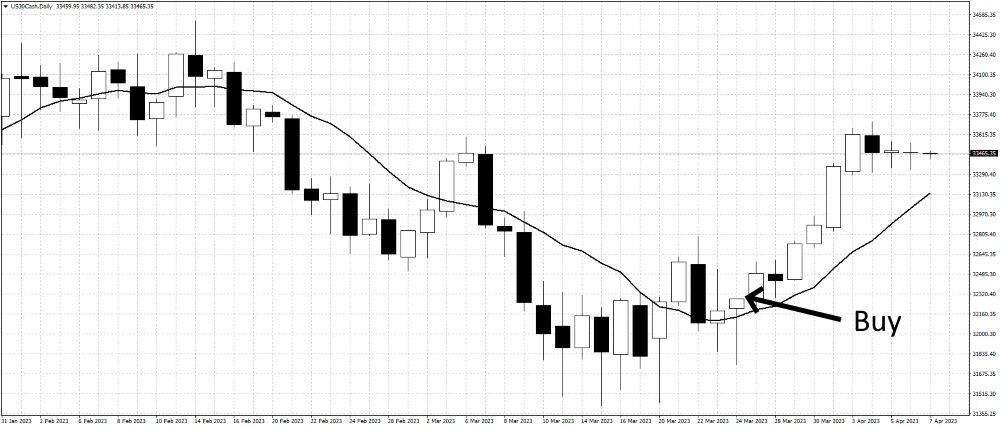
The Hammer forms after a downward move and signals that selling pressure may be weakening. During the period, price initially falls but then reverses strongly and closes near its high. This shows that buyers have stepped in and pushed price higher.
Traders often wait for the next candle to confirm strength before entering a long position. The key idea is not just the pattern itself, but the shift in control from sellers to buyers.
The Shooting Star Pattern
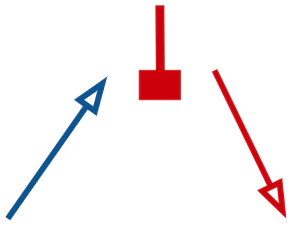
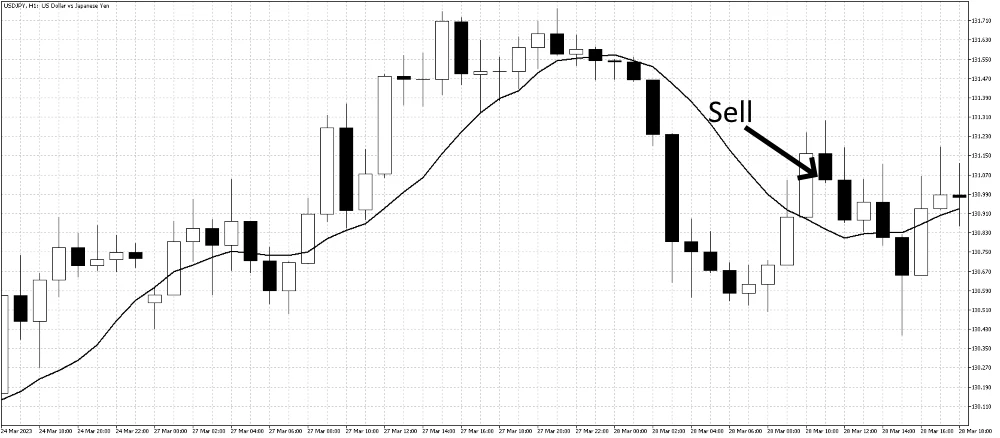
The Shooting Star is the opposite of the Hammer and appears after an upward move. Price pushes higher during the session but fails to hold those gains and closes near the low. This suggests that buying pressure is weakening and sellers are starting to take control.
It is often followed by further downside, especially if the next candle confirms the reversal.
The Bullish Engulfing Pattern
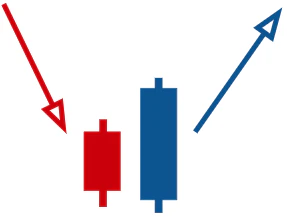
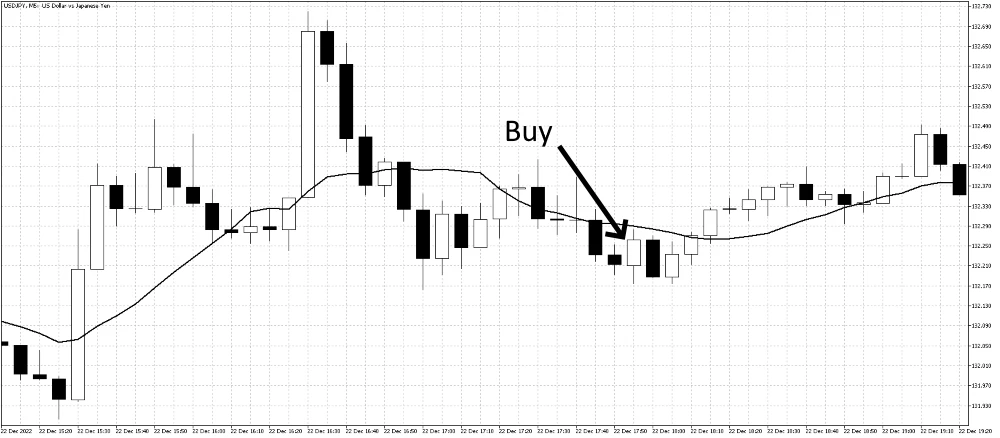
The bullish engulfing pattern consists of two candles. The first candle is bearish, followed by a larger bullish candle that fully covers the previous candle’s range. This shows a strong shift from selling to buying pressure.
It often appears near the end of a downtrend and can signal the start of a new upward move, particularly when supported by other factors such as support levels or increasing volume.
The Bearish Engulfing Pattern
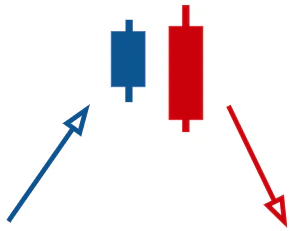
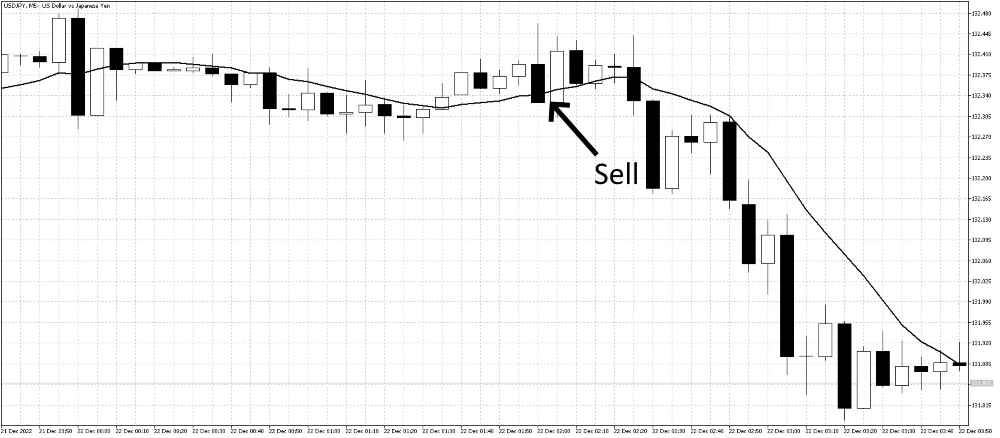
The bearish engulfing pattern is the reverse. A smaller bullish candle is followed by a larger bearish candle that fully engulfs it. This signals that sellers have taken control after a period of strength.
When this pattern forms near resistance or after a strong rally, it can indicate a potential reversal to the downside.
Using Candlestick Patterns in Real Trading
Candlestick patterns are most effective when used as part of a broader trading approach. They should not be traded in isolation but combined with key levels, trend direction, and market context.
For example, a bullish pattern forming at a strong support level carries more weight than the same pattern appearing in the middle of a range. Similarly, reversal patterns are more reliable when they align with overbought or oversold conditions.
Traders who focus on how patterns form, rather than simply memorizing them, tend to make better decisions. Understanding why a pattern appears provides more insight than the pattern itself.
Focus on Profit vs Loss, Not Just Win Rate
Candlestick patterns can improve timing, but they do not guarantee successful trades. Even strong patterns can fail, especially in volatile or news-driven markets.
What matters more is how trades are managed. A strategy with a moderate win rate can still perform well if losses are controlled and winning trades are allowed to develop. Candlestick patterns should be used to improve entries, while risk management determines long-term results.
By combining clear price action signals with disciplined risk control, traders can use candlestick analysis as a practical tool rather than relying on it as a prediction method.