
Nick Goold
The triple top is a bearish reversal pattern that appears after an uptrend and signals that buying pressure may be weakening. While it does not occur often, it can provide strong trading opportunities when it forms clearly.
The pattern develops when price reaches a similar high three times and fails to break higher. This repeated rejection suggests that buyers are losing control. Once price breaks below the support level formed between the highs, the pattern is confirmed and a potential downtrend can begin.
Because the structure reflects a shift in market sentiment, the move that follows can be sharp, especially when combined with fundamental catalysts.
How the Triple Top Pattern Forms
The triple top consists of three peaks at roughly the same level, with pullbacks in between. These pullbacks create a support level that becomes the key trigger point for the trade.
The highs do not need to be perfectly equal. Small differences are normal, and traders must use judgment when identifying the pattern.
What matters more is the repeated failure to move higher. Each rejection shows that sellers are becoming more active at that level.
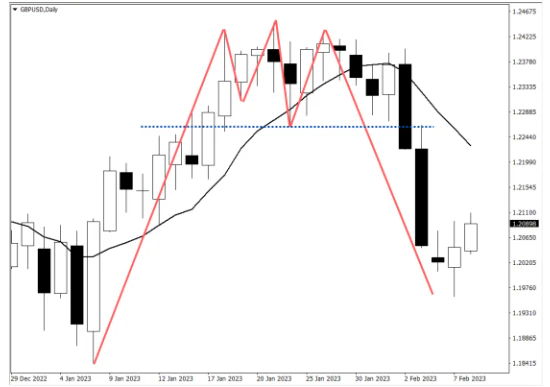
In many cases, a catalyst such as economic data or news helps trigger the break below support. Once that level is broken, traders who were previously buying may begin to exit, adding to downward momentum.
Why the Pattern Can Be Powerful
The triple top reflects a gradual shift from buying pressure to selling pressure. Instead of a sudden reversal, the market shows signs of weakness over time.
When support finally breaks, several factors can drive the move:
- Buyers exiting positions after failed breakouts
- New sellers entering on the breakdown
- Stop-loss orders triggering below support
This combination can create a faster move than expected, especially if the pattern forms on higher timeframes.
As a general rule, patterns on longer timeframes tend to be more reliable because they reflect broader market participation.
Entry Timing and Confirmation
The most common entry is after price breaks below the support level formed between the three highs. This confirms that the pattern is complete.
Some traders enter immediately on the break, while others wait for a small pullback to the broken support level before entering. This pullback can provide a more controlled entry with clearer risk levels.
Entering too early, before confirmation, increases the risk of false signals.
Setting Profit Targets
There are several ways to manage profit targets when trading a triple top. The best approach often depends on market conditions and your trading style.
A few common methods include:
- Measuring the height of the pattern and projecting it downward from the breakout
- Using retracement levels such as 38.2%, 50%, or 61.8% of the previous uptrend
- Targeting the next key support level or previous resistance zone
In stronger trends, scaling out at multiple levels can help secure profits while keeping part of the position open.
Stop Loss Placement and Risk Control
Managing risk is essential because not all triple tops lead to reversals. Some patterns fail, especially in strong bullish markets.
A common stop-loss approach is to place the stop above the most recent high. This level represents the point where the pattern is no longer valid.
Short-term traders may prefer tighter stops, such as placing them just above the most recent swing low after the breakout. This allows for smaller risk but may result in more frequent stop-outs.
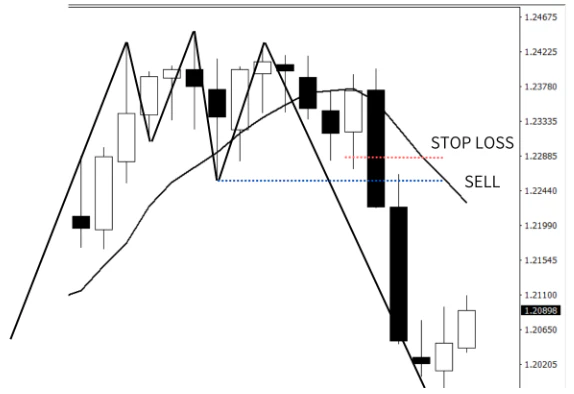
The key is to choose a stop level that matches your timeframe and risk tolerance.
Managing Emotions When Trading the Pattern
Because the triple top is not common, traders may feel excitement when they identify one. This can lead to rushed decisions or overconfidence. Staying disciplined is important. Before entering a trade, take time to review the setup, confirm the structure, and check for any upcoming news that could affect the market.
Losses are part of trading, even with strong patterns. Accepting this helps prevent emotional reactions such as chasing trades or increasing risk after a loss. Similarly, a successful trade should not lead to overconfidence. Performance should be measured over a series of trades, not a single outcome.
Think in Risk and Reward, Not Win Rate
The triple top does not appear frequently, but when it does, it can offer strong risk-to-reward opportunities. This makes it more important to focus on trade quality rather than the number of trades taken.
Even if some setups fail, maintaining controlled losses and allowing profitable trades to develop can lead to consistent results over time. Patience is key. Traders who wait for clear structures and follow their plan are more likely to benefit from this pattern when it appears. With experience, recognizing and trading triple tops becomes more natural, allowing you to take advantage of major turning points in the market.