
Nick Goold
Forex charts are one of the most important tools a trader uses. They turn raw price data into a visual format that is much easier to understand, helping traders see patterns, trends, and key levels more clearly. Instead of looking at numbers alone, charts allow you to interpret how the market behaves over time and how price reacts in different conditions.
For beginners, charts can feel overwhelming at first. However, once you understand the basic chart types, they become a powerful way to improve decision-making. Each chart type shows the same market data in a slightly different way, and learning how to read them properly helps you build a more structured approach to trading.
The three main types of forex charts are line charts, bar charts, and candlestick charts. Each has its own strengths, and understanding when to use them can make a noticeable difference in how you analyze the market.
Understanding Line Charts
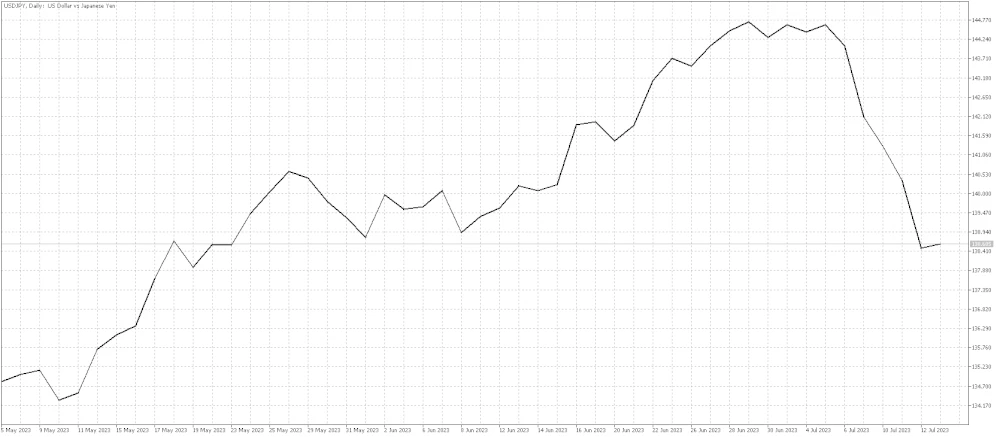
Line charts are the simplest type of forex chart. They connect closing prices over a selected time period to form a single continuous line. Because they only show closing prices, they remove a lot of short-term noise and provide a cleaner view of the overall trend.
This simplicity makes line charts especially useful for beginners. They help you focus on the bigger picture without getting distracted by small price movements within each trading period. If your goal is to understand whether a market is generally trending up, down, or moving sideways, a line chart can give you that answer quickly.
However, the simplicity also means that some important information is missing. Since line charts do not show opening prices, highs, or lows, they are less useful for detailed analysis or precise trade entries. As a result, traders often use them as a starting point before switching to more detailed chart types.
- Easy to read and understand
- Useful for identifying overall trends
- Reduces short-term noise
- Limited detail for advanced analysis
Understanding Bar Charts (OHLC)
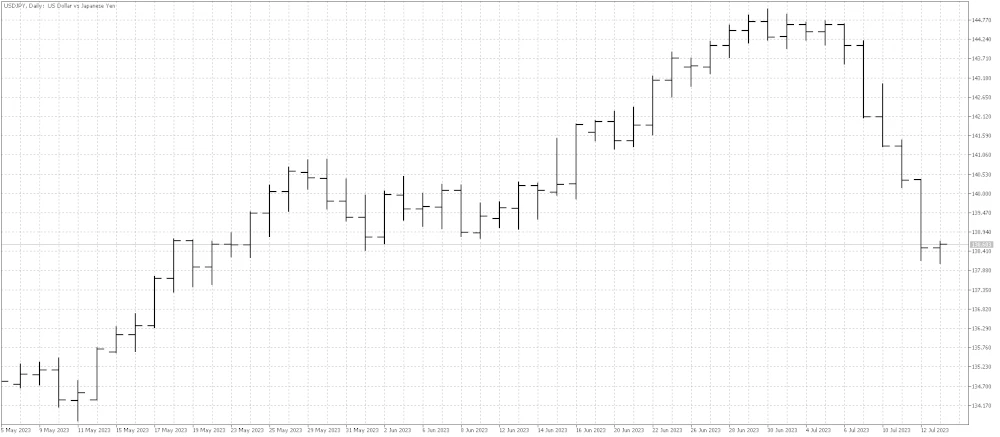
Bar charts provide more detailed information than line charts. Each bar represents a full trading period and shows four key data points: the opening price, the highest price, the lowest price, and the closing price. This is why they are often called OHLC charts.
The vertical line shows the full price range during the period, while the small horizontal lines indicate the opening and closing prices. This structure allows traders to see not just where price closed, but how it moved during the period.
This additional detail makes bar charts useful for understanding volatility and price behavior. Traders can see how strong a move was, whether price reversed during the period, and how wide the trading range was. However, for beginners, bar charts can look complex and harder to interpret at first glance.
- Shows full price range (open, high, low, close)
- Helps assess volatility and price movement
- More detailed than line charts
- Can be harder to read for beginners
Understanding Candlestick Charts
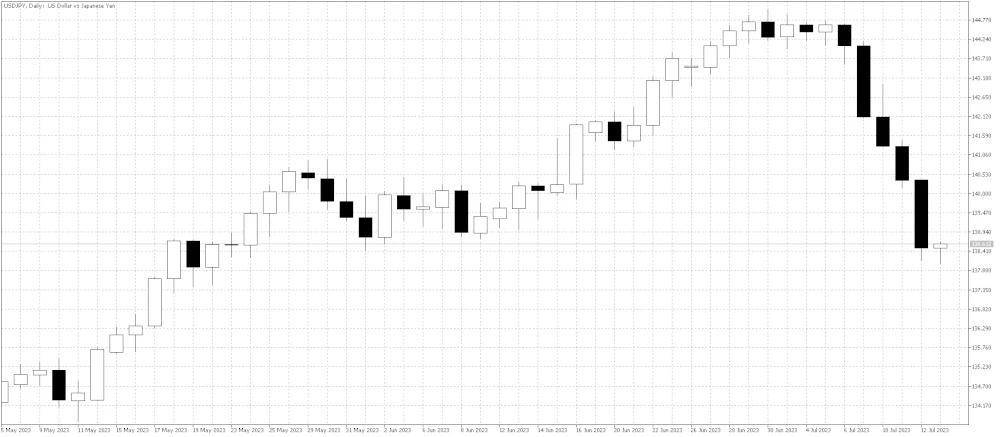
Candlestick charts are the most widely used chart type in forex trading. Like bar charts, they display open, high, low, and close prices, but they present this information in a more visual and intuitive way.
Each candlestick has a body and wicks. The body shows the distance between the opening and closing price, while the wicks show the highest and lowest prices reached during the period. If the closing price is higher than the opening price, the candle is typically shown as bullish. If the closing price is lower, it is shown as bearish.
This visual structure makes it easier to quickly understand market sentiment. Traders can immediately see whether buyers or sellers were in control and how strong that movement was. Over time, certain candlestick patterns can also help traders identify potential reversals or continuation setups.
While candlestick charts are powerful, they require practice to use effectively. Too much information on the chart can make it feel cluttered, especially when using lower timeframes. Learning to focus only on relevant patterns and key levels is important.
- Highly visual and easy to interpret
- Shows market sentiment clearly
- Useful for pattern recognition
- Requires practice to master
Choosing the Right Chart for Your Trading Style
No single chart type is better than the others. Each one provides a different perspective on the same market data, and the best choice depends on your trading style and experience level.
Line charts are useful for understanding long-term trends and keeping analysis simple. Bar charts offer more detailed insights into price movement and volatility. Candlestick charts provide a balance of detail and visual clarity, making them the preferred choice for many traders.
As you gain experience, you may find yourself using multiple chart types depending on the situation. For example, you might use a line chart to identify the overall trend and then switch to candlestick charts for more precise trade entries.
Developing the ability to read and interpret different chart types will give you a more complete understanding of the market. This deeper perspective helps you make better decisions and build a more consistent trading approach over time.