
Nick Goold
The Accumulation/Distribution (A/D) indicator is a widely used tool in forex and CFD trading that helps traders understand the relationship between price movement and trading volume. :contentReference[oaicite:0]{index=0}
Rather than focusing only on price, it shows whether money is flowing into or out of a market. This makes it useful for confirming trends, spotting early reversals, and understanding the strength behind price moves.
What the Accumulation/Distribution Indicator Shows
The A/D indicator is based on a simple idea. When price closes near the high of a range with strong volume, it suggests buying pressure. When price closes near the low, it suggests selling pressure.
By combining price position within a candle and volume, the indicator builds a running total that reflects overall market participation. This helps traders answer an important question: is the trend supported by real buying or selling interest, or is it weak and likely to fail?
How the A/D Line Works in Practice
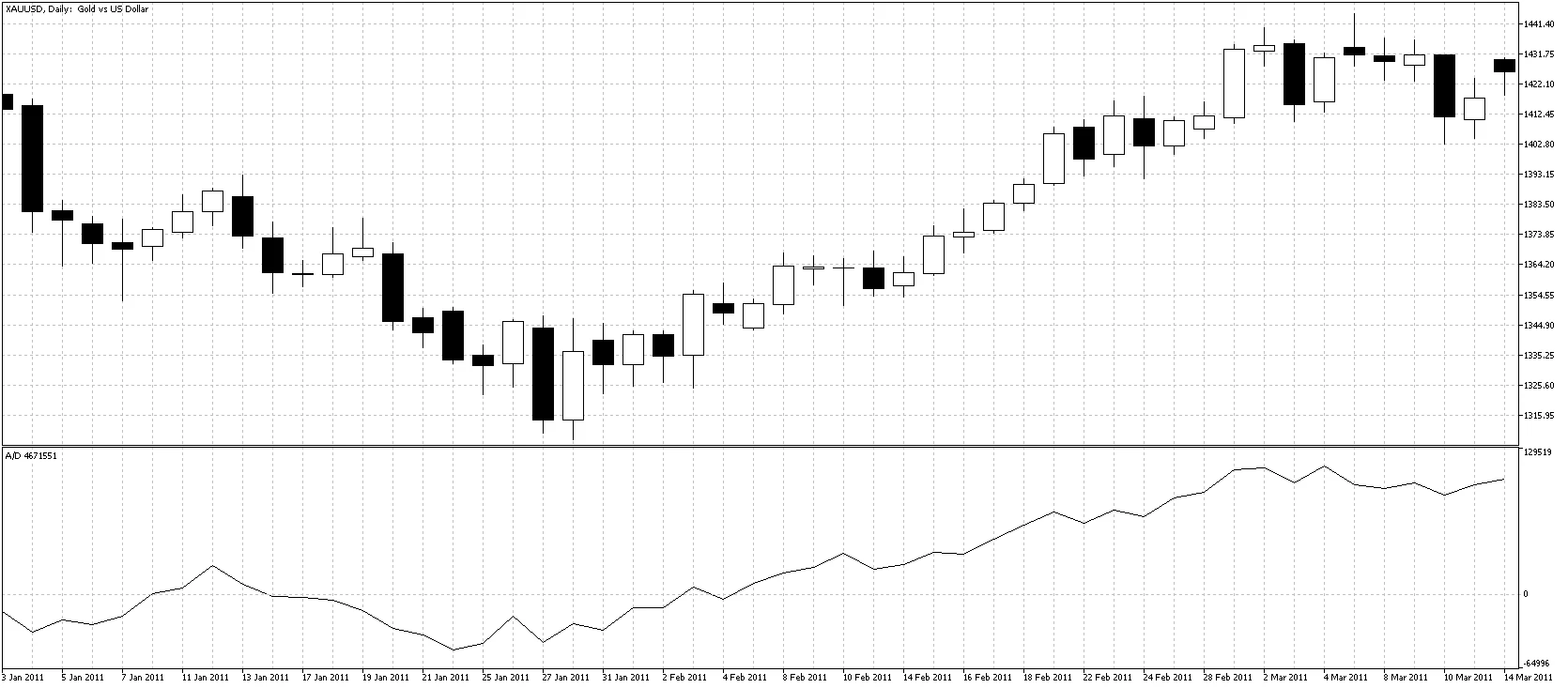
The A/D line moves higher when buying pressure dominates and moves lower when selling pressure increases. Over time, this creates a clear picture of whether the market is accumulating positions or distributing them.
When the A/D line rises alongside price, it suggests that the trend is supported by strong demand. When it falls while price rises, it may indicate hidden selling pressure. This difference is where the indicator becomes most useful.
Using A/D to Confirm Trends
One of the most practical uses of the A/D indicator is confirming trends. If price is trending higher and the A/D line is also rising, the move is supported by volume. This increases the probability that the trend will continue.
If price is rising but the A/D line is flat or falling, it suggests weaker participation. In this case, the trend may struggle to continue. This simple check can help avoid low-quality trades where price is moving without strong backing.
Spotting Divergence and Potential Reversals
Divergence is one of the most valuable signals the A/D indicator provides.
A bullish divergence occurs when price makes lower lows, but the A/D line forms higher lows. This suggests that selling pressure is weakening and buyers may start to take control.
A bearish divergence occurs when price makes higher highs, but the A/D line fails to follow. This often signals that buying pressure is fading.
These setups do not guarantee reversals, but they can provide early warning signs that market conditions are changing.
Identifying Support and Resistance with A/D
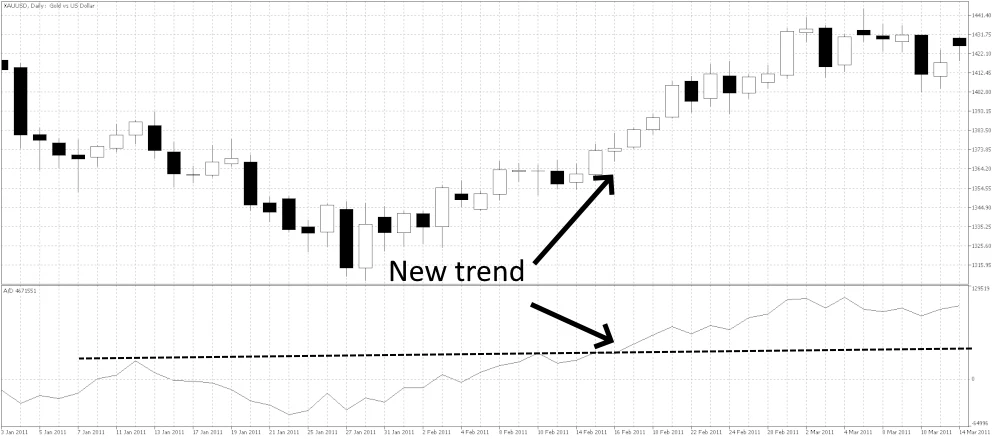
The A/D line can also help identify key levels in the market. When the indicator breaks above previous highs, it shows increasing buying pressure. This often supports the formation of new support levels.
When it breaks below previous lows, it suggests stronger selling pressure, which can reinforce resistance levels. This adds another layer of confirmation when combined with price-based support and resistance analysis.
How to Use A/D in a Trading Strategy
The A/D indicator works best as a confirmation tool rather than a standalone signal.
A practical approach is to:
- Use price action or structure to identify a setup
- Check whether the A/D line supports the move
- Avoid trades where price and volume flow are not aligned
This keeps the strategy simple while improving trade selection.
For example, in an uptrend, traders can look for pullbacks to support and confirm that the A/D line remains stable or rising before entering.
Advantages of the Accumulation/Distribution Indicator
The A/D indicator provides insight that price alone cannot offer.
It helps traders:
- Understand whether trends are supported by real volume
- Detect hidden buying or selling pressure
- Identify early signs of potential reversals
This makes it particularly useful in trending markets where confirmation is important.
Limitations to Be Aware Of
Like all indicators, A/D has limitations. It is based on past data, so signals can lag behind current price action. This means traders may not catch the exact turning point.
It can also produce misleading signals in choppy or low-volume markets where price moves lack consistency. Because of this, it should not be used alone. Combining it with simple tools like support and resistance or moving averages can improve reliability.
Building a Consistent Approach with A/D
The Accumulation/Distribution indicator is most effective when used to improve decision quality rather than predict the market. By focusing on whether price moves are supported by volume, traders can avoid weak setups and focus on stronger opportunities.
Over time, this leads to more consistent trade selection and better overall performance, especially in markets where momentum plays a key role.