
Nick Goold
In the foreign exchange (FX) market, currency prices are typically driven by supply and demand. Buyers and sellers react to economic data, interest rates, inflation, and global capital flows, which causes exchange rates to move continuously. This system is known as a free-floating exchange rate, where market forces determine the value of a currency.
However, not all currencies are freely traded. Some countries choose to fix, or “peg,” their currency to the US dollar to maintain stability. This approach is known as dollar pegging, and it plays an important role in both global economics and FX trading.
What Is Dollar Pegging and How It Works
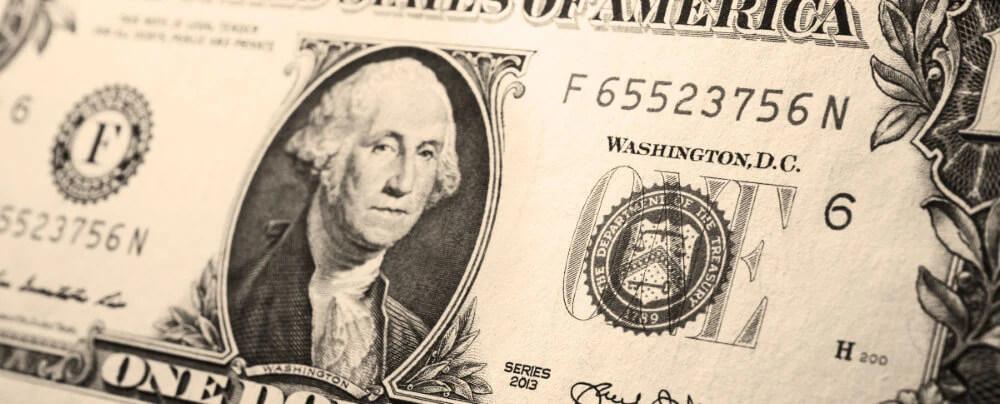
Dollar pegging is a system where a country fixes its currency to the US dollar at a predetermined exchange rate. Instead of allowing the currency to fluctuate freely, the central bank actively manages the exchange rate by buying or selling its own currency in the market.
If the currency becomes too strong, the central bank may sell its currency to push it lower. If it becomes too weak, the central bank may buy its currency to support it. This constant intervention helps keep the exchange rate within a targeted range.
There are different types of pegs depending on how strict the system is:
A hard peg means the exchange rate is fixed with almost no flexibility, regardless of economic conditions.
A soft peg allows some movement within a defined range, giving the central bank limited flexibility.
Why Countries Use Dollar Pegs
For many countries, especially smaller or emerging economies, stability is the main reason for adopting a dollar peg. A fixed exchange rate makes international trade more predictable, which helps businesses plan imports, exports, and investment decisions.
It also builds confidence among foreign investors. When a currency is stable against the US dollar, investors face less exchange rate risk, making the country more attractive for capital inflows.
However, this stability comes at a cost. By fixing the exchange rate, a country gives up some control over its own monetary policy. Interest rates and money supply decisions often need to align with the US, even if domestic economic conditions are different.
Currency Boards: A More Strict System
A currency board is a stricter version of a dollar peg. Under this system, every unit of domestic currency must be backed by an equivalent amount of foreign reserves, usually US dollars.
This creates a very high level of credibility because the money supply is directly linked to foreign reserves. The central bank cannot freely print money or adjust policy, which reduces the risk of inflation or currency devaluation.
While this system builds strong confidence, it also removes flexibility. In times of economic stress, the country has fewer tools to respond.
Historical Examples of Dollar Peg Systems
Dollar pegging has played a key role in global financial history. Two major examples highlight how exchange rate systems shape markets:
The Bretton Woods system established the US dollar as the global reserve currency, with other currencies fixed to it. This system collapsed in 1971 when the US ended gold convertibility.
The Plaza Accord in 1985 showed how coordinated policy actions can move exchange rates, leading to a sharp appreciation of the Japanese yen and a weaker US dollar.
These events demonstrate that even fixed systems can change quickly when economic or political pressures build.
Modern Examples of Dollar Pegged Currencies
Several countries still maintain dollar pegs today, each with slightly different approaches:
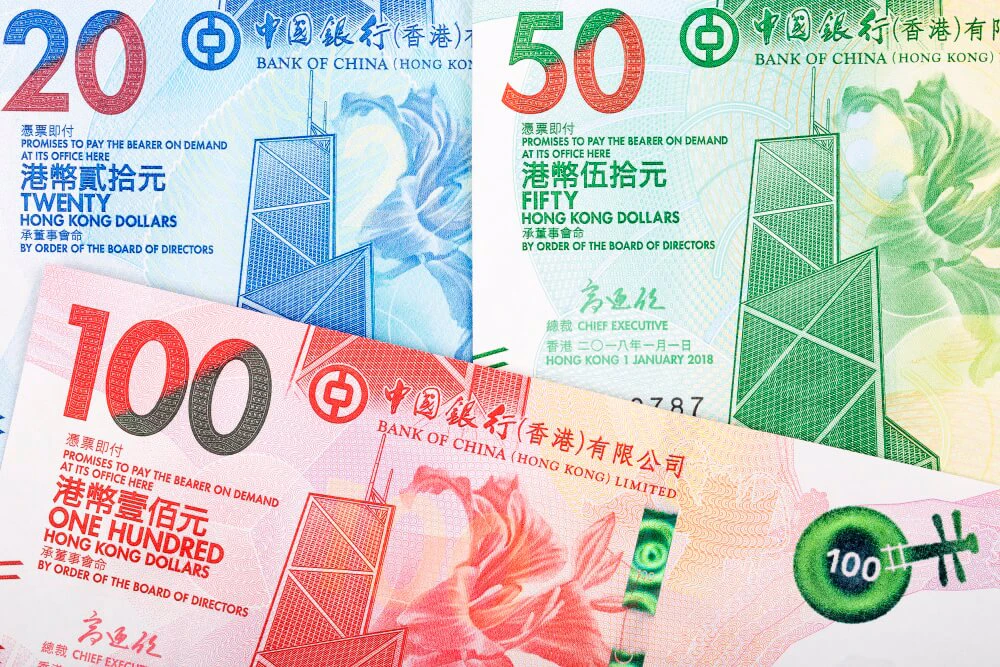
Hong Kong maintains a tight trading band around 7.8 HKD per USD, actively managed by its monetary authority.
Saudi Arabia fixes its currency at 3.75 SAR per USD, supported by oil revenues and large reserves.
China uses a managed system, allowing gradual movement while still guiding the exchange rate through daily reference levels.
Advantages and Risks of Dollar Pegging
Dollar pegging can bring stability, but it also introduces risks that traders and investors must understand.
On the positive side, it reduces exchange rate volatility and supports trade and investment flows. This is especially useful for economies that rely heavily on exports or foreign capital.
On the downside, it limits flexibility. When economic conditions change, the central bank may not be able to adjust interest rates or currency levels effectively. This can lead to imbalances over time.
Another major risk is exposure to external shocks. Changes in global interest rates, oil prices, or investor sentiment can put pressure on the peg. If the market believes the peg is unsustainable, it can trigger large speculative flows.
What FX Traders Should Watch
For FX traders, dollar pegs create a very different trading environment compared to free-floating currencies. Price movement is often limited, but when pressure builds, the potential for large moves increases significantly.
Key factors to monitor include:
Foreign exchange reserves – declining reserves may signal difficulty maintaining the peg
Interest rate differentials – especially versus the US
Commodity prices – particularly for oil-dependent economies
Political and economic stability

If a peg comes under pressure, volatility can increase rapidly. Traders should be cautious, especially when using leverage, as moves can be sudden and extreme.
The Risk of De-Peg Events
The biggest risk in pegged currencies is a sudden de-peg. When a central bank abandons a fixed exchange rate, the market can reprice the currency instantly.
A well-known example is the Swiss franc in 2015. When the peg to the euro was removed, the currency surged by around 20% in a very short time. Many traders were unable to exit positions, leading to significant losses.
This highlights an important lesson for traders: pegged currencies may appear stable, but hidden risk can build over time. When that risk is released, the move is often sharp and unforgiving.
Why Dollar Pegging Still Matters in FX Trading
Even in today’s global markets, dollar pegging remains highly relevant. It influences capital flows, interest rate expectations, and overall market structure.
For traders, understanding how and why a peg exists can provide an edge. It helps identify when a market is likely to remain stable and when pressure may be building beneath the surface.
In many cases, the best opportunities come not from the stability of the peg itself, but from the moments when that stability starts to break.