
Nick Goold
A trailing stop is one of the most practical tools traders can use to manage risk and protect profits. It allows you to adjust your stop loss automatically as the market moves in your favor, helping you stay in winning trades while reducing the risk of giving back gains.
Many traders focus heavily on entries, but how you manage a trade after entering is just as important. A trailing stop helps you handle this process with structure and discipline.
What Is a Trailing Stop?
A trailing stop is a dynamic stop loss that moves with the market when your trade is in profit. Instead of staying fixed, it adjusts as price moves in your favor while remaining unchanged if the market moves against you.
For example:
- You buy USD/JPY at 130.05
- You set a trailing stop 10 pips below price
- If price rises to 130.65, your stop moves to 130.55
If the market then reverses and hits your stop, the trade closes automatically, locking in profit.
Why Trailing Stops Are Important
One of the biggest challenges in trading is managing open positions. Traders often exit too early or hold too long. A trailing stop helps balance both.
It allows you to:
- Stay in profitable trades longer
- Protect gains as price moves
- Reduce the need for constant monitoring
This makes it easier to follow a consistent process rather than relying on emotion or guesswork.
Locking in Profits as the Market Moves
A trailing stop helps secure profits without needing to predict an exact exit level.
In trending markets, price can move further than expected. Exiting too early can limit your potential returns. A trailing stop allows you to stay in the trade while gradually protecting your gains.
This approach is especially useful when:
- The market is trending strongly
- You are unsure where to take profit
- You want to let the trade develop naturally
Limiting Losses and Protecting Capital
Even if a trade starts well, the market can reverse at any time. Without proper management, a profitable trade can turn into a loss.
A trailing stop helps prevent this by:
- Reducing risk as the trade moves in your favor
- Protecting unrealized profits
- Closing trades automatically when momentum changes
This is one of the key advantages of using a trailing stop compared to a fixed stop loss.
Reducing Emotional Decision-Making
Emotions play a major role in trading mistakes. Fear can cause traders to exit too early, while greed can lead them to hold too long.
A trailing stop removes much of this pressure by automating part of the decision-making process.
Instead of reacting to every price movement, you can rely on your predefined rules.
This helps:
- Improve discipline
- Reduce stress during trades
- Maintain consistency over time
Using Trailing Stops to Maximize Trends
In strong trends, it is often difficult to identify the best exit point. Many traders either take profits too early or miss the majority of the move.
A trailing stop allows you to stay in the trend while gradually securing profits.
This means you can capture larger moves without needing to predict market tops or bottoms.
Over time, just a few strong trending trades can have a significant impact on overall performance.
How to Use Trailing Stops Effectively
While trailing stops are useful, they need to be applied correctly.
Key considerations:
Use market structure:
- Place trailing stops below support in an uptrend
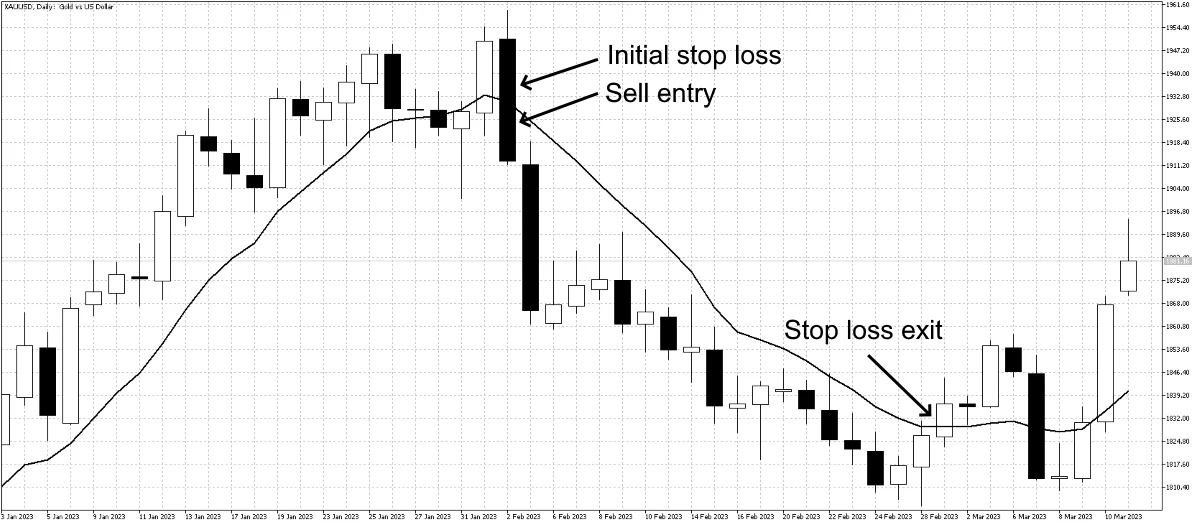
- Use moving averages or trendlines as guides
Be patient:
- Avoid moving your stop too early
- Give the trade room to develop
Adjust based on conditions:
- Wider stops in volatile markets
- Tighter stops in slower conditions
Using a trailing stop too aggressively can result in being stopped out too early, while using it too loosely may reduce its effectiveness.
Using Time-Based Stop Adjustments
In addition to price-based trailing stops, some traders also use time-based adjustments.
This involves tightening the stop gradually as time passes, especially if the trade is not moving strongly.
For example:
- Reduce your stop distance every hour
- Close trades that are not progressing
This helps manage risk when momentum slows and prevents trades from remaining open unnecessarily.
Building a Consistent Exit Strategy
A trailing stop is not just a tool—it is part of a broader risk management process.
When used correctly, it helps you:
- Protect profits
- Control risk
- Stay consistent in your execution
Instead of trying to predict perfect exits, focus on managing trades effectively. Over time, this approach leads to more stable and repeatable results.
In forex trading, how you exit trades often has a greater impact than how you enter them. A trailing stop provides a structured way to handle that process.