
Nick Goold
Stop hunting is a concept in forex trading where price moves into areas filled with stop-loss orders, often triggering sharp and fast movements. Stop-loss orders are used by traders to exit losing positions at predefined levels. When many of these orders are clustered together, they can create sudden bursts of momentum once triggered.
Understanding how stop hunting works is important for all traders. Even if you do not actively use this strategy, being aware of it can help you avoid getting caught in unnecessary losses and improve how you place your stops.
This type of price movement is often driven by larger market participants such as banks or institutional traders. While smaller traders cannot move the market themselves, they can learn to recognize these patterns and react accordingly.
What is stop hunting in forex trading?
Stop hunting occurs when price moves into areas where many stop-loss orders are likely to be placed. These areas are usually around obvious support and resistance levels, where many traders place their stops based on common strategies.
When these levels are reached, stop-loss orders are triggered, creating additional buying or selling pressure. This can lead to rapid price movements in a short period of time.
Although some traders view stop hunting as unfair or manipulative, it is better understood as a natural result of how liquidity works in the market. Large traders need liquidity to enter and exit positions, and clusters of stop-loss orders provide that liquidity.
When stop hunting is more likely to occur
Stop hunting tends to happen more often during periods of low liquidity. In quieter market conditions, it takes less volume to move price, making it easier for larger participants to push the market toward key levels.
Common situations where stop hunting may occur include:
- Public holidays when major financial centers are closed
- Early Asian session, particularly before 9:00 Tokyo time
- Periods of low trading activity with limited market participation
During these times, price movements can appear sudden and exaggerated, especially around well-known technical levels.
How to identify likely stop-loss areas
Many traders use similar technical approaches, often learned from the same books, courses, or online content. As a result, stop-loss orders tend to cluster around predictable areas.
The most common locations include:
- Below support levels where buyers expect price to hold
- Above resistance levels where sellers expect price to reverse
- Near round numbers and obvious chart patterns
The more visible and widely followed a level is, the more likely it is that stop-loss orders are concentrated there. By understanding this behaviour, traders can anticipate where liquidity may exist.
Common stop hunting strategies
There are two main approaches traders use when dealing with stop-loss clusters. Both rely on understanding how price behaves when these levels are triggered.
One approach is to enter before the stop-loss orders are triggered. In this case, traders position themselves ahead of a key level, expecting that once stops are activated, price will move quickly in their favour.
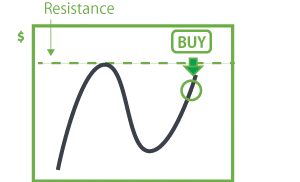
For example, if resistance is clearly defined at a level such as 130.00, many traders may place stop-loss orders just above it. Larger traders may begin buying slightly below this level, pushing price higher until those stops are triggered. Once triggered, the additional buying pressure can drive price quickly higher, allowing early entrants to exit with profit.
The second approach is to trade after stop-loss orders have been triggered. Once the initial spike has occurred and the market has absorbed the orders, price may reverse direction.
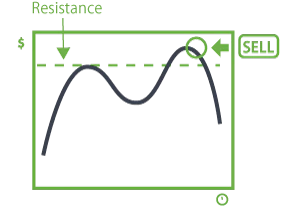
In this scenario, traders wait for the fast move to complete and look for signs of exhaustion. If there is no strong fundamental reason supporting the move, the price may return to its previous range, offering a reversal opportunity.
Managing risk when trading stop hunting setups
Stop hunting strategies can be profitable, but they also carry significant risk. Because these trades depend on fast price movements, they require precise execution and clear risk control. A typical approach is to use a relatively small stop-loss and a larger profit target. For example, a trader might risk 5 pips to target 10 pips or more. This allows for a favourable risk-reward ratio if the move develops as expected.
However, if the market fails to break a key level, price can reverse quickly. In these situations, it is important to reduce risk early rather than hold onto a losing position. Clear planning is essential. Before entering a trade, you should already know where you will exit if the trade works and where you will exit if it fails.
Mental control when trading fast market moves
Trading around stop-loss clusters can be stressful due to the speed of price movement. It is not always easy to predict when larger players will act, and timing is critical. Like any trading strategy, there is no guarantee of success. Traders must be prepared for losses and avoid becoming emotionally attached to any single trade.
Maintaining calm and discipline is especially important during fast-moving conditions. Reacting impulsively can lead to poor execution, while a controlled approach allows you to follow your plan effectively.
By understanding how stop hunting works, where it is likely to occur, and how to manage risk, traders can turn what appears to be unpredictable price movement into a structured trading opportunity.