
Nick Goold
The triangle pattern is one of the most common price action patterns in technical analysis. It forms when the market begins to consolidate, with price moving into a tighter range over time. This tightening structure reflects a balance between buyers and sellers, often leading to a strong breakout once that balance is resolved.
Triangle patterns are especially useful during quieter market conditions, where volatility decreases before expanding again. For traders, this creates an opportunity to prepare for a potential breakout rather than chasing fast-moving markets.
Understanding Triangle Patterns
All triangle patterns share a similar structure. Price moves between two converging trendlines, creating a narrowing range. As the pattern develops, each move becomes smaller, showing that momentum is building for a larger move.
There are three main types of triangle patterns, each with slightly different characteristics and implications.
Symmetrical Triangle
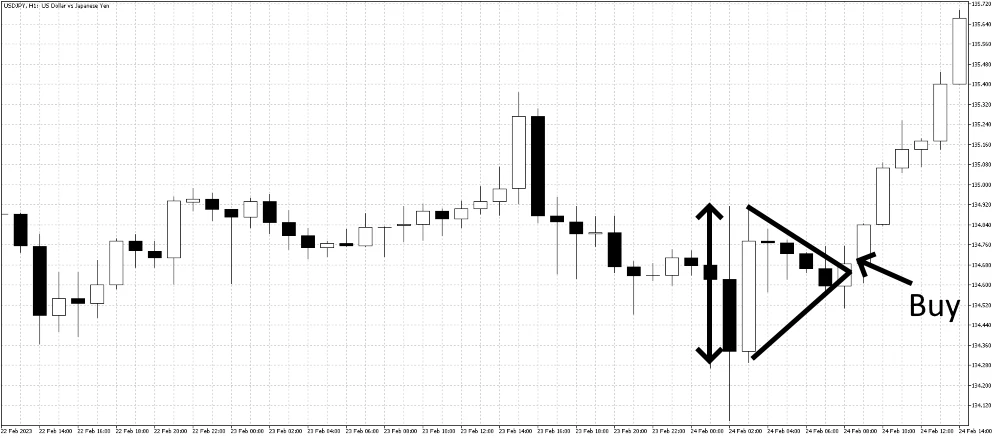
A symmetrical triangle forms when price creates both higher lows and lower highs. This shows that neither buyers nor sellers are in control. The pattern reflects a period of indecision, and the breakout direction is not clear in advance.
Because of this, traders typically wait for the breakout before deciding on direction rather than trying to predict it.
Ascending Triangle
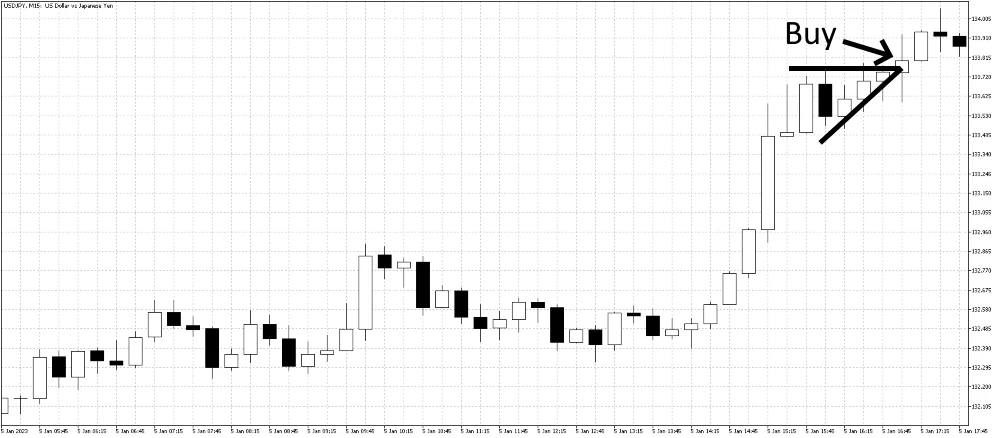
An ascending triangle forms when price repeatedly tests a horizontal resistance level while creating higher lows. This suggests that buyers are becoming more aggressive, gradually pushing price upward.
Although this pattern often leads to an upside breakout, it is not guaranteed. A break below the rising trendline can still result in a downward move, which is why confirmation is important.
Descending Triangle
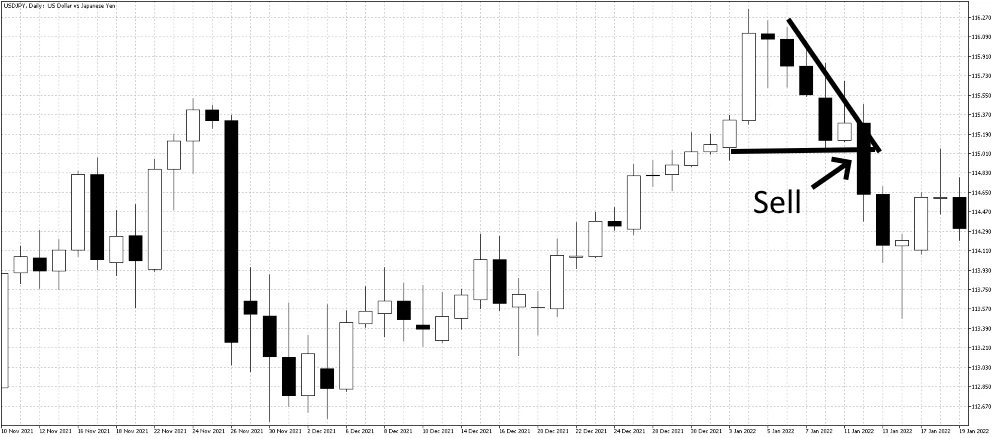
A descending triangle forms when price holds a horizontal support level while forming lower highs. This indicates increasing selling pressure as sellers push price down toward support.
This pattern is typically seen as bearish, with a higher probability of a downside breakout. However, like all patterns, unexpected moves can occur, especially during news events or shifts in market sentiment.
How to Trade Triangle Breakouts
Most traders approach triangle patterns by waiting for a breakout. This happens when price moves clearly outside the pattern and shows signs of continuation. Entries are usually placed just above resistance or below support, depending on the direction of the breakout.
There are two main approaches to entry. Some traders enter immediately when price breaks out, aiming to capture the move early. Others prefer to wait for confirmation, allowing price to stay outside the triangle for some time before entering.
- Early entry offers better risk-reward but higher chance of false signals
- Confirmation entry improves reliability but may reduce potential profit
- Volume and momentum can help confirm breakout strength
The choice between these approaches depends on trading style and risk tolerance.
Managing Risk When Trading Triangle Patterns
Risk management is essential when trading breakouts. Not every triangle pattern will result in a strong move, and false breakouts are common, especially in low-volume conditions.
Stop losses are typically placed just inside the triangle, where the pattern becomes invalid. If price moves back into the range, it often signals that the breakout has failed.
Profit targets are commonly based on the size of the triangle. Traders measure the widest part of the pattern and project that distance from the breakout point. This provides a structured way to estimate potential movement.
- Exit quickly if price returns inside the triangle
- Use measured moves to set realistic targets
- Consider support and resistance for additional target levels
Trailing stops are also widely used, especially when the breakout develops into a strong trend.
Patience and Timing in Triangle Patterns
Triangle patterns can take time to develop, which often tests a trader’s patience. Entering too early, before the breakout, is one of the most common mistakes. This can lead to being trapped in sideways movement or reacting to false signals.
Waiting for the market to commit to a direction reduces unnecessary trades and improves overall decision-making. When the breakout finally occurs, it is important to stay focused and follow the trading plan rather than reacting emotionally.
Although triangle patterns may have a lower win rate compared to some strategies, the size of successful moves can be significant. This is why discipline and consistency matter more than trying to win every trade.
Improve Risk Management
Triangle patterns are often used in trend continuation strategies, where large moves can outweigh smaller losses. Even if only half of the trades are successful, a strong risk-reward approach can lead to positive results over time.
Managing losses quickly and allowing winning trades to develop is key. Instead of focusing on how often a trade wins, focus on how much is gained when it works and how much is lost when it fails. This mindset helps reduce pressure and allows traders to approach breakout setups with more confidence and consistency.