
Nick Goold
Over the weekend, President Donald Trump reaffirmed his commitment to imposing significant tariffs on imports from Canada, Mexico, and China, leading to substantial movements across financial markets on Monday. These tariffs are scheduled to take effect at 12:01 a.m. Eastern Time on Tuesday, February 4, 2025. The measures include a 25% tariff on goods from Canada and Mexico, with a lower 10% tariff specifically on Canadian energy resources, and a 10% tariff on Chinese imports.
Trump has warned that Americans may feel economic “pain” from his tariffs on key trading partners, emphasizing that this is a necessary sacrifice for long-term economic gains. His administration argues that the tariffs will create fairer trade conditions and boost American industries, but markets are currently reacting negatively to the uncertainty.
This announcement has already caused major volatility in global markets. Canada has retaliated with a 25% tariff on U.S. goods, and Mexico is expected to announce similar measures. The fear of a global trade war has sent stock markets tumbling, increased currency volatility, and driven commodities like oil higher as investors seek safety.
For a deeper analysis of how Trump’s tariffs could impact markets and create trading opportunities, see our previous article: How Trump’s Tariffs Could Impact Markets and Create Opportunities.
President Trump is set to speak with Canadian Prime Minister Justin Trudeau and Mexican President Claudia Sheinbaum on Monday, February 3, 2025, to discuss the situation. However, he has downplayed expectations of reversing the tariffs, suggesting that this is part of a broader negotiation strategy to secure better trade deals for the United States.
Market Reactions and Outlook
While the market was expecting tariffs, the reaction has been much bigger than expected. This shows how hard it is for investors to predict Trump’s decisions and the impact of a trade war. The tariffs were not a surprise, but the strong market moves show that investors are reacting with uncertainty, especially with the risk of more tariffs on other countries.
FX
The U.S. dollar has strengthened significantly, reflecting expectations of rising U.S. inflation due to the tariffs.
- The USD Index has now returned to yearly highs.
- USD/JPY is back above the critical 155.00 support level, indicating further upside potential.
- AUD/USD has hit a new 5-year low, as concerns over global trade tensions and risk-off sentiment drive investors toward the stronger U.S. dollar.
- If trade talks fail and Trump expands tariffs to additional countries, the dollar could strengthen further.
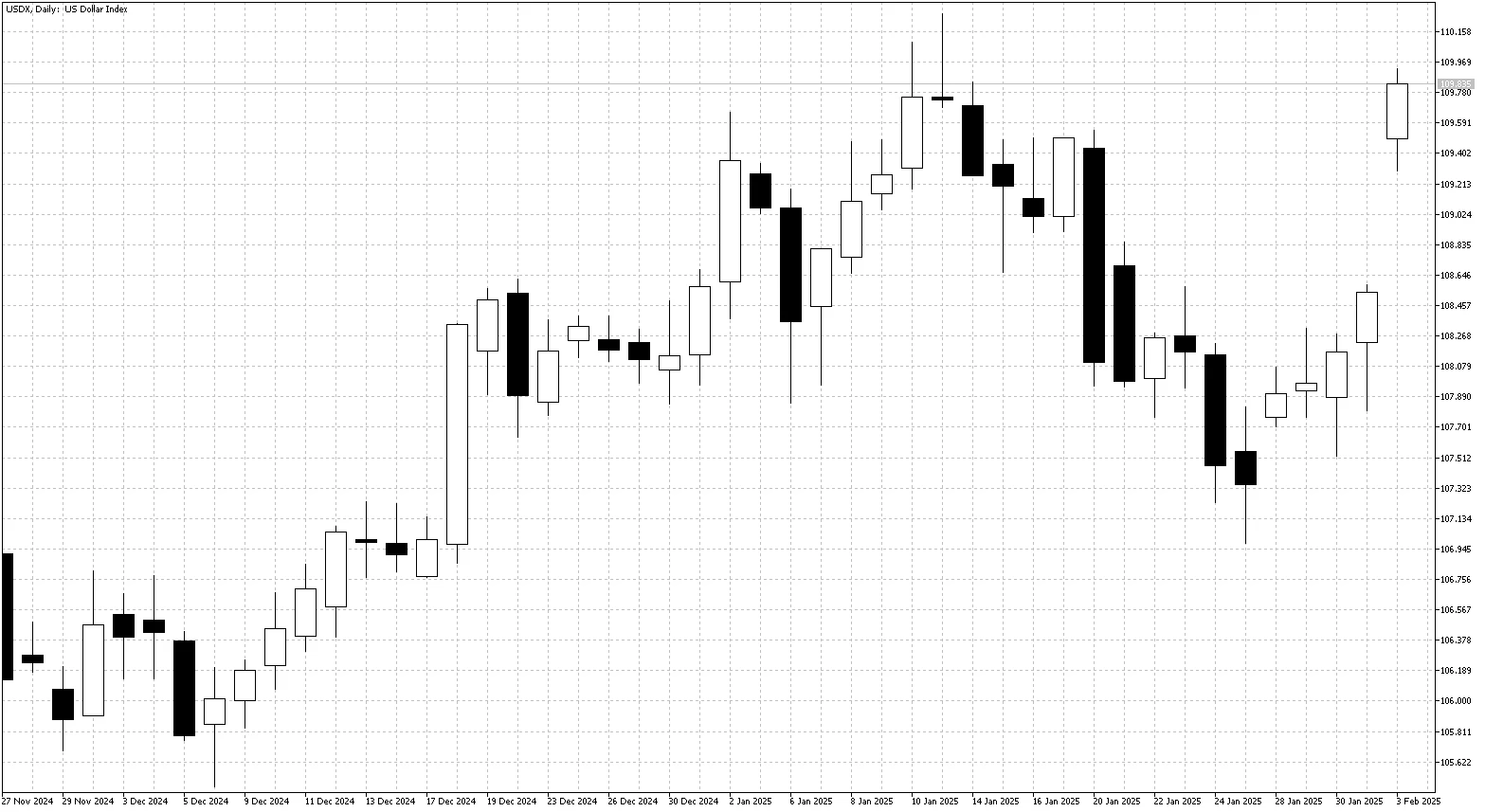
USD Index Daily Chart
VIX (Volatility Index)
Market volatility spiked on Monday as investors worried about the potential for Trump to target more countries.
- The VIX could rise further if the tariffs go into effect and retaliation escalates.
- If Trump introduces additional tariffs, equity market volatility is likely to increase sharply.
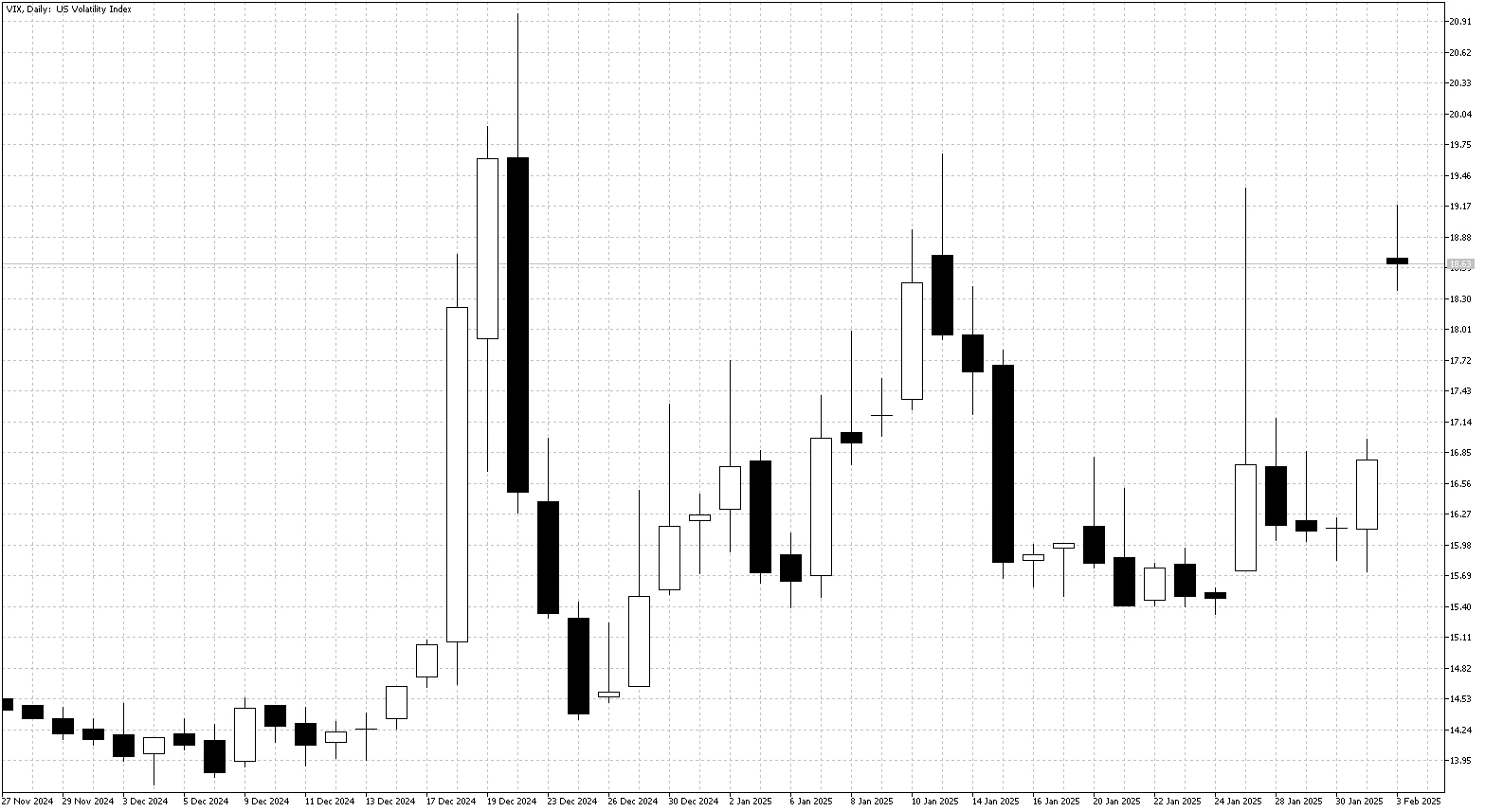
VIX Daily Chart
S&P 500
U.S. equity markets have not yet opened, but futures are already down around 2%.
- While this news was anticipated, a bounce-back is possible given how far equities have risen over the past two years.
- However, further large losses are likely if more negative headlines emerge regarding global trade.
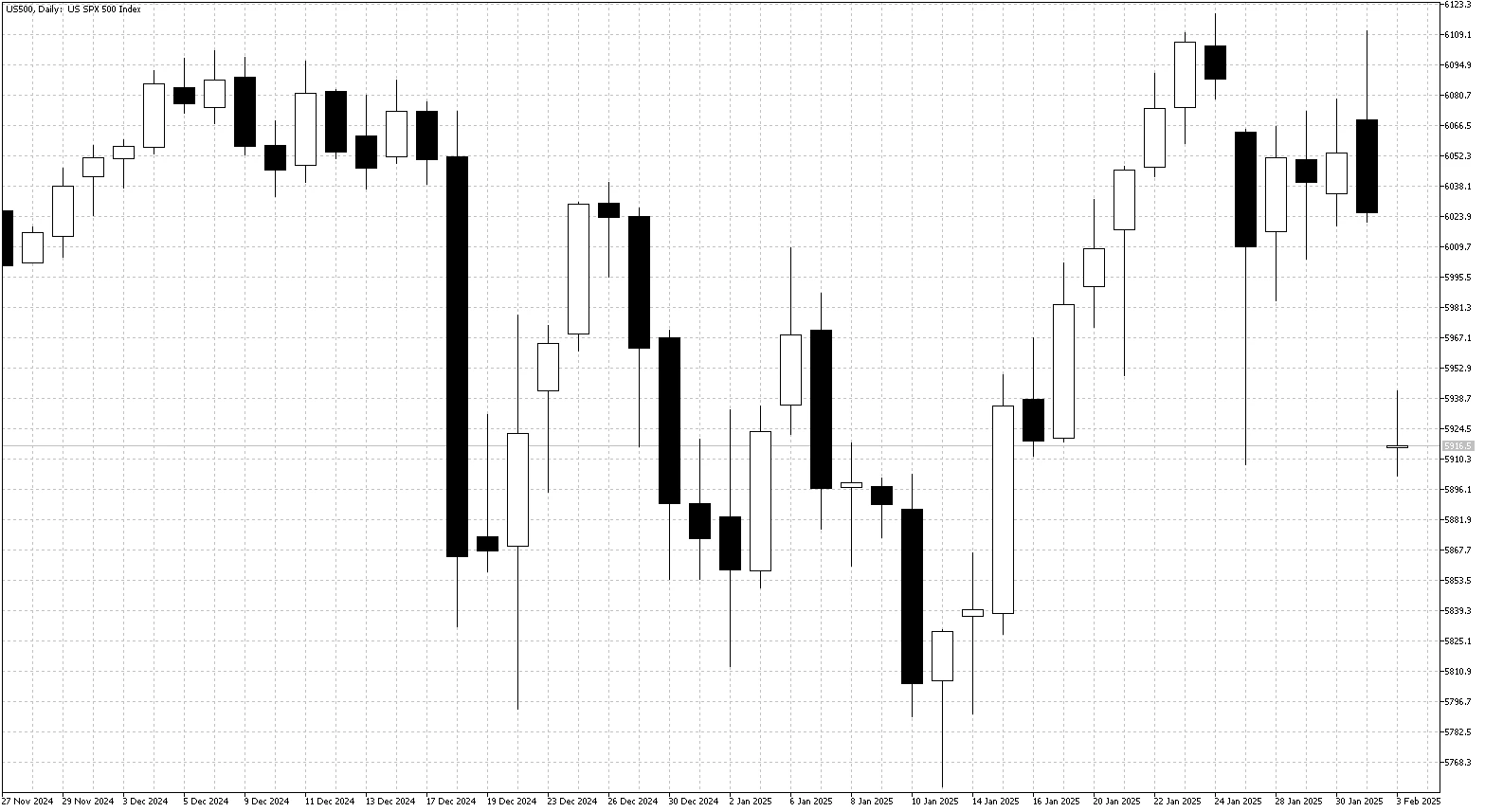
S&P 500 Daily Chart
Nikkei 225
The Nikkei 225 is down over 2%, as concerns grow that Japan may become Trump’s next target.
- Japan is a major trading partner of the U.S., and potential tariffs could have severe economic implications.
- The technical picture remains weak, with the Nikkei repeatedly failing at the 40,000 resistance level.
- Looking for selling opportunities seems more favorable than buying at current levels.
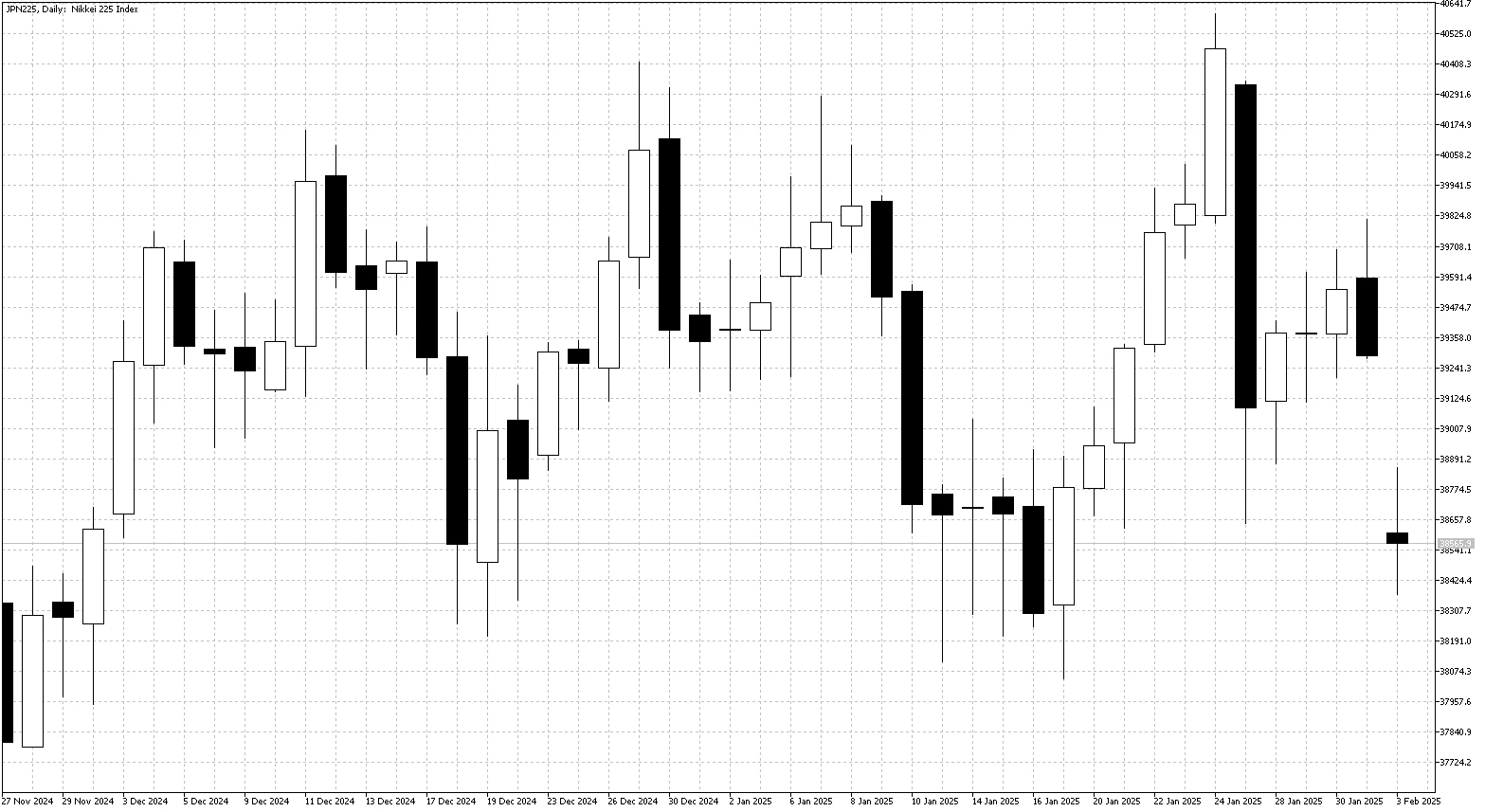
Nikkei Daily Chart
Gold
Gold has fallen so far today, as the stronger U.S. dollar makes the metal less attractive for investors.
- Some traders remain bullish on gold, expecting a trade war to increase demand for safe-haven assets.
- However, for now, the stronger dollar and rising Treasury yields are limiting gold’s upside.
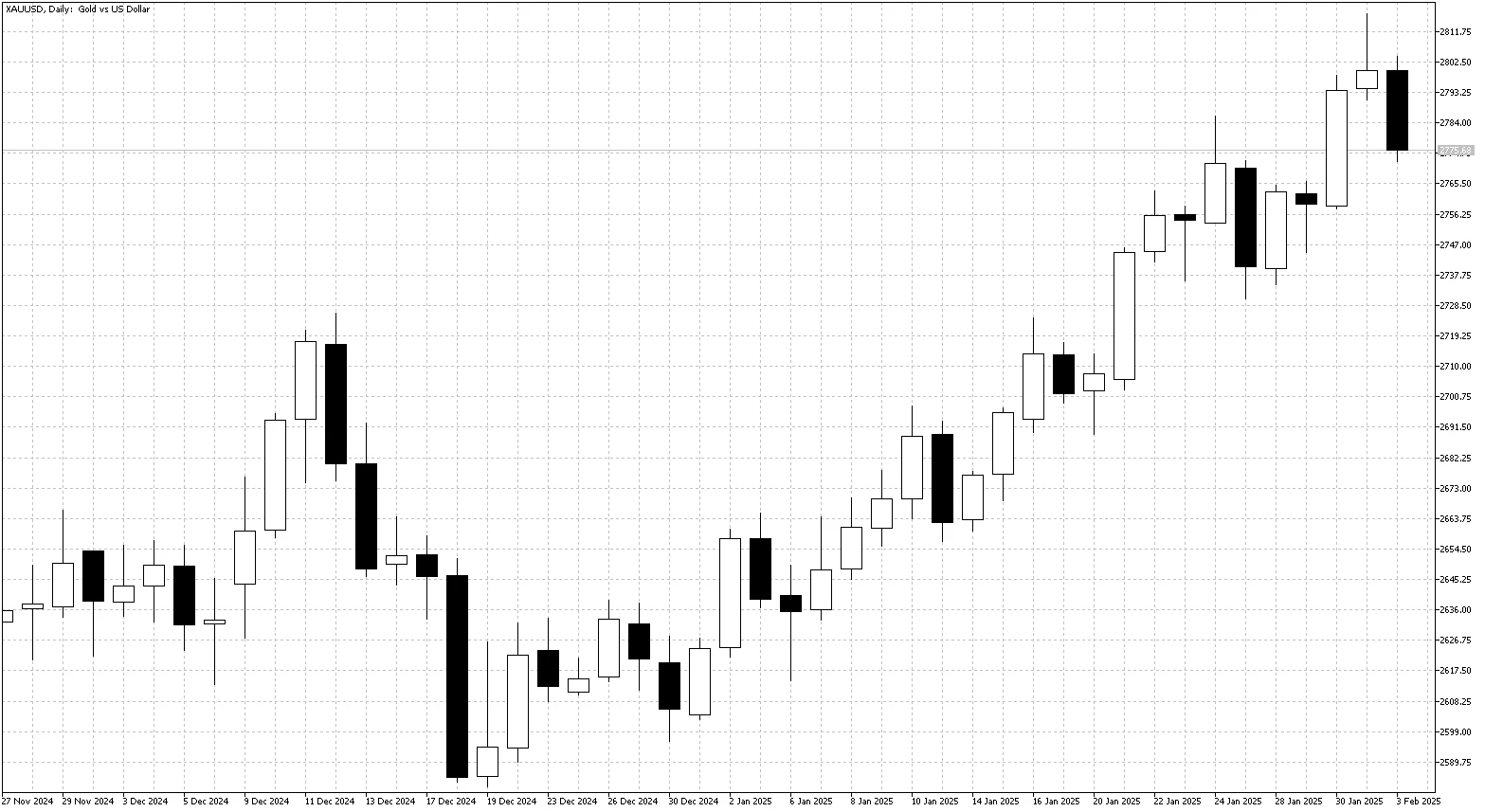
Gold Daily Chart
Oil
Oil prices initially rose, as a 10% tariff on Canadian energy imports was seen as bullish.
- However, the gains have been limited, as the market remains focused on broader economic risks and global growth concerns.
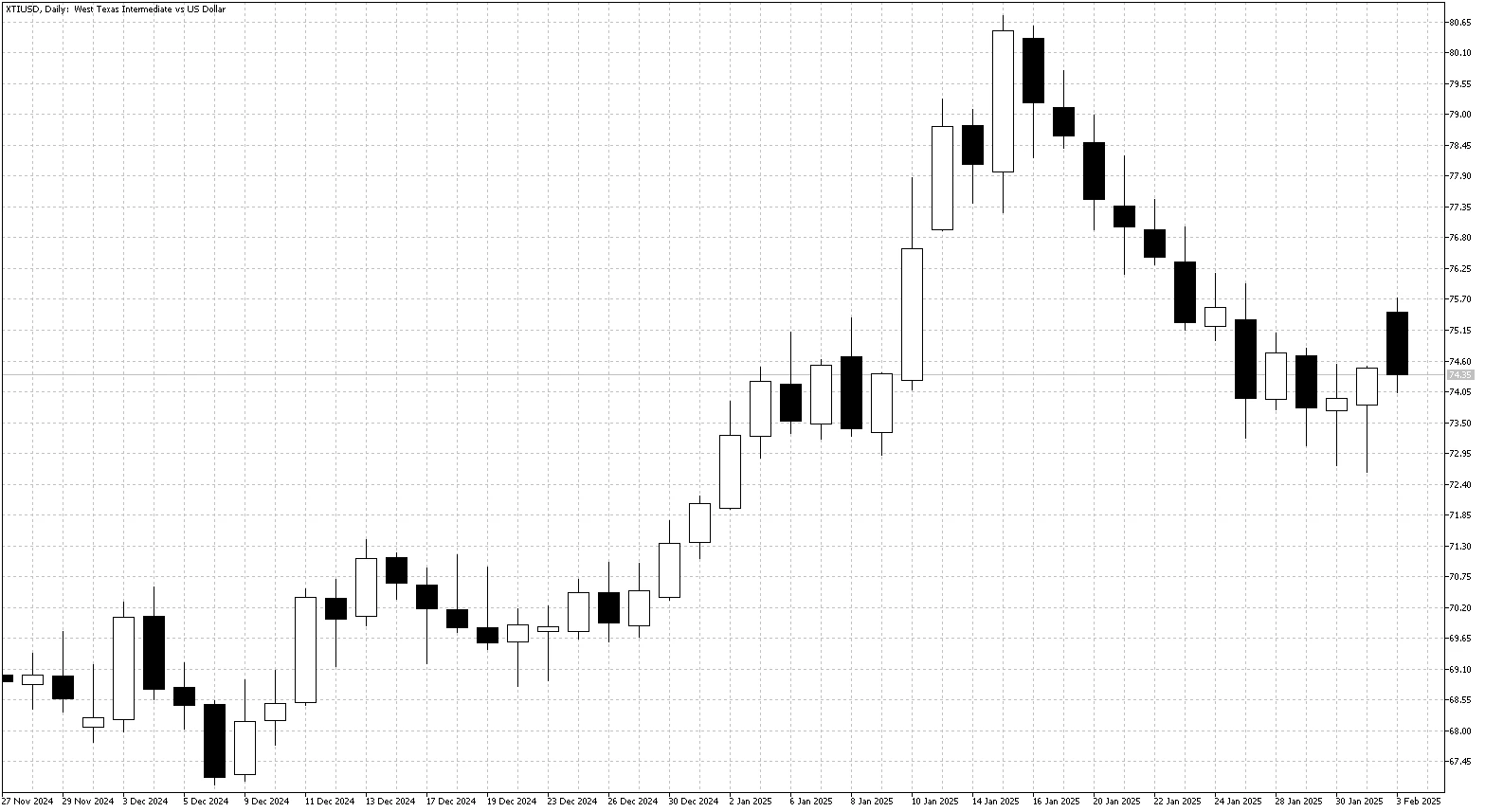
WTI Daily Chart
Bitcoin
Bitcoin fell below $100,000 over the weekend following Trump’s tariff announcement and has continued lower on Monday as investors reduce exposure to riskier assets.
- Bitcoin is vulnerable to a break below $90,000 support in the short term.
- With rising inflation expectations and a stronger U.S. dollar, traders are rotating out of crypto assets, favoring more stable investments.
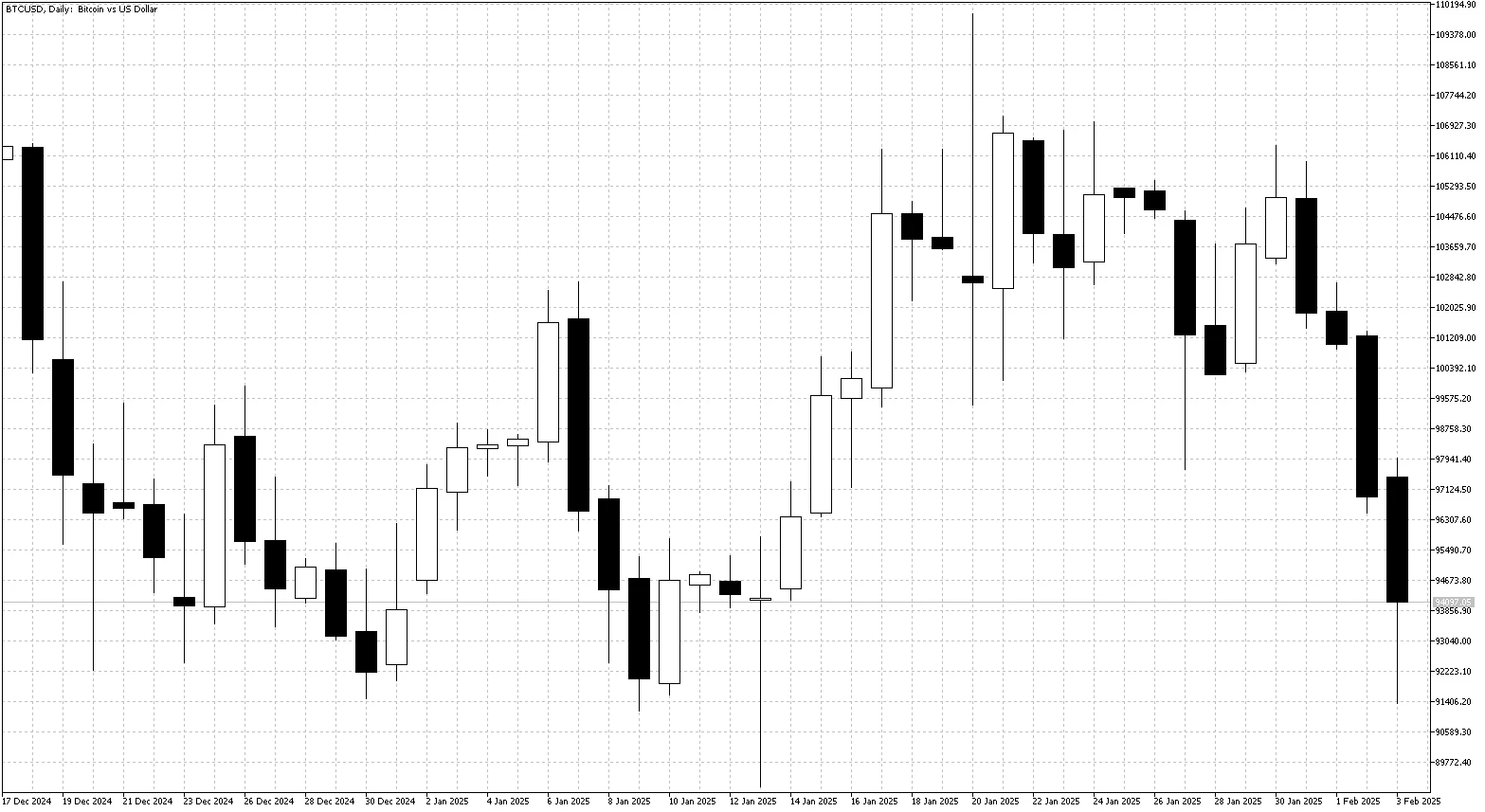
Bitcoin Daily Chart
Potential for a Trade War
The imposition of these tariffs has raised fears of a full-scale global trade war.
- Canada has already imposed a 25% retaliatory tariff on U.S. goods, and Mexico is expected to follow suit.
- China’s response remains unclear, but a strong countermeasure is expected.
There is also growing concern that Trump could extend tariffs to other countries, including Japan and key European nations. If this happens, global trade disruptions could worsen significantly, causing major economic losses.
- Japan, with its export-heavy economy, could face severe challenges, particularly in the auto and technology sectors.
- The European Union is also at risk, as Trump has hinted at potential tariffs on European goods, which could strain transatlantic relations further.
Looking Ahead: How to Navigate Market Volatility
With tariffs set to go into effect, the next 24-48 hours will be critical for global markets.
- Will Trump reconsider or expand tariffs further?
- How will China respond?
- Will markets stabilize, or is more volatility ahead?
Traders and investors should stay informed and flexible, watching developments closely. Following the news is essential, as Trump’s social media activity and press statements can move markets quickly.
- Be prepared for rapid price swings and always have a clear plan before entering a trade.
- Avoid trading against short-term trends too soon – the market can move much further than expected before reversing. Wait for confirmation that the trend has shifted before positioning for a reversal.
- If the market moves suddenly, only follow the trend if it aligns with your strategy. The high volatility means stop-losses can be hit quickly, so risk management is crucial.
- Have a strategy for reacting to unexpected events – market sentiment can change instantly, so flexibility is key.
Looking ahead, Trump’s statements, social media activity, and new policy developments will continue to drive markets. Traders should stay adaptable and be prepared for rapid changes, as uncertainty remains exceptionally high.
Seize Trading Opportunities with Titan FX as Trump’s Presidency Begins
The start of Trump’s presidency is creating exciting opportunities across global markets. Tariff announcements, economic policies, and geopolitical shifts are driving volatility, offering traders the chance to profit. U.S. stock indices, individual stocks, and FX pairs like AUD/USD and USD/JPY are seeing increased activity. Crude oil and commodities are also in focus as energy and trade policies create price swings.
With Titan FX’s MT5 platform, you can trade FX, stock indices, individual stocks, commodities, and Bitcoin—all from one account—giving you the flexibility to capitalize on dynamic market conditions.
Why Choose Titan FX?
- Fast Execution: React quickly to fast-moving markets
- Dedicated Support: Get professional assistance whenever you need it
- Seamless Deposits & Withdrawals: Stay focused on trading, not logistics
- Multi-Market Access: Effortlessly switch between assets to adapt to market changes
As Trump’s presidency fuels market volatility, Titan FX provides the tools you need to trade with confidence. Start trading on our advanced platform today and seize these opportunities!