
Nick Goold
Solid Goold Trading
Monday’s Edition
With Nick Goold
It was another relatively quiet week until Friday, with financial markets supported by optimism around U.S.–China trade talks. Negotiations continued to progress smoothly, and President Trump said he was open to extending the July 8 deadline if needed—though he believed it likely wouldn’t be necessary. U.S. CPI and PPI data came in slightly above expectations, showing inflation remains high and close to 3%. Despite weaker-than-expected GDP figures in the U.K., the British pound stayed firm, while the U.S. dollar remained under pressure throughout the week.
Equity markets in both the U.S. and Japan extended their recovery on the back of improving sentiment and steady economic data. However, Friday brought a sharp shift in tone, as news broke of Israel launching an attack on Iran, followed by Iran’s swift retaliation. The geopolitical shock triggered a sell-off in global equities and a flight to safety. Crude oil surged above key resistance at $65 on fears the conflict could disrupt supply, while gold attracted strong buying, climbing to its highest level in a month. In the FX market, the U.S. dollar continued to weaken against both the euro and the British pound, while USD/JPY dropped sharply before bouncing back as markets responded to rising uncertainty and expectations the Bank of Japan may delay rate hikes due to tariff concerns.
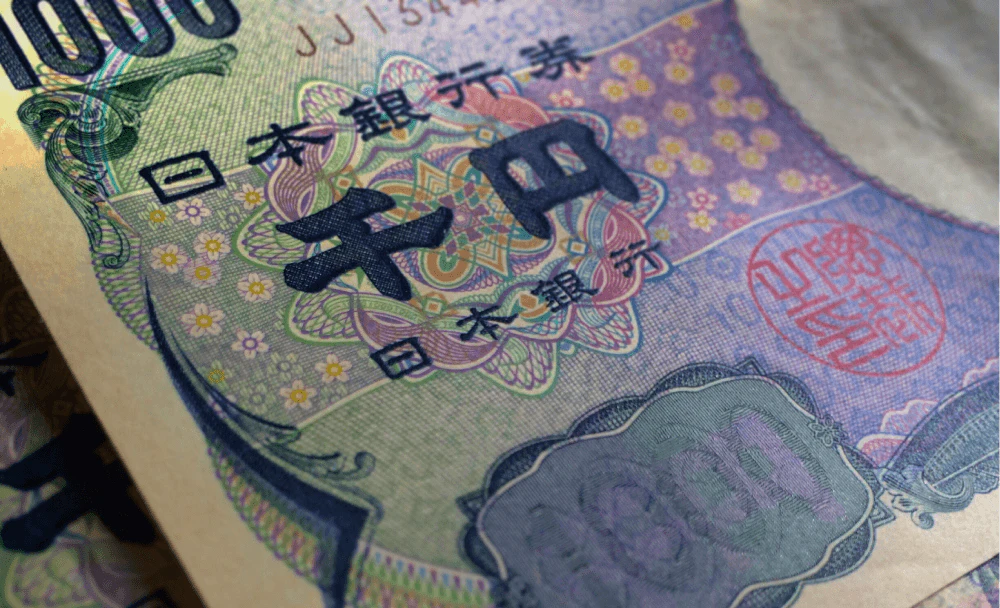
Bitcoin failed to break above key resistance at $110,000 and came under pressure as risk sentiment weakened following the escalation in the Middle East. The U.S. dollar index attempted to recover but remained capped below the 100 level. Overall, the week had been marked by cautious optimism, with markets reacting positively to steady trade progress and economic data—until Friday’s conflict reignited geopolitical risks and disrupted the calm.
Markets This Week
U.S. Stocks
The Dow tested the 43,000 level several times last week as optimism over U.S.–China trade talks supported the market. A sharp dip followed the outbreak of fighting between Israel and Iran, but the drop was limited as hopes for a trade deal kept sentiment stable. While the Middle East conflict adds downside risk, easing trade tensions remain a positive driver. This balance suggests range-bound trading is likely for now, with resistance at 43,000 and 44,000, and support at 42,000, 41,500, and 41,000.
Japanese Stocks
The Nikkei 225 tested last month’s highs early last week as optimism over U.S.–Japan tariff negotiations supported the market, but it failed to break resistance. A quick sell-off followed the outbreak of fighting between Israel and Iran, though the index rebounded ahead of this week’s G7 summit, where U.S. and Japanese leaders will continue trade talks. With uncertainty still in play, range trading remains the best strategy. Support levels are at 37,500円, 36,500円, and 36,000円, while resistance is seen at 38,800円, 39,000円, and 40,000円.
USD/JPY
USD/JPY remains stuck in the 142–146 range, after showing a positive tone earlier in the week. The pair dropped sharply on Friday as fighting broke out between Israel and Iran, but strong buying quickly followed as markets focused on a likely delay in Japanese interest rate hikes due to tariff concerns. This week, traders will watch for policy signals from the U.S. Federal Reserve and Bank of Japan, while a meeting between Trump and Ishiba at the G7 could also influence sentiment through tariff-related headlines. Resistance is seen at 145.00, 146.00, and 148.00, while support lies at 142.00 and 140.00.
Gold
Gold had a strong week, initially rising on continued weakness in the U.S. dollar and then surging higher as unrest in the Middle East escalated. Technical indicators are pointing upward, and the fundamental outlook remains supportive. The bias is to the upside this week, with buying on dips likely to be the best strategy. Support is seen at $3,400, $3,300, and $3,250, while resistance stands at $3,450 and $3,500.
Crude Oil
Crude oil finally broke out of its range last week, surging higher on fears of supply disruptions after direct fighting began between Israel and Iran. The market remains on high alert for further developments that could impact global oil supply. Prices have already risen significantly, so traders should consider buying only if the conflict escalates further—or look for short-term selling opportunities if the market rallies too far. Resistance is now seen at $80, $85, and $88, with support at $65 and $60.
Bitcoin
Bitcoin made another attempt to break above $110,000 early last week on optimism over U.S.–China trade talks, but resistance held, triggering speculative selling. The situation worsened as Middle East tensions sparked another wave of risk-off selling. However, demand for Bitcoin remains strong, and buying on weakness continues to be the preferred strategy. Support is at $105,000, $100,000, and $95,000, while resistance is seen at $110,000, $112,500, and $115,000.
This Week’s Focus
Tuesday: Japan Bank of Japan Interest Rate Decision, U.S. Retail Sales, Industrial Production
Wednesday: U.K. CPI, E.U. CPI, U.S. FOMC Statement
Thursday: U.K. Bank of England Interest Rate Decision
Friday: Japan CPI, U.S. Philadelphia Fed Manufacturing Index
This week is likely to be busy after a few relatively quiet ones. Markets are focused on the Israel–Iran conflict, which is affecting not only oil but overall sentiment. Japanese Prime Minister Shigeru Ishiba is set to meet with U.S. President Donald Trump at the G7 summit in Canada, with Japan expected to again call for the removal of U.S. tariffs.
U.S.–China trade talks are ongoing and could produce key headlines. Interest rates are expected to remain unchanged in Japan, the U.K., and the U.S., but comments following the announcements should move FX and equity markets.