
Nick Goold
The RSI: A Simple Yet Powerful Tool
The Relative Strength Index (RSI) is one of the most popular tools in technical analysis. It helps you identify when a currency pair may be reaching a high (overbought) or low (oversold) based on recent price momentum.
RSI is calculated by comparing recent gains to recent losses over a period (typically 14 candles). The output is a number between 0 and 100:
Above 70 = overbought (potential high)
Below 30 = oversold (potential low)
It doesn’t guarantee market reversals—but it’s a great starting point for spotting potential trading opportunities.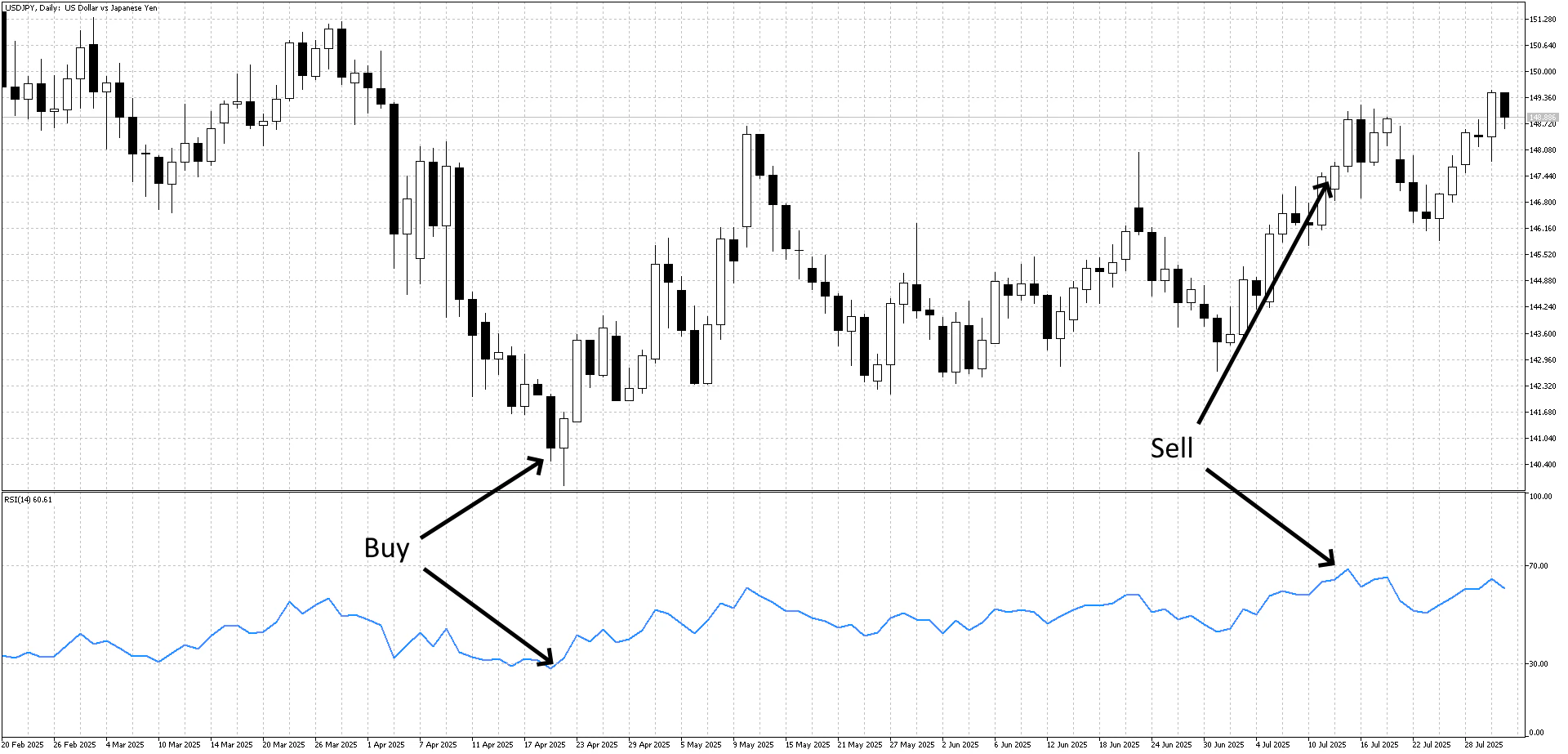
Entry and Exit Strategies Using RSI
Buy Entry (Oversold Conditions):
- Watch for RSI dipping below 30 and then turning back upward.
- This suggests selling pressure is fading and buyers might return.
- Works best when the price is also near a support level.
Sell Entry (Overbought Conditions):
- Look for RSI rising above 70, then starting to decline.
- This suggests the buying momentum may be weakening.
- Ideal when the price is near a resistance zone.
Exit Strategy:
- For long trades, consider exiting when RSI nears 70 or flattens.
- For short trades, consider exiting as RSI approaches 30 or rises.
- Don’t rely only on RSI—use price action and risk management to confirm.
Enhancing RSI with Support and Resistance
Relying solely on RSI can produce false signals, especially in strong trending markets where the RSI can stay overbought or oversold for a long time. That’s why combining RSI with support and resistance levels significantly improves its accuracy.
Buying with Support:
Even if RSI is below 30, don't buy unless the price is also near a strong support level. When both conditions align, the chances of a successful bounce increase.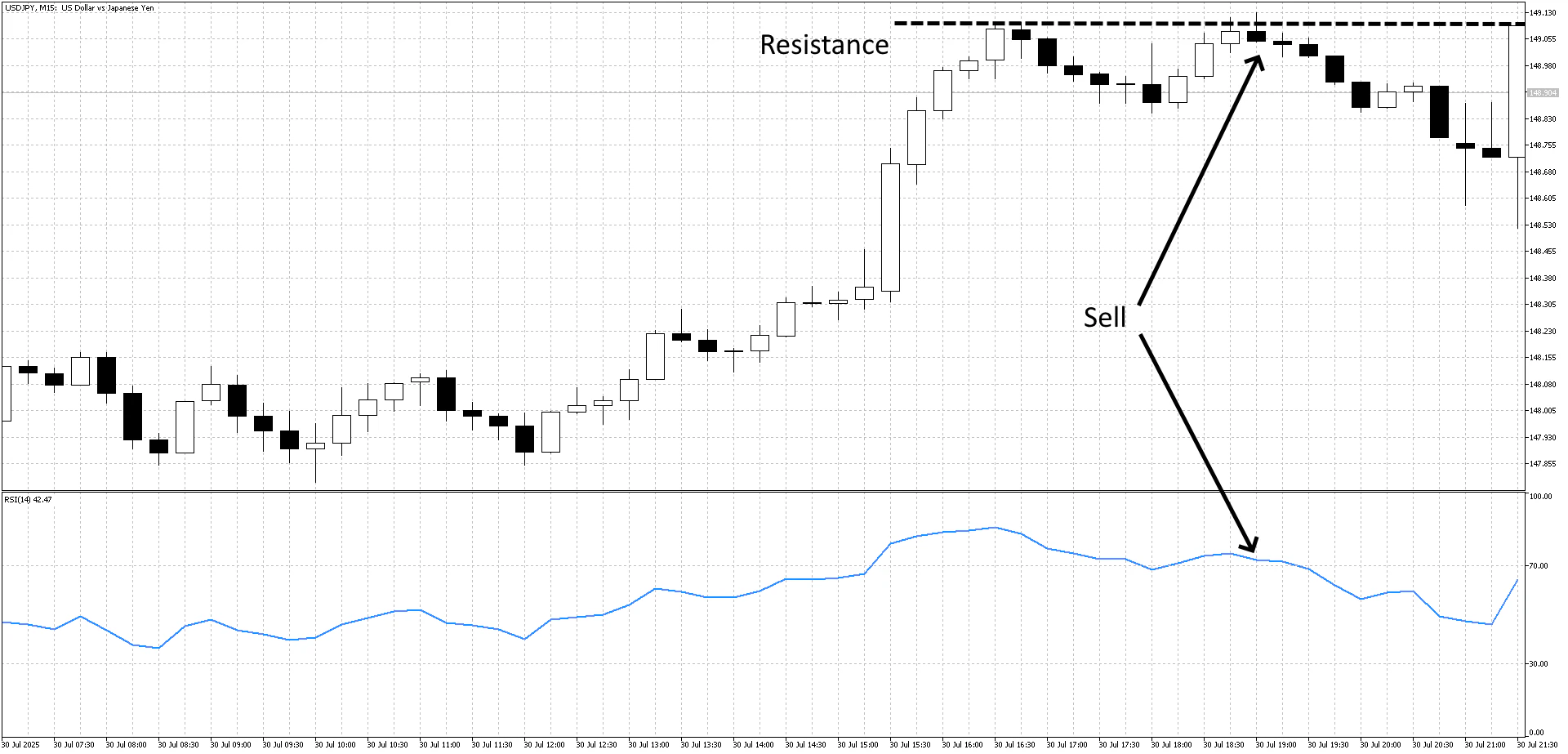
Selling with Resistance:
When RSI is above 70, confirm the signal with a resistance level nearby. This combination gives you a better chance of catching a real reversal, not just a temporary pause.
Risk Management: The Key to Long-Term Success
Even great RSI signals can fail. Proper risk management protects your capital:
- Stop Loss for Long Trades: Set below the recent swing low or support.
- Stop Loss for Short Trades: Set above the recent swing high or resistance.
- Risk-Reward Ratio: Aim for at least 1:2. Risk $1 to make $2.
- Profit Targets: Use RSI extremes or swing highs/lows.
- Trailing Stops: Move your stop in your favor as price moves.
A key mistake to avoid: adding to losing trades just because RSI looks more extreme. This “averaging down” can lead to large losses when markets keep trending.
The Problem with Trending Markets
One of the most dangerous assumptions is believing RSI extremes always mean the market will reverse. In reality, strong trends break the rules:
- In uptrends, RSI can stay above 70 for days or weeks.
- In downtrends, RSI can stay below 30 for extended periods.
- Beginners often lose money trying to “fight the trend” just because RSI is extreme.
This is why it’s crucial to combine RSI with trend analysis and price structure, not just rely on signals.
Understanding the News: Why RSI Can Stay Extreme
RSI shows you the strength of price movement—but it doesn't explain why the market is moving. That’s where fundamental analysis becomes essential. Events such as:
- Central bank announcements (e.g. interest rate decisions or forward guidance)
- Inflation and employment data
- Geopolitical developments (wars, sanctions, regional instability)
- Trade policies (including tariffs, export bans, or new trade agreements)
- Political events (elections, government instability, policy shifts)
These types of events often result in sharp and sustained price movements. When markets react to powerful news or political developments, RSI can remain in overbought or oversold territory for an extended period—even as the trend continues.
In these situations, traditional RSI reversal signals become less reliable, especially on short timeframes. Entering a trade based solely on RSI without understanding the broader context can lead to premature or losing trades.
Before trading based on RSI, always:
- Check the economic calendar for upcoming high-impact news.
- Stay aware of scheduled political or policy events that could affect markets.
- Understand the reason behind the price move before reacting to it.
- Avoid trading immediately before or after major announcements unless your strategy accounts for volatility.
By combining RSI with an awareness of what’s moving the market, you can trade with greater confidence and avoid common traps that catch many beginners.
Using the Titan FX RSI Analysis Tool
To help you apply RSI more effectively, Titan FX Research Hub offers a powerful RSI Analysis tool.
Key Features:
- Tracks RSI across multiple timeframes: 5min, 15min, 30min, and 1hr
- Shows RSI status for each timeframe over the past 12 hours
- Displays results as a clear, color-coded heatmap
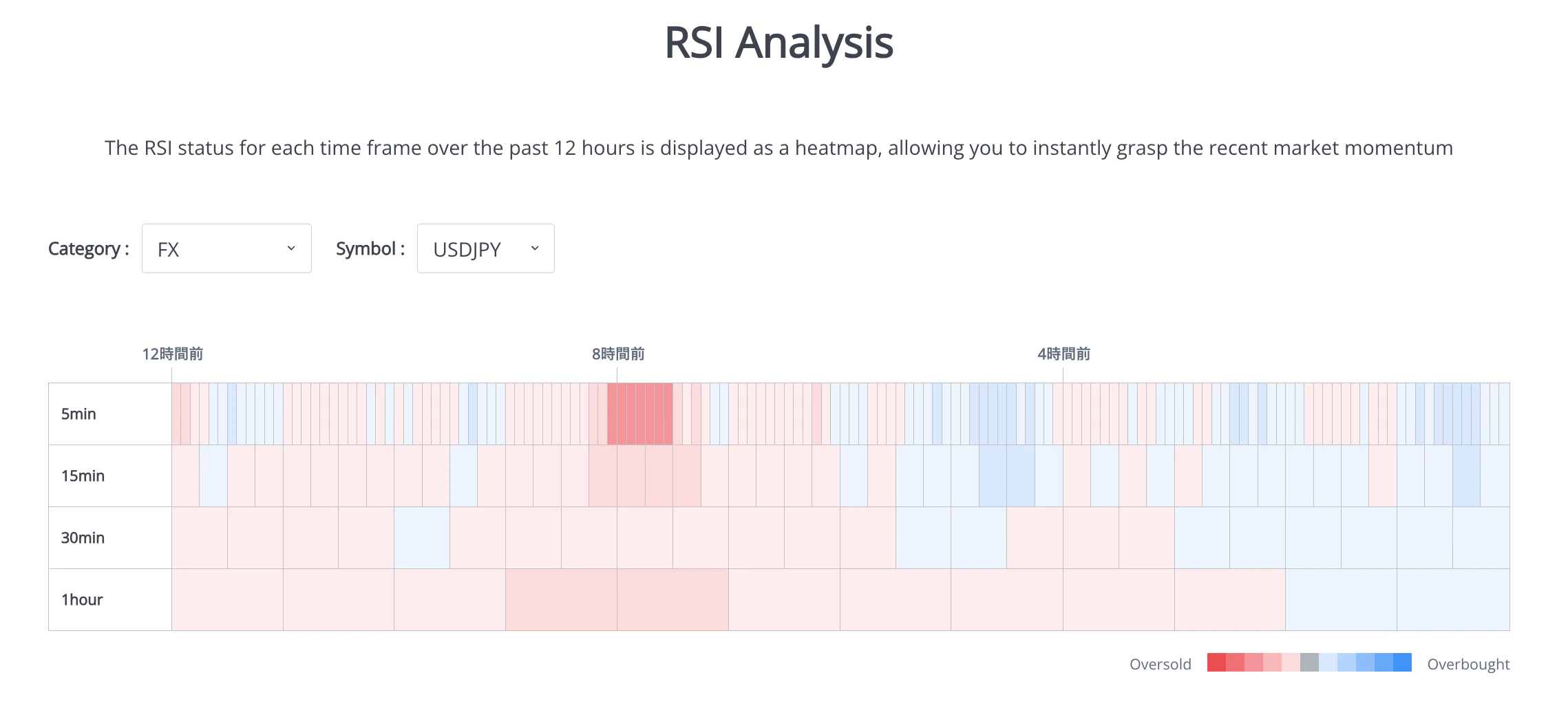
With this tool, you can instantly identify when multiple timeframes agree on RSI conditions—giving you a stronger signal for potential reversals.
Why it helps:
- Quick market overview
- Spot momentum shifts across timeframes
- Make smarter entry and exit decisions
- Avoid trades when RSI signals are mixed or unclear
Mastering RSI for Trading Success
The RSI indicator can be a powerful ally in spotting market highs and lows—but only if used correctly. To trade successfully with RSI, remember these key points:
- Use RSI as a guide, not a standalone signal.
- Combine RSI with support/resistance and price action.
- Apply risk management on every trade.
- Avoid trades during strong news-driven trends.
- Use tools like the Titan FX RSI Heatmap to confirm signals across timeframes.
With practice and discipline, RSI can help you become a more confident and consistent trader.