
Nick Goold
As inflation pressures grow in the U.S., markets are now expecting a rise in official U.S. interest rates this year. This has supported the U.S. dollar and created stronger moves across many FX pairs. At the same time, other major currencies are reacting to their own central bank outlooks, inflation trends and changes in risk sentiment.
This week, we will analyze EUR/USD, USD/JPY, AUD/NZD, GBP/USD and EUR/CHF. These pairs are included in Week 1 of Titan FX’s three-week Trade Beyond Borders campaign, with zero spread trading conditions available on selected popular FX pairs.
Each pair has different drivers, chart conditions and levels of volatility. This creates different types of trading opportunities, from major USD pairs reacting to interest rate expectations to cross pairs moving on regional economic themes.
Below, we look at each market’s daily chart outlook, average daily true range, key drivers and trading ideas.
How Average True Range Helps Traders Compare FX Pairs
Average True Range, or ATR, helps traders compare volatility across different FX pairs by showing how much a pair moves on an average day. This can help traders choose markets that suit their trading style and avoid using the same stop-loss size on every pair.
ATR also changes as market conditions change. For example, USD/JPY’s current daily ATR is around 60 pips, but during the Bank of Japan intervention period in May, it was closer to 140 pips. GBP/USD currently has an ATR of around 82 pips, with volatility rising as markets react to the change in prime minister.
Higher ATR pairs can be useful for scalping and day trading because there is more intraday movement. Lower ATR pairs may be better suited to swing trading or holding positions for a couple of days. As a rough guide, traders might use 5% to 10% of daily ATR for scalping, 10% to 25% for day trading and 25% to 100% for swing trading. For example, if a pair has a daily ATR of 80 pips, a day trader may consider a stop of around 8 to 20 pips, depending on the setup, support and resistance, and upcoming news risk.
EUR/USD: The Main Pair to Watch
EUR/USD is the world’s most traded currency pair. It is highly liquid, usually has tight spreads and often reacts clearly to changes in Federal Reserve and European Central Bank expectations.
The pair is heavily influenced by U.S. dollar direction. When markets expect higher U.S. interest rates, the dollar often strengthens and EUR/USD can come under pressure. When U.S. data weakens or the eurozone outlook improves, the pair can recover.
Average daily true range: 64 pips (1 pip = 0.0001).
Daily chart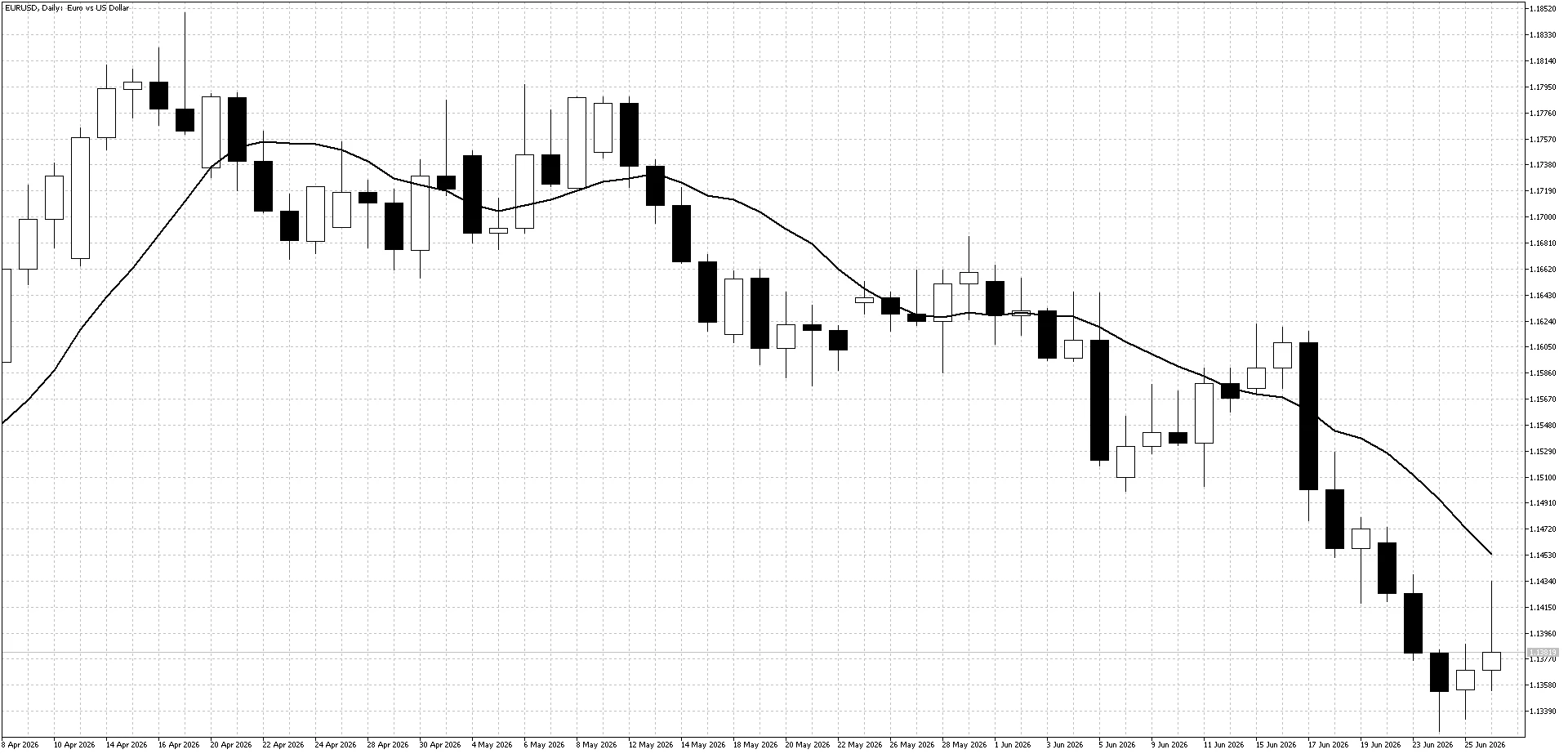
Current chart outlook
EUR/USD has fallen to new lows for the year as markets now expect a rise in official U.S. interest rates this year. The downtrend remains strong, with the 10-day moving average pointing lower and showing continued selling pressure.
Key drivers
- U.S. interest rate expectations
- Federal Reserve comments
- ECB policy expectations
- U.S. inflation and employment data
- Eurozone CPI and PMI data
Trading ideas
In the short term, the downtrend remains strong, so looking for selling opportunities near the 10-day moving average may be a practical strategy. If EUR/USD rallies but fails to break above this moving average, sellers may look for the downtrend to continue.
Medium-term traders could also look for range-trading opportunities. The market has already priced in the possibility of a U.S. interest rate rise, so any weaker-than-expected U.S. data could trigger a short-term recovery.
USD/JPY: Strong Trend, But Intervention Risk Remains High
USD/JPY is one of the most actively traded FX pairs and often reacts clearly to changes in U.S. yields, Bank of Japan policy expectations and Japanese yen sentiment. It is active throughout the whole trading day, with opportunities often appearing during the Asian, London and New York sessions.
The pair is heavily influenced by the interest rate gap between the U.S. and Japan. When U.S. yields rise, the dollar often strengthens against the yen and USD/JPY can move higher. However, when the yen weakens too quickly, traders also need to watch for comments or possible action from Japanese authorities, as intervention risk can trigger sharp reversals.
Average daily true range: 60 pips (1 pip = 0.01).
Daily chart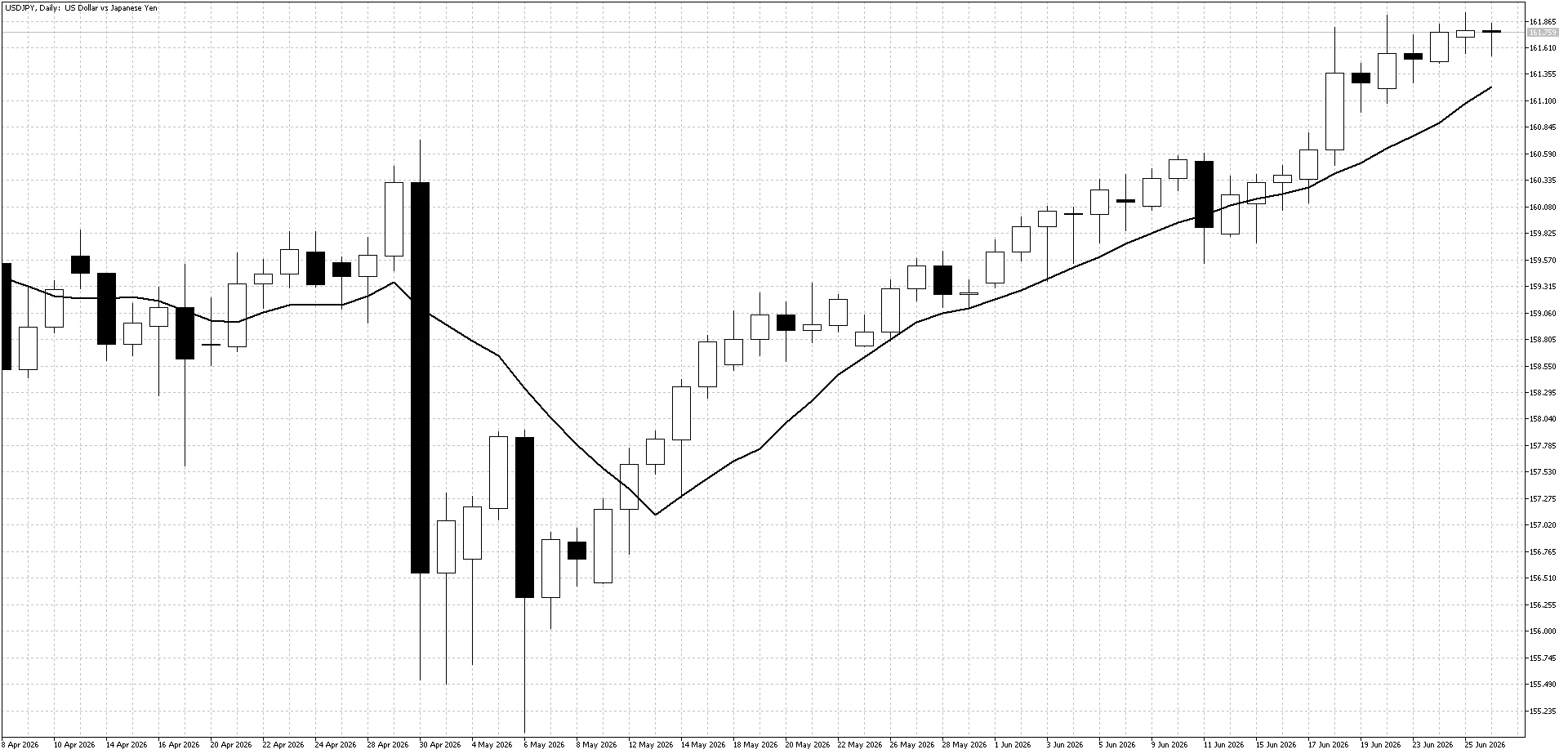
Current chart outlook
The uptrend in USD/JPY remains strong, but the pair has failed to break above resistance near 162.00. This suggests traders are becoming more cautious at higher levels as the market worries about potential yen-buying intervention by Japanese authorities.
Key drivers
- U.S. Treasury yields
- Federal Reserve rate expectations
- Bank of Japan policy outlook
- Japanese intervention warnings
- Japan inflation and wage data
Trading ideas
The USD/JPY uptrend is still strong because U.S. interest rates are much higher than Japanese interest rates. While the pair stays above the 10-day moving average, traders may look to buy pullbacks toward this level.
If USD/JPY breaks below the 10-day moving average, it may show that the trend is weakening. Traders could then look for short-term selling opportunities, especially if U.S. yields fall or Japanese intervention warnings increase.
The 162.00 level is important. Predicting intervention is difficult, but a quick move above 162.00 could increase intervention risk and create a selling opportunity for traders.
AUD/NZD: A Slower Cross With Clear Relative-Value Themes
AUD/NZD is known as the “Aussie-Kiwi” cross. It does not include the U.S. dollar, so it often gives traders a cleaner view of the difference between the Australian and New Zealand economies.
The pair is mainly driven by Reserve Bank of Australia and Reserve Bank of New Zealand expectations. It can also react to commodity prices, China-related news and regional growth data.
Average daily true range: 68 pips (1 pip = 0.0001).
Daily chart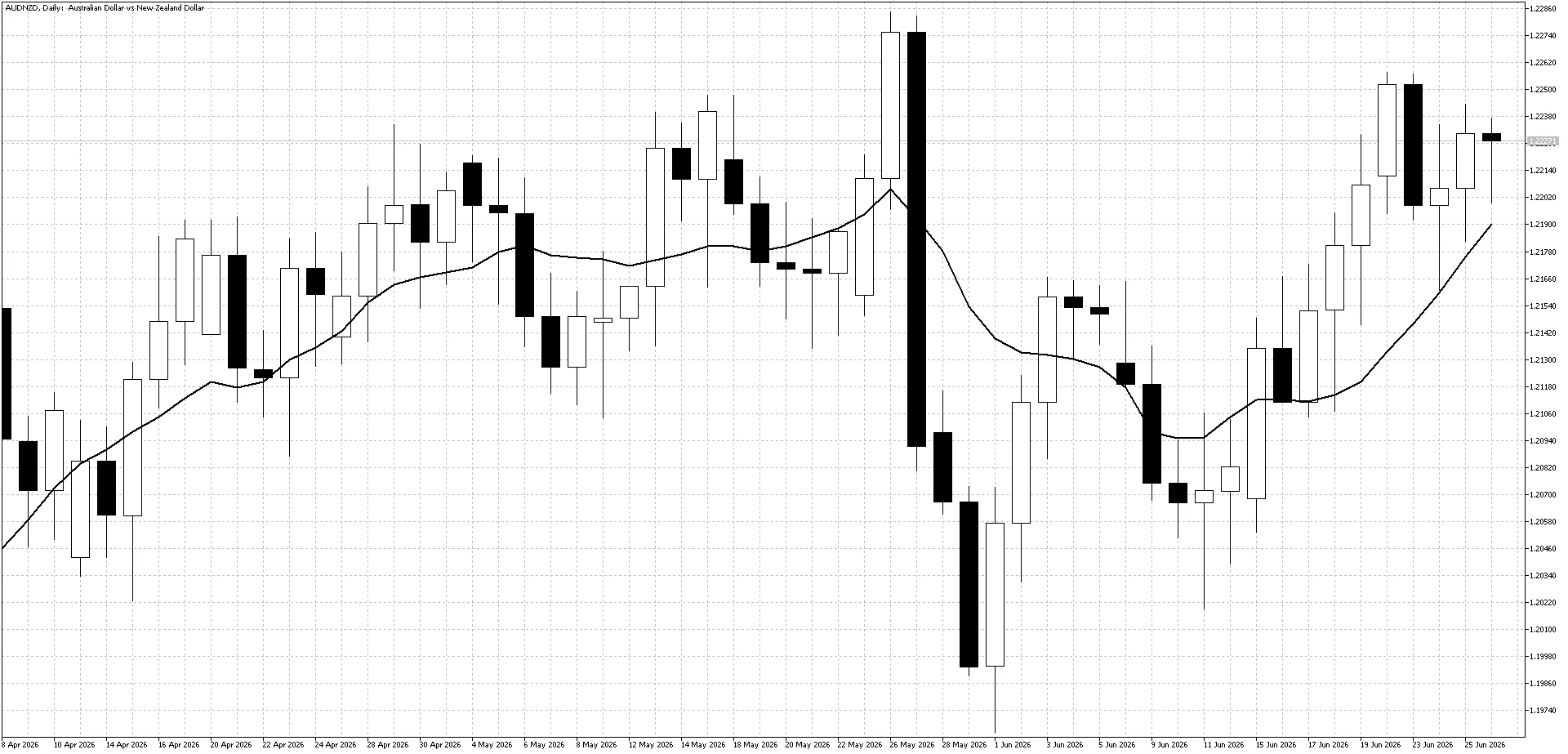
Current chart outlook
AUD/NZD has resumed its uptrend after reaching a 10-year high earlier this year. The pair now looks likely to test the May high again, with the 10-day moving average pointing higher and indicating that buyers remain in control.
Key drivers
- RBA interest rate expectations
- RBNZ interest rate expectations
- Australian inflation and employment data
- New Zealand inflation and employment data
- China growth outlook
- Commodity market sentiment
Trading ideas
Following the current uptrend looks like the better strategy in the short and medium term. Traders may look for buying opportunities around the 10-day moving average while price remains above it.
If AUD/NZD rises back toward the yearly highs and starts to find resistance, this could create a good selling opportunity.
GBP/USD: A Higher-Volatility Major Pair
GBP/USD, often called “Cable,” is one of the most actively traded major currency pairs. It usually moves more than EUR/USD and can react sharply to both UK and U.S. news.
The pair is influenced by Bank of England expectations, U.S. rate expectations, UK inflation, employment data and broader risk sentiment. When the U.S. dollar is strong, GBP/USD can come under pressure. When UK data is firm or U.S. data weakens, the pound can recover.
Average daily true range: 82 pips (1 pip = 0.0001).
Daily chart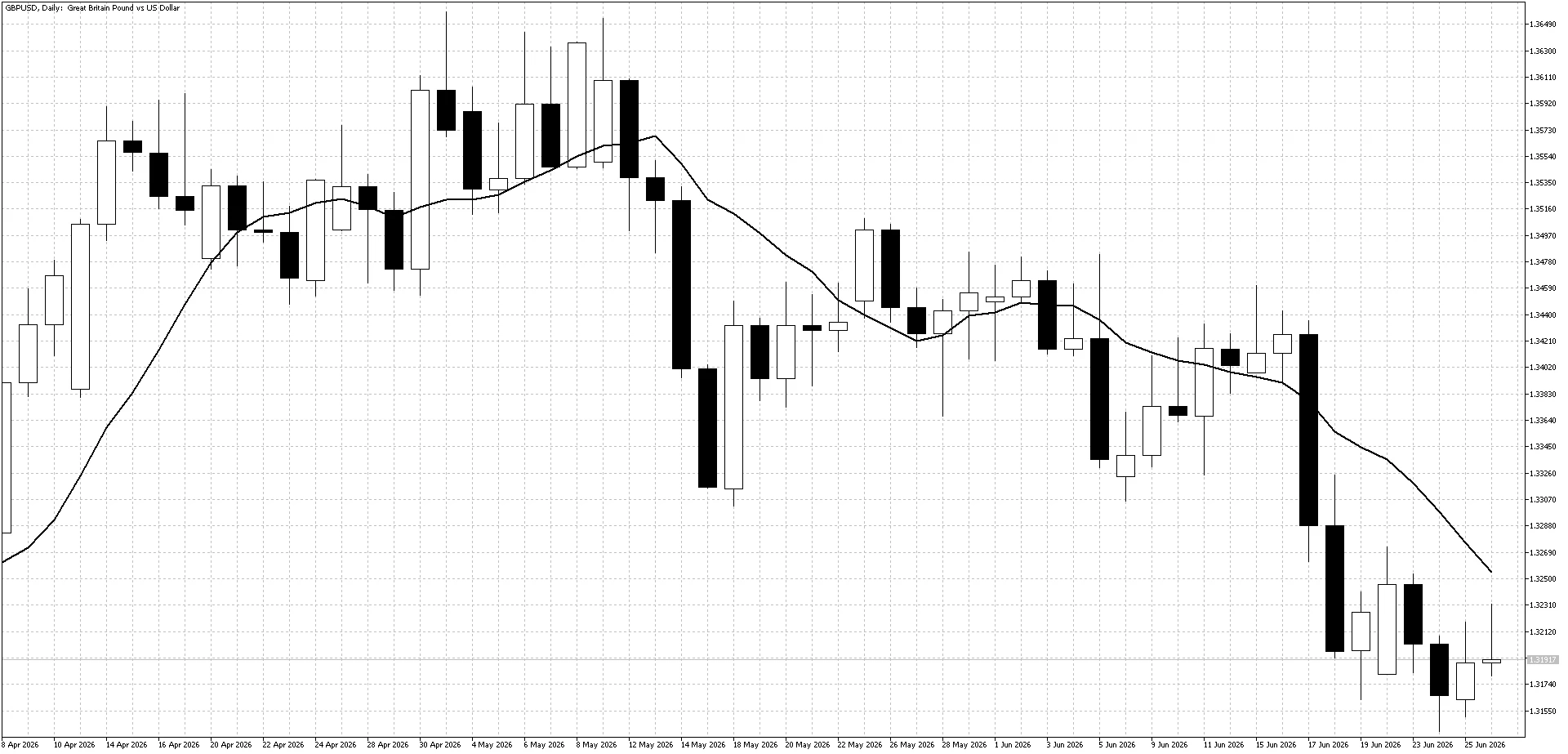
Current chart outlook
GBP/USD is in a downtrend as rising U.S. interest rate expectations continue to support the dollar. The pair is also under pressure from the change in UK government leadership, as traders worry that more interventionist government policy could be negative for the UK economy.
Key drivers
- U.S. interest rate expectations
- Bank of England policy outlook
- UK employment and inflation data
- U.S. employment and inflation data
- U.K. political changes
Trading ideas
Selling opportunities may be the better strategy for GBP/USD in the short and medium term, as both the chart and fundamental outlook look negative. Rising U.S. interest rate expectations are supporting the dollar, while UK political uncertainty is adding pressure to the pound.
Volatility is not extremely high, so traders may not need to chase the market lower. A more practical approach could be to wait for strength, then look for selling opportunities near resistance or the 10-day moving average.
EUR/CHF: Lower Volatility and Range-Based Opportunities
EUR/CHF is usually a quieter FX pair. It is mainly driven by ECB policy, Swiss National Bank policy and changes in market sentiment.
The Swiss franc is often bought when traders become nervous. This means EUR/CHF can fall when markets become more cautious. When market sentiment improves, the euro may recover against the franc.
Average daily true range: 37 pips (1 pip = 0.0001).
Daily chart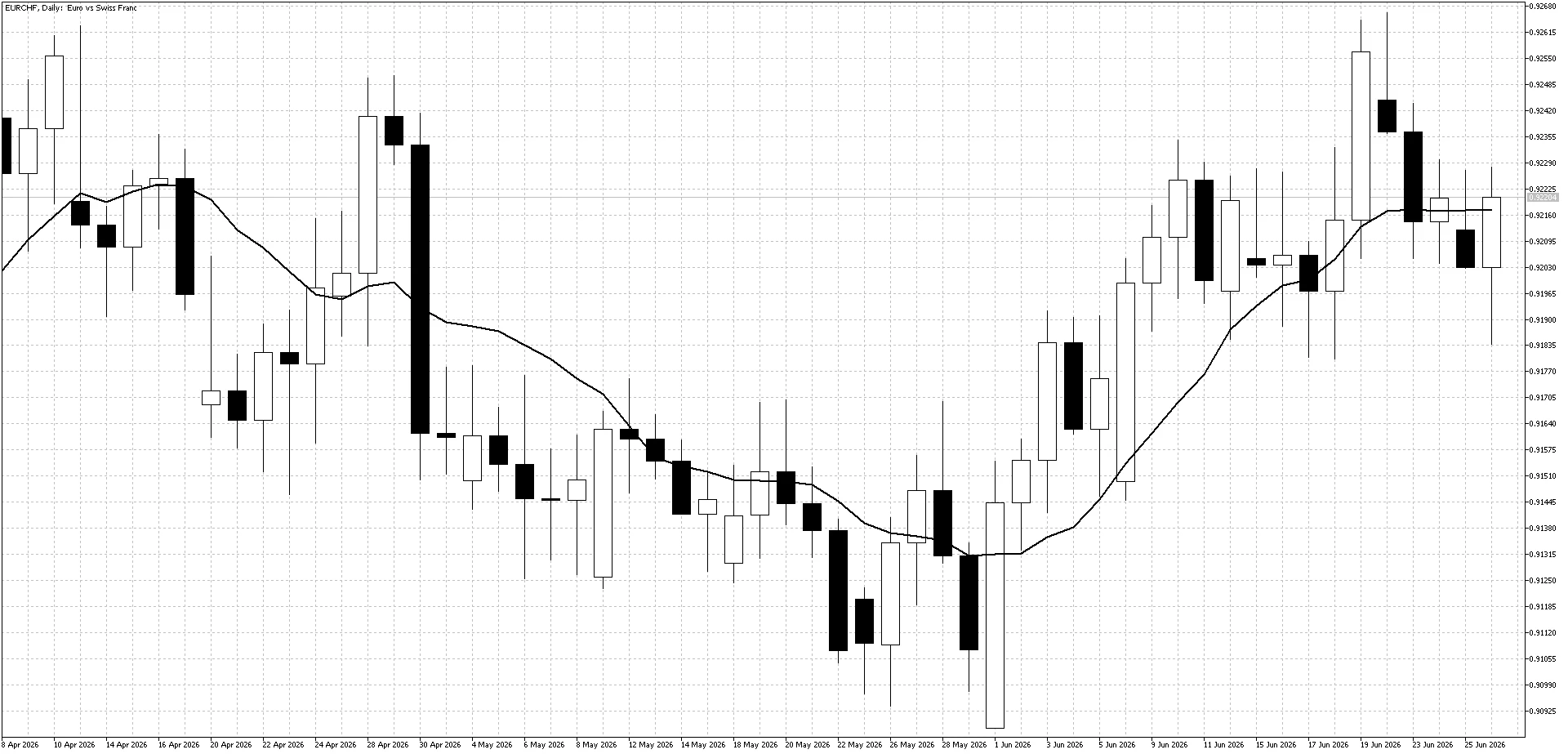
Current chart outlook
EUR/CHF has reached resistance near the April highs, and the 10-day moving average is now moving sideways. This shows that the recent recovery may be losing strength.
The long-term trend is still down after EUR/CHF fell to more than 10-year lows earlier this year. If price cannot break above resistance, sellers may look for the downtrend to continue.
Key drivers
- ECB policy expectations
- Swiss National Bank policy outlook
- Eurozone inflation data
- European risk sentiment
- Safe-haven demand for CHF
Trading ideas
EUR/CHF has stopped rising and failed near resistance. If the market stays below resistance, traders may focus on selling opportunities and look for a move back toward the yearly lows.
Trade Beyond Borders with Zero Spreads
Titan FX’s Trade Beyond Borders campaign gives traders the opportunity to trade selected popular FX pairs with Zero Spread* for three weeks only.
During Week 1, eligible pairs include EUR/USD, USD/JPY, AUD/NZD, GBP/USD and EUR/CHF. EUR/USD remains included throughout the full campaign, while four additional FX pairs rotate each week.
The campaign period runs from 29 June 2026 to 19 July 2026, excluding 22:00–02:00 GMT+3 each day. No registration is required, and promotional trading conditions are applied automatically to eligible live Standard and Blade accounts.
Learn More: https://titanfx.com/promotions/zero-spreads
Zero spread conditions apply to Blade Accounts. Standard Accounts are subject to a fixed 1 pip spread. Commission charges apply to Blade Accounts.